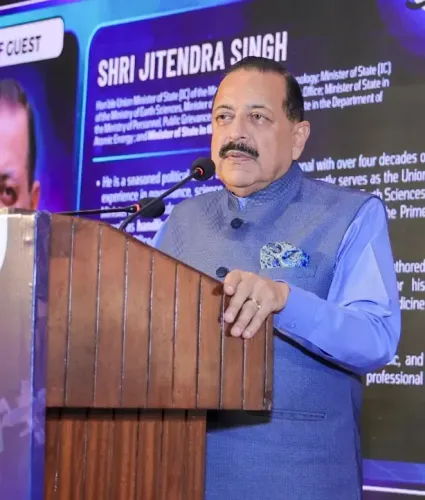
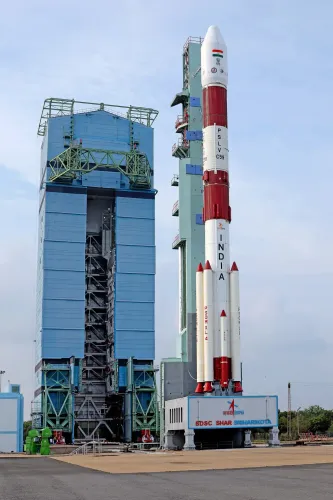
Dr. Jitendra Singh flags ISRO as India's space economy surges
Synopsis
Union Science and Technology Minister Dr. Jitendra Singh on 2 June 2026 amplified projections of India's space economy reaching $45 billion over the next decade, spotlighting ISRO's pivotal role and the government's sustained push to bring private capital into satellite and launch vehicle development.
Key Takeaways
Jitendra Singh shared projections on 2 June 2026 positioning India's space sector as a key component of the overall economy.
The cited report projects India's space economy could surge to $45 billion over the next 10 years .
ISRO remains the anchor institution, now operating alongside private-sector enablers IN-SPACe and NewSpace India Limited (NSIL) .
Structural reforms since 2020 , culminating in the Indian Space Policy 2023 , opened launches and satellite development to private players.
Key near-term milestones include IN-SPACe licensing rollout, first private SSLV -class launches, and potential dedicated space allocations in the next Union Budget .
The sector's growth supports Atmanirbhar Bharat goals and has dual-use implications for national security and defence.
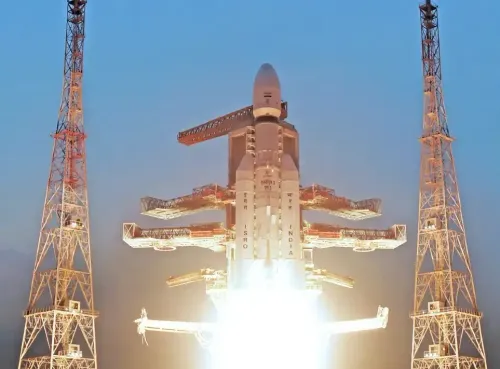
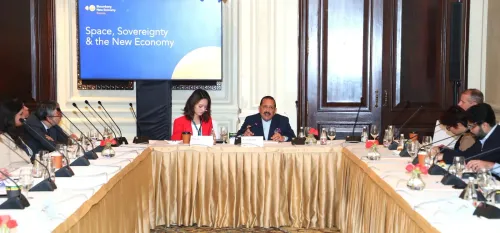
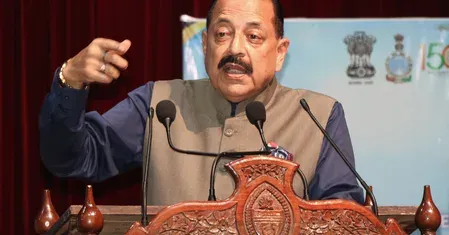
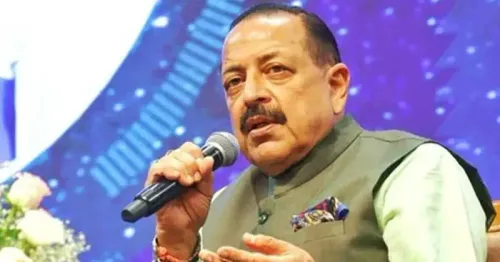
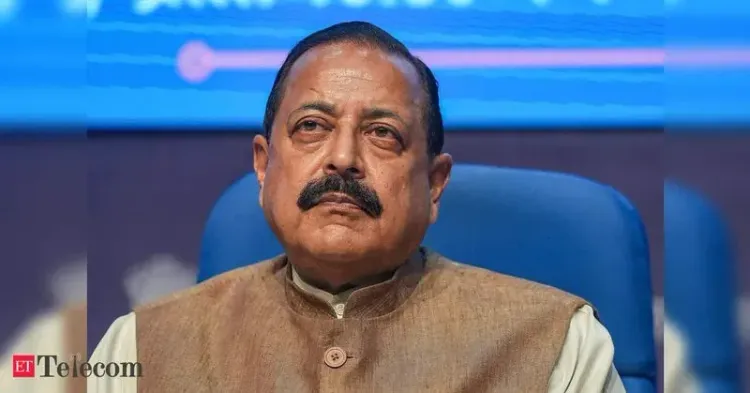
Union Science and Technology Minister Dr. Jitendra Singh on Tuesday, 2 June 2026 shared a report projecting India's space economy as a key growth pillar of the country's overall economic architecture, drawing attention to ISRO's expanding role in what analysts describe as a structural shift in national space policy.
Context
The minister's post amplified a report projecting India's space economy to surge to $45 billion over the next decade, positioning the sector alongside manufacturing and digital services as a core contributor to national GDP. Dr. Jitendra Singh, who holds independent charge of the Ministry of Science and Technology and Ministry of Earth Sciences and also serves in the Prime Minister's Office, has been the political face of India's space liberalisation drive since 2019.
The projection reflects a broader transformation: India has moved from a purely government-driven space model to one that actively courts private capital, domestic manufacturing, and downstream satellite services.
Policy Backdrop
The foundations for this trajectory were laid in June 2020, when the government announced sweeping reforms opening the space sector to private investment and ending ISRO's near-monopoly on launches and satellite development. The landmark Indian Space Policy 2023 subsequently defined clear roles for government agencies, academia, and private entities, authorising IN-SPACe — the Indian National Space Promotion and Authorisation Centre — to issue licences for space activities.
NewSpace India Limited (NSIL), incorporated in 2019 as a government-owned commercial arm, was tasked with transferring ISRO technologies to industry and booking commercial launches on PSLV and the newer SSLV vehicles. Together, these institutional reforms created the scaffolding for private-sector participation at scale.
The push mirrors liberalisation seen in civil aviation and defence production under the Atmanirbhar Bharat initiative, with an added national security dimension: a larger domestic industrial base for dual-use space capabilities.
Stakeholders and Impact
The primary beneficiaries of a surging space economy include private space startups, satellite communications service providers, and defence users who rely on indigenous satellite infrastructure. India's growing constellation of earth-observation and communication satellites has already attracted global interest from sovereign and commercial customers alike.
For domestic startups, the IN-SPACe licensing regime represents the clearest regulatory pathway yet to build, launch, and operate satellites commercially — a shift that industry bodies have long advocated. Broader economic linkages extend to sectors such as precision agriculture, urban planning, disaster management, and broadband connectivity in remote regions.
What's Next
Policy watchers will focus on the rollout of IN-SPACe's detailed licensing framework, the first fully private-sector launches of SSLV-class vehicles, and any dedicated space budget allocation or venture-fund announcement in the forthcoming Union Budget. Dr. Jitendra Singh's amplification of the $45-billion projection signals that the government intends to keep space sector momentum at the centre of its technology and economic narrative heading into the second half of the decade.
If the growth trajectory holds, India's space economy could emerge as one of the most significant new engines of high-technology employment and export revenue, reinforcing the country's ambition to capture a substantially larger share of the global space economy.
Point of View
Not merely a prestige science programme. By amplifying a $45-billion projection, the minister is framing ISRO's transformation within the same Atmanirbhar Bharat logic that has already reshaped defence procurement and semiconductor policy. The timing — ahead of what is expected to be a budget cycle with heightened scrutiny of technology spending — suggests the ministry is laying groundwork for a larger fiscal ask or a high-profile policy announcement. Whether the projection holds will depend on how quickly IN-SPACe's licensing machinery converts regulatory intent into actual private launches and commercial satellite contracts.
NationPress
21 Oct 2026
Frequently Asked Questions
What is India's space economy projected to be worth?
A report shared by Minister Dr. Jitendra Singh projects India's space economy could surge to $45 billion over the next 10 years, making it a key component of the country's overall economy.
What is IN-SPACe and what does it do?
IN-SPACe, or the Indian National Space Promotion and Authorisation Centre, was created in 2020 to regulate and facilitate private-sector entry into satellite building, launches, and downstream space services in India.
How has India opened its space sector to private companies?
Beginning with reforms announced in June 2020 and formalised through the Indian Space Policy 2023, India ended ISRO's near-monopoly, authorised IN-SPACe to issue licences, and set up NSIL to transfer ISRO technologies to industry.
What is NSIL and how does it support India's space economy?
NewSpace India Limited (NSIL), incorporated in 2019, is a government-owned commercial entity that commercialises ISRO technologies, procures launch services, and markets space capabilities to domestic and global customers.
What should I watch for next in India's space sector policy?
Key milestones include IN-SPACe's detailed licensing framework rollout, the first private-sector SSLV-class vehicle launches, and any dedicated space budget line or venture-fund announcement in the upcoming Union Budget.