India's space economy to hit $44 billion by 2033: Shekhawat at National Space Day
Synopsis
India's space economy is on course to grow more than fivefold — from $8.4 billion to $44 billion by 2033 — according to a senior Union minister speaking at the third National Space Day. With ISRO also confirming the Bharatiya Antariksha Station's first module approved for 2035, India's space ambitions are shifting from milestone missions to sustained economic and infrastructure scale.
Key Takeaways
Union Minister Gajendra Singh Shekhawat projected India's space economy to grow from $8.4 billion to $44 billion by 2033 .
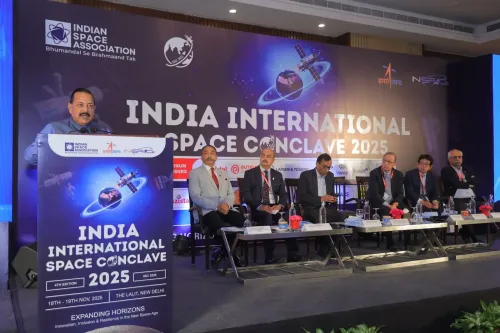
Remarks were made at the third National Space Day event in Ahmedabad on 23 August .
2020 space reforms opened the sector to private companies, startups, and industries without reducing ISRO's role.
Key challenges flagged include space debris , cyber security , data security , and responsible use of artificial intelligence .
Narayanan confirmed India is working towards the Bharatiya Antariksha Station by 2035 , with the first module already approved.
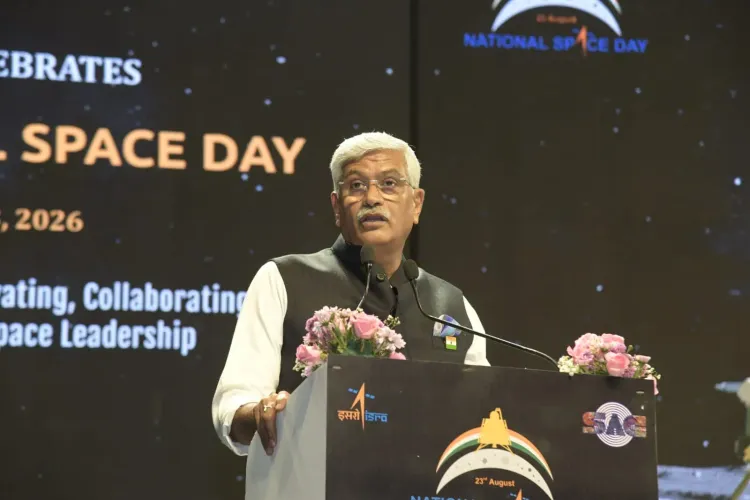
India's space economy is projected to surge from approximately $8.4 billion to nearly $44 billion by 2033, Union Culture and Tourism Minister Gajendra Singh Shekhawat said in Ahmedabad on Sunday, 23 August, as the country observed its third National Space Day. The minister's remarks, delivered at The Forum Convention Centre, underscored India's ambition to emerge as a global space power within the decade.
Scale Beyond Finances
Shekhawat cautioned that the growth of India's space economy should not be measured purely in monetary terms. He said the country would also need to manufacture advanced technologies, generate high-skill employment, commercialise intellectual property, and develop solutions to challenges faced by its citizens. 'Economic expansion alone would not be sufficient,' he noted.
Impact of 2020 Reforms
The minister credited the 2020 space sector reforms with ushering in a new phase for Indian space activity. He said the policy changes had opened greater opportunities for private companies, startups, and industries — without diminishing the central role of the Indian Space Research Organisation (ISRO). 'The changes had created an opportunity to broaden the country's capabilities,' Shekhawat said. Private participation is now generating opportunities across satellite manufacturing, launch services, components, ground support, space applications, and data analytics.
Emerging Challenges
Shekhawat stressed the need to address a set of emerging risks alongside the growth opportunity. He flagged space debris, cyber security, data security, and the responsible use of artificial intelligence as priority concerns. 'Orbit is a shared and limited resource for the entire world,' he said, adding that India would need to take the lead in ensuring that increasing space debris did not become a future obstacle to space activity.
Bharatiya Antariksha Station on the Horizon
ISRO Chairman V. Narayanan said India is working towards establishing the Bharatiya Antariksha Station by 2035, with the first module already approved. The announcement signals a significant expansion of India's long-term space infrastructure ambitions beyond Earth orbit missions.
National Space Day Theme
The event was organised by ISRO's Space Applications Centre under the theme 'Towards Viksit Bharat: Innovating, Collaborating and Aspiring to Global Space Leadership'. Shekhawat said innovation, collaboration, and global leadership were central to India's space ambitions, with young people at the core of all three. As India's private space sector matures, the next milestone will be translating policy momentum into verifiable employment and technology outcomes.
Point of View
But the fivefold jump in under a decade depends heavily on whether private sector participation translates into actual revenue — not just registered startups. The 2020 reforms were a genuine structural shift, yet execution gaps remain: launch frequency, satellite manufacturing scale, and IP commercialisation are all still nascent. The Bharatiya Antariksha Station announcement is strategically significant, but 2035 is a long runway, and India's record on large-programme timelines invites measured optimism. The real indicator to watch is not the economy's size but its composition — how much is indigenous technology versus integration of foreign components.
NationPress
9 Oct 2026
Frequently Asked Questions
What is India's space economy projected to reach by 2033?
India's space economy is projected to grow from approximately $8.4 billion to nearly $44 billion by 2033, according to Union Minister Gajendra Singh Shekhawat. He made the projection at the third National Space Day event in Ahmedabad on 23 August.
What is the Bharatiya Antariksha Station?
The Bharatiya Antariksha Station is India's planned national space station, targeted for establishment by 2035. ISRO Chairman V. Narayanan confirmed that the first module has already been approved.
How did the 2020 space reforms change India's space sector?
The 2020 reforms opened India's space sector to greater private participation, including startups, private companies, and industries. According to Shekhawat, the changes broadened the country's capabilities without reducing ISRO's central role.
What challenges did the minister flag for India's space sector?
Shekhawat identified space debris, cyber security, data security, and the responsible use of artificial intelligence as key emerging challenges. He said India must lead efforts to prevent space debris from obstructing future space activity.
What was the theme of National Space Day 2025?
The third National Space Day, organised by ISRO's Space Applications Centre, was held under the theme 'Towards Viksit Bharat: Innovating, Collaborating and Aspiring to Global Space Leadership'.