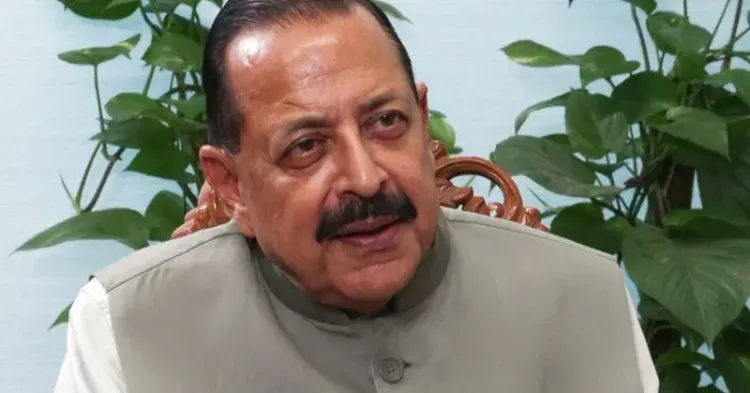
Dr. Jitendra Singh: India space economy to hit $45 bn, Gaganyaan next year
Synopsis
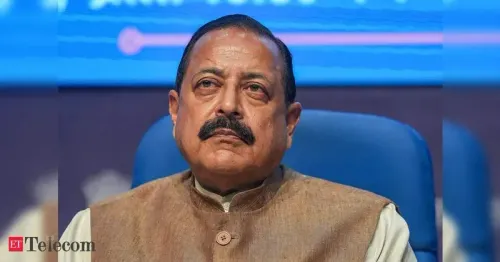
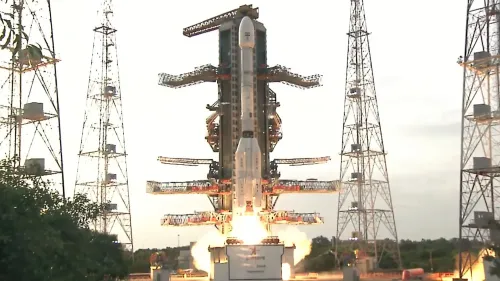
Union Science and Technology Minister Dr. Jitendra Singh has projected India's space economy will grow five-fold to USD 45 billion, while indicating the Gaganyaan human spaceflight mission is likely a year away. The announcement underscores India's accelerating space ambitions backed by ISRO and private-sector reforms.
Key Takeaways
Jitendra Singh projected India's space economy to grow five-fold to USD 45 billion .
The Gaganyaan human spaceflight mission is indicated to launch likely in 2027 .
The Gaganyaan programme was approved by the Union Cabinet in December 2018 with a budget of approximately Rs 10,000 crore .
IN-SPACe , established in June 2020 , opened the sector to private participation and acts as a single-window regulatory body.
India would become the fourth country in the world to independently send humans to space if Gaganyaan succeeds.
The growth target aligns with the Atmanirbhar Bharat framework for indigenous capability in strategic technologies.
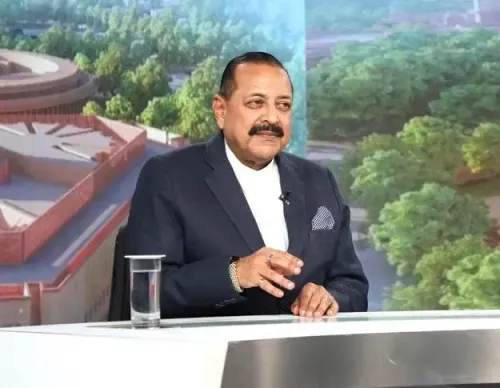
Union Science and Technology Minister Dr. Jitendra Singh on Saturday, 20 June 2026, shared projections that India's space economy is set to grow five-fold to USD 45 billion, while indicating that the Gaganyaan human spaceflight mission is likely to take place next year. The minister's post, tagged with #12yearsOfSeva and #ISRO, highlighted the landmark trajectory of India's space ambitions under the current government.
Context
Dr. Jitendra Singh shared the projection on the occasion of what his post marked as 12 years of governance, underscoring the expansion of India's space sector as a key achievement. The five-fold growth target — from the current base to USD 45 billion — places India among the most ambitious space economies in the world. The minister simultaneously flagged the Gaganyaan crewed orbital mission as being on course for launch in the coming year.
ISRO, India's national space agency operating under the Department of Space, is the primary vehicle for both the commercial space economy expansion and the Gaganyaan programme. The agency has been conducting preparatory uncrewed test flights ahead of the first human spaceflight mission.
Policy Backdrop
The Gaganyaan human spaceflight programme was approved by the Union Cabinet in December 2018 with an initial budget of approximately Rs 10,000 crore. The mission aims to send Indian astronauts into low-Earth orbit aboard a human-rated launch vehicle developed indigenously by ISRO.
In June 2020, the government introduced sweeping space-sector reforms that opened the industry to private participation and established IN-SPACe — the Indian National Space Promotion and Authorisation Centre — as a single-window regulatory body. These reforms have since catalysed a growing ecosystem of private space start-ups and commercial launch service providers, directly contributing to projections of accelerated economic growth in the sector.
The expansion aligns with the broader Atmanirbhar Bharat framework, which prioritises indigenous capability in strategic and high-technology industries. Parallel diplomatic initiatives have included renewed collaboration between ISRO and NASA, as well as India's active participation in multilateral space governance forums.
Stakeholders and Impact
The projected growth to USD 45 billion stands to benefit a wide range of stakeholders — from ISRO scientists and government-linked entities to the rapidly expanding private space industry. Start-ups focused on satellite manufacturing, launch services, space applications, and downstream data services are positioned to capture a significant share of this growth.
For the broader public, the Gaganyaan mission carries symbolic and strategic weight: it would make India only the fourth country in the world to independently send humans to space. Success would also open pathways for India's participation in future international crewed missions and potential lunar or deep-space endeavours.
What's Next
The immediate milestones to watch include the completion of remaining uncrewed Gaganyaan test flights and the formal announcement of a crewed mission date by ISRO. Any new funding allocations or regulatory updates in the next Union Budget or Space Commission meeting will be closely watched by the industry.
With the minister's post signalling political confidence in the timeline, pressure will mount on ISRO to conclude its pre-mission qualification tests on schedule. The five-fold space-economy target will also require sustained policy support, private investment, and international partnerships to be realised within the projected horizon.
Point of View
Timed to the '12 years of seva' milestone, framing the space sector's growth as a governance dividend. The five-fold USD 45 billion projection and the Gaganyaan timeline together construct a narrative of technological nationalism that the ruling dispensation has consistently cultivated around ISRO's achievements. Coming ahead of what could be India's first crewed spaceflight, the minister is staking reputational capital on a mission that has faced multiple schedule revisions, making the 'likely next year' framing both bold and politically consequential. The broader arc connects to India's ambition to be recognised as a Tier-1 space power — commercially, diplomatically, and strategically.
NationPress
19 Sept 2026
Frequently Asked Questions
What is the projected size of India's space economy?
India's space economy is projected to grow five-fold to USD 45 billion , according to projections shared by Union Minister Dr. Jitendra Singh on 20 June 2026.
When will the Gaganyaan human mission launch?
The Gaganyaan crewed mission is indicated to be 'likely next year,' suggesting a 2027 launch window, though ISRO has not yet announced a formal date.
What is the Gaganyaan mission?
Gaganyaan is India's first planned crewed orbital spaceflight mission, approved by the Union Cabinet in December 2018 with a budget of approximately Rs 10,000 crore , aimed at sending Indian astronauts to low-Earth orbit.
How has India opened its space sector to private companies?
In June 2020 , the government introduced reforms establishing IN-SPACe as a single-window agency to regulate and promote private participation in India's space industry.
Who is Dr. Jitendra Singh?
Dr. Jitendra Singh is the Union Minister of State (Independent Charge) for Science and Technology and Earth Sciences, and also holds portfolios in the Prime Minister's Office and Personnel.