Giriraj Singh Shares Gaganyaan Tracking Station Boost in Australia

Synopsis
Union Textiles Minister Giriraj Singh on July 11, 2026, highlighted that a ground tracking station for India's Gaganyaan human spaceflight mission will be established in Australia, strengthening ISRO's global telemetry network and deepening India-Australia space ties under the Quad framework.
Key Takeaways
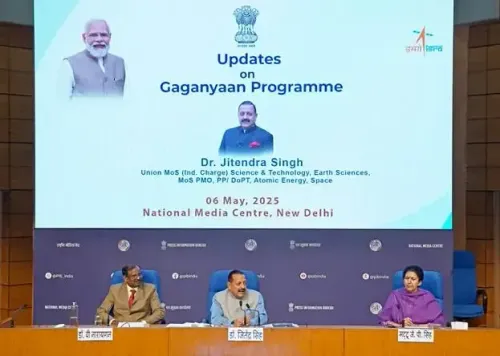
Union Textiles Minister Giriraj Singh shared the Gaganyaan tracking-station development on July 11, 2026 via the NaMo App.
A new ground tracking station for India's Gaganyaan mission is set to be established in Australia .
The Gaganyaan programme was approved by the Union Cabinet in December 2018 with an outlay of approximately ₹10,000 crore .
ISRO requires international ground stations to ensure continuous telemetry and command coverage during crewed orbital missions.
The arrangement with Australia , a Quad partner, reflects India's broader space diplomacy strategy in the Indo-Pacific.
Further unmanned Gaganyaan test flights and a potential formal India-Australia space-cooperation agreement are expected in the coming months.
Union Textiles Minister Giriraj Singh on Saturday, July 11, 2026, shared news of a significant development for India's Gaganyaan human spaceflight mission, highlighting that a new tracking station is set to be established in Australia to bolster the programme's ground support infrastructure.
Context
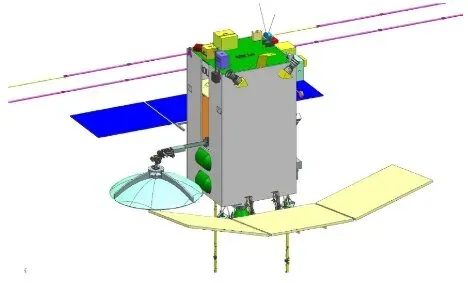
The post, shared via the NaMo App, points to a development wherein a ground tracking station will be set up in Australia to provide telemetry, tracking, and command support for the Gaganyaan mission — India's first planned crewed spaceflight programme. The minister's post, originally in Hindi, reads: 'Bharat ke Gaganyaan Mission ko mili nayi taakat, Australia mein sthapit hoga tracking station' ('India's Gaganyaan Mission gets new strength, a tracking station to be set up in Australia').
Gaganyaan aims to send Indian astronauts to low-Earth orbit aboard a human-rated GSLV Mk III launch vehicle developed by the Indian Space Research Organisation (ISRO). The mission represents a landmark in India's space ambitions and has drawn wide political attention across party lines.
Policy Backdrop
The Union Cabinet approved the Gaganyaan programme in December 2018 with a budgetary outlay of approximately ₹10,000 crore. Since then, ISRO has conducted a series of test flights and abort-mission demonstrations to validate the systems required for a safe crewed launch.
Ground tracking stations are critical to crewed missions because they ensure continuous telemetry and command coverage during orbital passes that domestic networks alone cannot fully provide. India has historically pursued international ground-station agreements with friendly nations to bridge these coverage gaps, and an arrangement with Australia — a fellow Quad partner — fits squarely within that strategy.
Stakeholders and Impact
ISRO scientists and engineers, as well as the Indian astronaut corps currently undergoing training, stand to benefit most directly from expanded tracking infrastructure. Reliable ground coverage reduces mission risk and improves real-time communication windows during crewed orbital operations.
The India-Australia space cooperation dimension also carries diplomatic weight. Both countries have deepened defence and technology ties under the Quad framework, and a formal space-tracking arrangement would add a concrete operational layer to that partnership. For Australia, hosting such a station aligns with its own growing interest in the Indo-Pacific space economy.
What's Next
ISRO is expected to conduct further unmanned Gaganyaan test flights before committing to a crewed launch date. A formal bilateral space-cooperation agreement between India and Australia formalising the tracking-station arrangement may be tabled for parliamentary scrutiny or announced through diplomatic channels in the months ahead.
The broader arc of India's space diplomacy — encompassing similar ground-support facilities in other partner nations — suggests that the Gaganyaan programme is being positioned not just as a national achievement but as a vehicle for deepening India's strategic partnerships across the Indo-Pacific and beyond.
Point of View
Not merely a technical necessity. The fact that a senior Cabinet minister from outside the space portfolio is amplifying this news reflects the BJP government's broad political investment in Gaganyaan as a symbol of national prestige. Observers will watch whether this operational arrangement translates into a formal bilateral agreement, which would mark a qualitative upgrade in India-Australia space ties.
NationPress
10 Oct 2026
Frequently Asked Questions
What is the Gaganyaan mission?
Gaganyaan is India's first planned human spaceflight programme, developed by ISRO, aimed at sending Indian astronauts to low-Earth orbit aboard a human-rated GSLV Mk III rocket. The Union Cabinet approved it in December 2018 with a budget of approximately ₹10,000 crore.
Why is a tracking station being set up in Australia for Gaganyaan?
A ground tracking station in Australia will provide telemetry, tracking, and command support during orbital passes that India's domestic network cannot fully cover, reducing mission risk and improving real-time communication for the crewed mission.
What did Giriraj Singh post about Gaganyaan?
On July 11, 2026, Union Textiles Minister Giriraj Singh shared a post noting that India's Gaganyaan mission has received new strength with a tracking station set to be established in Australia, sharing the update via the NaMo App.
How does the Australia tracking station relate to the Quad?
Australia is a fellow Quad partner of India, and hosting a Gaganyaan ground tracking station adds an operational space-cooperation dimension to the broader defence and technology ties both countries have developed under the Quad framework.
When will Gaganyaan's crewed mission launch?
A confirmed crewed launch date has not been announced. ISRO is expected to conduct further unmanned test flights before committing to a human mission, with the tracking-station arrangement in Australia forming part of the preparatory infrastructure.