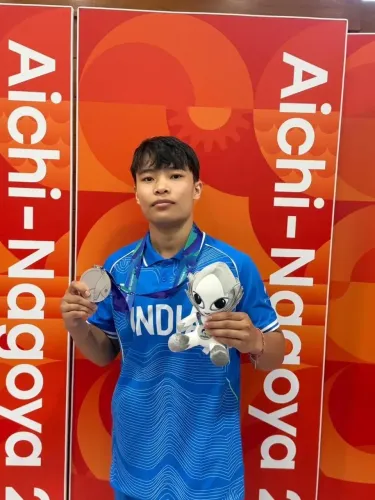
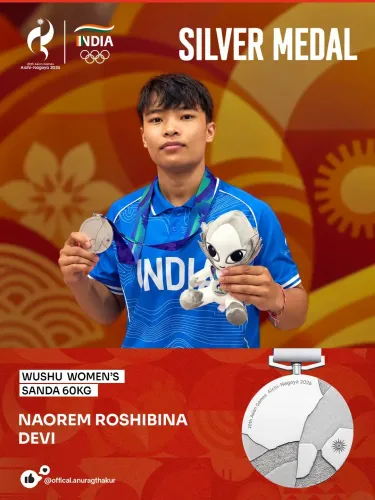
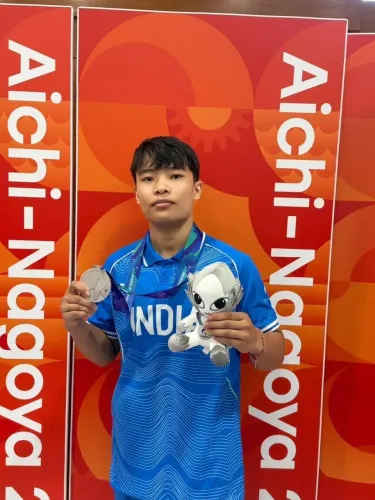
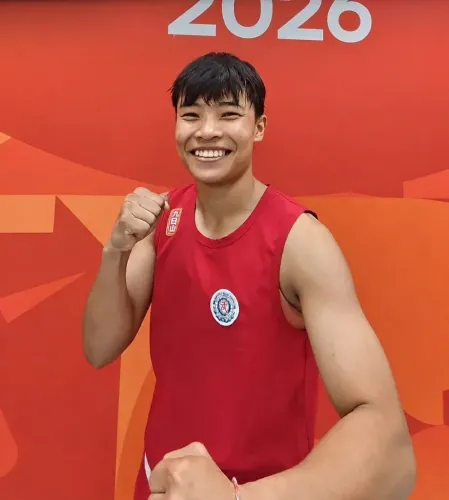
Mandaviya hails India's first Wushu medal at Youth Olympics 2026
Synopsis
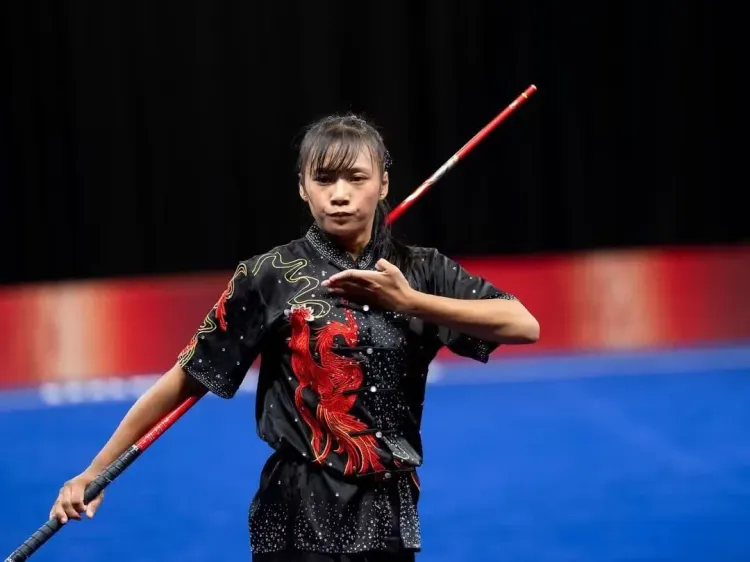
Rajkumari Lanchenbi Chanu wins a bronze medal in women's Changquan at the Youth Olympics 2026, becoming the first Indian Wushu athlete to medal at the Games. Union Sports Minister Mansukh Mandaviya called it a historic moment for Indian Wushu and congratulated the young athlete on X.
Key Takeaways
Rajkumari Lanchenbi Chanu won a bronze medal in women's Changquan at the Youth Olympic Games 2026 .
She is the first Indian Wushu athlete to win a medal at the Youth Olympics in the sport's history at the Games.
Union Sports Minister Mansukh Mandaviya congratulated her on 4 November 2026 , calling it 'a historic moment' for Indian Wushu.
Wushu has been part of the Youth Olympics programme since 2010 ; this is India's first podium finish in the discipline.
Changquan ('long fist') is one of Wushu's most technically demanding taolu (forms) events, combining acrobatics, power, and choreography.
A bronze medal, a first, and a name India will now remember — Rajkumari Lanchenbi Chanu stepped onto the podium at the Youth Olympic Games 2026 in the women's Changquan event, becoming the first Indian Wushu athlete ever to win a medal at the Youth Olympics. Union Labour and Sports Minister Mansukh Mandaviya marked the milestone on Wednesday, 4 November 2026, with an effusive congratulatory post on X.
Posting in Hindi, the minister called it 'ek aitihasik kshaṇ' — 'a historic moment' — for Indian Wushu, and offered warm congratulations to Lanchenbi Chanu for 'making the country proud.' The achievement stands out not simply as a personal triumph for the young athlete but as a barrier broken in a sport that has long fought for visibility on India's sporting map.
Changquan — the discipline that delivered India's breakthrough
Changquan, translated as 'long fist,' is one of Wushu's most technical and athletically demanding taolu (forms) disciplines, requiring a seamless blend of acrobatic power, flexibility, and precise choreography. It has been part of the Youth Olympics programme since the sport's inclusion, but India had never before claimed a podium finish in any Wushu event at these games. Lanchenbi Chanu's bronze ends that wait.
Wushu's quiet climb in India's youth sports pipeline
India has steadily invested in Wushu as part of a broader push to surface talent across Olympic-recognised combat sports. The country's participation in the Youth Olympic Games — a multi-sport event for athletes aged 15 to 18 — has served as a testing ground for disciplines that rarely draw prime-time attention but consistently produce quietly determined competitors. Wushu joined that journey at the Youth Olympics in 2010, and sixteen years on, an Indian athlete has finally converted that patience into precious metal.
Minister Mandaviya's sports portfolio has emphasised grassroots and junior-level pathways as the bedrock of India's long-term Olympic ambitions. A first Wushu medal at the Youth Olympics is precisely the kind of result that validates that framework — small in profile, significant in signal.
The athlete at the centre: Rajkumari Lanchenbi Chanu
Rajkumari Lanchenbi Chanu now joins a select group of Indian Youth Olympians whose podium finishes have foreshadowed careers at the senior level. Her name — rooted in the northeast of India, a region that has long punched above its weight in combat sports — adds another chapter to that tradition. The minister's post leaves no ambiguity: 'Desh ko aap par garv hai' — 'The country is proud of you.'
The question now is whether this bronze becomes a foundation or a ceiling — and given what India's combat-sports pipeline has produced in recent years, history suggests it will be the former.
Point of View
Where patient talent development rarely generates headlines until a moment exactly like this one. The result fits neatly into Sports Minister Mandaviya's public emphasis on grassroots pathways and youth pipelines as the building blocks of future Olympic success. Notably, the win comes from northeast India, a region with a strong martial-arts tradition that has historically been underserved by central sports infrastructure. If the federation and ministry channel attention and resources toward Wushu's emerging athletes now, this bronze could be the start of a recognisable Indian presence in the discipline on the global stage.
NationPress
4 Nov 2026
Frequently Asked Questions
Who is Rajkumari Lanchenbi Chanu?
Rajkumari Lanchenbi Chanu is an Indian Wushu athlete who won a bronze medal in women's Changquan at the Youth Olympic Games 2026, becoming the first Indian Wushu competitor ever to medal at the Youth Olympics.
What is Changquan in Wushu?
Changquan, meaning 'long fist,' is a taolu (forms) discipline in Wushu that combines acrobatic movements, flexibility, power, and precise choreography. It is one of the sport's most technically demanding events and has been part of the Youth Olympics programme since Wushu's inclusion in 2010.
When did Wushu first appear at the Youth Olympics?
Wushu was included in the Youth Olympic Games programme in 2010. India's first-ever medal in the discipline at these games came in 2026 through Lanchenbi Chanu's bronze in women's Changquan.
What did Mansukh Mandaviya say about Lanchenbi Chanu's medal?
Union Sports Minister Mansukh Mandaviya posted on X on 4 November 2026, calling the win 'a historic moment' for Indian Wushu and congratulating Lanchenbi Chanu, writing that 'the country is proud of you.'
What are the Youth Olympic Games?
The Youth Olympic Games is a multi-sport event organised for athletes aged 15 to 18, featuring Olympic-recognised sports including Wushu. It serves as a key development platform for emerging international talent.