Rajnath Singh hails Roshibina Devi's historic Asian Games silver

Synopsis
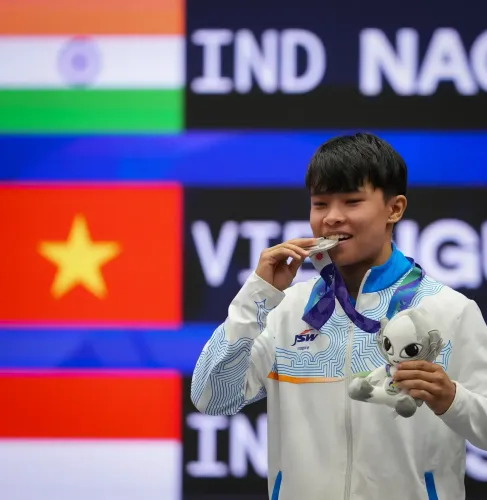
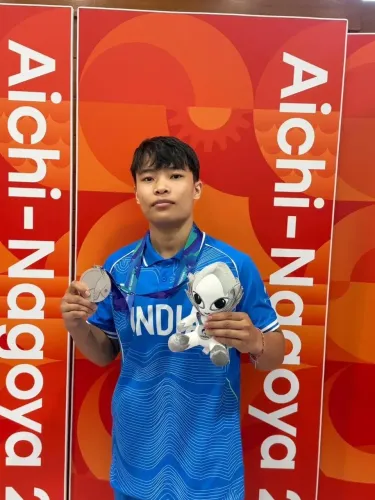
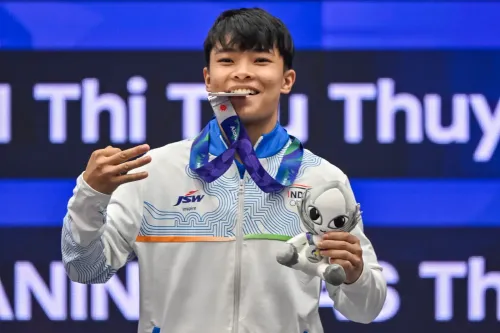
Naorem Roshibina Devi won silver in the Women's 60kg Sanda event at Asian Games 2026, becoming the first Indian Wushu athlete to medal at three consecutive Asian Games. Union Defence Minister Rajnath Singh hailed it as a historic moment and said her achievement would inspire a generation of Indian athletes.
Key Takeaways
Naorem Roshibina Devi won the Silver Medal in the Women's 60kg Sanda event at the Asian Games 2026 .
She is the first Indian Wushu athlete to win medals at three consecutive Asian Games .
Union Defence Minister Rajnath Singh publicly celebrated the achievement on 24 September 2026 , calling it 'a historic moment for Indian Wushu.' Singh said her performance 'will inspire a new generation of Indian athletes to strive for excellence.' Roshibina Devi hails from Manipur , which has a strong tradition of producing elite combat-sports athletes.
The milestone could boost visibility and institutional support for Wushu within India's sports-funding ecosystem.
Three consecutive Asian Games medals. That is the extraordinary mark Naorem Roshibina Devi has now etched into Indian sporting history, becoming the first Wushu athlete from the country to achieve the feat after claiming the Silver Medal in the Women's 60kg Sanda event at the Asian Games 2026. Union Defence Minister Rajnath Singh took to X on Thursday, 24 September 2026, to celebrate the milestone and call it 'a historic moment for Indian Wushu.'
A third Asian Games podium — and a first for Indian Wushu
Singh's post put the achievement in sharp relief: Roshibina Devi has now medalled at three Asian Games in a row, a run of consistency that no Indian Wushu athlete has matched before her. The Women's 60kg Sanda discipline — a full-contact format combining strikes, throws and takedowns — demands not just technique but the physical and mental durability to peak across multi-year cycles. Doing it once is an accomplishment; doing it three times places her in a category of her own within Indian combat sports.
Singh described her performance as 'a remarkable testament to her consistency and determination,' adding that it 'will inspire a new generation of Indian athletes to strive for excellence.' The tribute from one of the government's most senior ministers underlines how the Indian establishment has increasingly recognised Wushu as a discipline worthy of mainstream attention.
Wushu's long climb toward Indian sporting consciousness
Wushu has historically lived in the shadow of more prominent combat sports on the Indian calendar, but athletes like Roshibina Devi have steadily shifted that calculus. The Asian Games — held under the auspices of the Olympic Council of Asia — remains the sport's most prestigious international stage, given Wushu's recurring but unresolved bid for Olympic inclusion. A silver at this level carries genuine weight in the global pecking order of the discipline.
Roshibina Devi hails from Manipur, a state that has produced a disproportionate share of India's combat-sports champions. Her sustained success across Asian Games cycles mirrors a broader pattern of northeastern Indian athletes punching well above the national average in contact disciplines — a trend driven by grassroots infrastructure, coaching lineage, and a deep cultural connection to martial traditions.
What a three-Games medal haul means for Indian Wushu's future
For a sport still building its funding base and institutional support in India, a publicly celebrated milestone like this carries practical consequences. Visibility at the ministerial level often translates into greater attention from the Sports Authority of India and state-level bodies when scholarship, infrastructure, and selection-committee decisions are made. Singh's framing of Roshibina Devi as an inspiration for 'a new generation' signals exactly the kind of symbolic capital that young athletes and coaches in the discipline will point to when making the case for resources.
The silver, not gold, also tells its own story — the competition at the top of Asian Wushu is fierce, and closing in on the podium's summit across three consecutive Games is the next chapter waiting to be written.
Point of View
Inclusive sporting nationalism ahead of India's growing multi-sport ambitions. Roshibina Devi's three-Games medal haul offers a compelling narrative: a northeastern athlete from a historically under-resourced discipline delivering elite consistency on the continent's biggest stage. That visibility could accelerate institutional investment in Wushu at a moment when the sport is pushing hard for a permanent Olympic berth. The political optics of championing a Manipuri woman athlete also carry regional resonance for a government navigating a complex relationship with the northeast.
NationPress
24 Sept 2026
Frequently Asked Questions
Who is Naorem Roshibina Devi?
Naorem Roshibina Devi is an Indian Wushu athlete from Manipur who competes in the Women's 60kg Sanda event. She made history at the Asian Games 2026 by becoming the first Indian Wushu athlete to win medals at three consecutive Asian Games.
What medal did Roshibina Devi win at Asian Games 2026?
Roshibina Devi won the Silver Medal in the Women's 60kg Sanda event at the Asian Games 2026.
Why is Roshibina Devi's achievement historic?
She is the first Indian Wushu athlete ever to win medals at three consecutive Asian Games, a feat no other Indian competitor in the discipline has achieved.
What is Sanda in Wushu?
Sanda is the full-contact combat format within Wushu, combining punches, kicks, throws and takedowns. It is distinct from the choreographic 'Taolu' form of the sport and is contested at major events like the Asian Games.
Why did Rajnath Singh congratulate Roshibina Devi?
Union Defence Minister Rajnath Singh congratulated Roshibina Devi on her Silver Medal at the Asian Games 2026, calling it a historic moment for Indian Wushu and saying her achievement would inspire a new generation of Indian athletes.