Kishan Reddy shares Modi's Diwali remark on Naxal victory
Synopsis
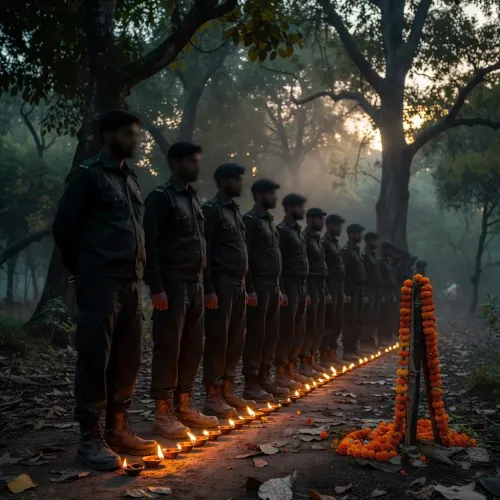
On Diwali 2026, Union Minister G. Kishan Reddy shared PM Narendra Modi's declaration that India had won its decades-long battle against Naxalism and Maoist terrorism — a claim freighted with decades of security history and immediate political significance.
Key Takeaways
Union Coal and Mines Minister G.
Kishan Reddy amplified PM Narendra Modi 's Diwali statement on 8 November 2026 declaring India's victory over Naxalism.
Modi described this Diwali as 'special' — the first after the country 'won its decades-long battle against Naxalism and Maoist terrorism.' Naxalism originated in the late 1960s and was designated India's single biggest internal security challenge by the central government in 2006 .
The government's counter-insurgency effort included Operation Green Hunt (circa 2009–10 ), surrender policies and development programmes across the Red Corridor .
As BJP Telangana state president , Kishan Reddy's amplification carries local weight — Telangana was itself a Naxal-affected state.
Attention now turns to rehabilitation of surrendered cadres and post-conflict development in former Naxal-affected districts.
India's first Diwali after the government declared victory over decades of Maoist insurgency arrived with a pointed message from the top — and Union Coal and Mines Minister G. Kishan Reddy made sure it landed wide, amplifying Prime Minister Narendra Modi's words to the nation on Sunday, 8 November 2026.
Modi's words: a Diwali unlike any before
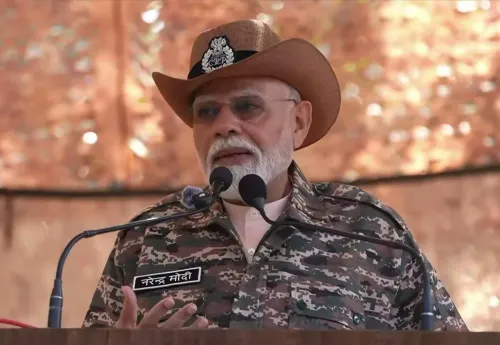
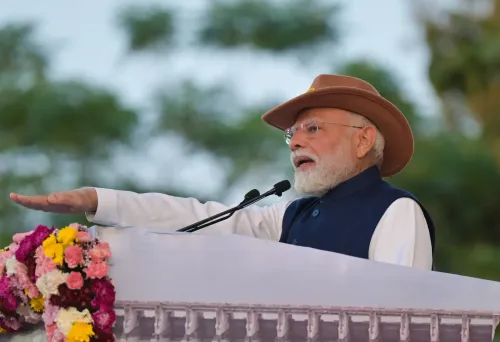
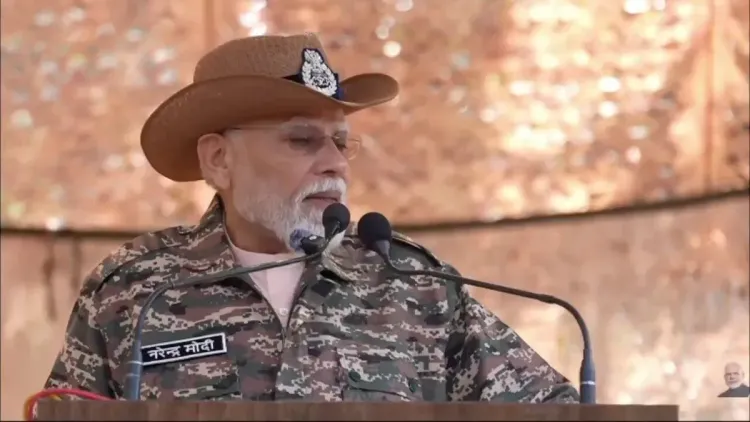
The Prime Minister's statement, quoted verbatim by Kishan Reddy, was spare and deliberate: 'This year's Diwali is special. It is the first Diwali since the country won its decades-long battle against Naxalism and Maoist terrorism.' Six words do the heavy lifting — 'decades-long battle' and 'won'. For a government that has staked considerable political capital on resolving what a previous administration once called India's single biggest internal security threat, the framing is as much historical verdict as festive greeting.
From the Red Corridor to this moment
Naxalism took root in the late 1960s, named after the Naxalbari uprising in West Bengal, and over six decades spread through a swathe of central and eastern India — Chhattisgarh, Jharkhand, Odisha, Telangana, Maharashtra — that came to be known as the Red Corridor. At its peak the CPI (Maoist) movement controlled vast forest tracts, ran parallel administrations, and regularly ambushed security forces. By 2006, the central government had formally designated it the country's foremost internal security challenge.
The two-decade counter-insurgency arc that followed combined kinetic operations — most visibly Operation Green Hunt from around 2009–10 — with surrender and rehabilitation policies and accelerated development spending in affected districts. Official data tracked a long, uneven but unmistakable decline: in the number of districts categorised as Naxal-affected, in annual incident counts, and in casualties on both sides.
Kishan Reddy's amplification — and its Telangana subtext
The minister is not a neutral relay. As BJP Telangana state president, Kishan Reddy represents a state where Maoist presence once ran deep across the Adilabad–Bhadradri belt. Sharing the Prime Minister's declaration on the festival of lights carries a pointed local resonance: Telangana's own communities in former conflict zones are among the most direct beneficiaries if the government's claim holds.
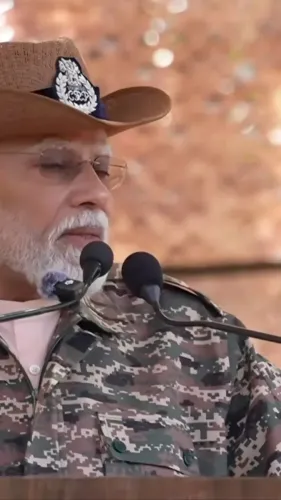
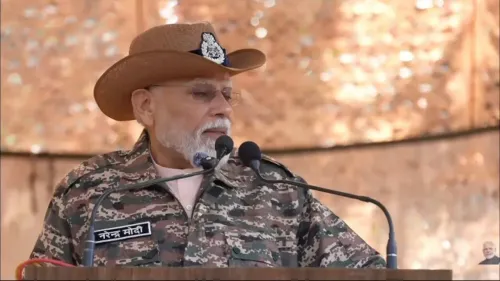
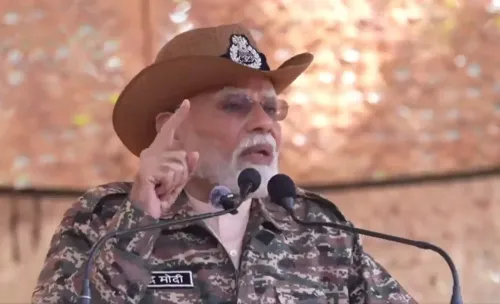
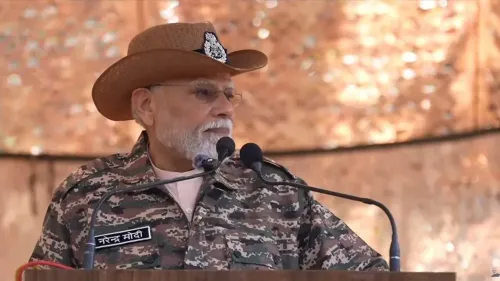
The post also embeds a video — the full clip of the Prime Minister's remarks — giving the message reach well beyond text alone. On a day when political leaders typically post generic greetings, the choice to anchor a Diwali message to a security milestone is a deliberate signal of governance confidence.
What the declaration sets in motion
Official declarations of victory in asymmetric conflicts carry weight — and accountability. If the government has formally closed the chapter, attention will shift quickly to rehabilitation: the thousands of surrendered cadres, the forest communities that bore the brunt of conflict, and the development deficit that insurgency both exploited and deepened. Watchers will look to the Ministry of Home Affairs for a follow-up assessment and to the forthcoming winter session of Parliament for any legislative or budgetary response to post-conflict reconstruction in the erstwhile Red Corridor.
India's longest-running internal insurgency may have reached its formal close. The harder work — rebuilding what six decades of conflict eroded — is just beginning.
Point of View
Closing the Naxal chapter reinforces its law-and-order credentials ahead of any electoral cycle in affected states, particularly in Chhattisgarh, Jharkhand and Telangana. The declaration also shifts the policy burden: once victory is proclaimed, failure to deliver post-conflict development in the former Red Corridor becomes a direct liability rather than a distant aspiration. Kishan Reddy's amplification signals the party intends this narrative to travel hard.
NationPress
8 Nov 2026
Frequently Asked Questions
Has India completely ended Naxalism in 2026?
Prime Minister Narendra Modi declared on Diwali 2026 that India had won its decades-long battle against Naxalism and Maoist terrorism. Official data had shown a sustained decline in violence and affected districts over many years, and the government has now framed the conflict as concluded.
What was the Red Corridor in India?
The Red Corridor was a belt of central and eastern Indian states — including Chhattisgarh, Jharkhand, Odisha, Telangana and Maharashtra — where CPI (Maoist) groups were most active, controlling forest areas and conducting armed operations against security forces and state infrastructure.
What was Operation Green Hunt?
Operation Green Hunt was a large-scale coordinated anti-Naxal security operation launched by the central and state governments around 2009–10, involving paramilitary and state police forces conducting simultaneous offensives across multiple Naxal-affected states.
Why did G. Kishan Reddy share PM Modi's Naxal statement?
G. Kishan Reddy is Union Coal and Mines Minister and BJP's Telangana state president. Telangana was historically one of the Naxal-affected states, so amplifying PM Modi's declaration of victory carries both national political significance and direct local resonance for his constituency.
When did the Indian government first call Naxalism its biggest internal threat?
In 2006, the central government formally described Naxalism as India's single biggest internal security challenge, triggering a sustained two-decade policy response combining security operations, rehabilitation schemes and accelerated development spending in affected districts.