PM Modi heads to Bastar to celebrate Diwali with security forces
Synopsis
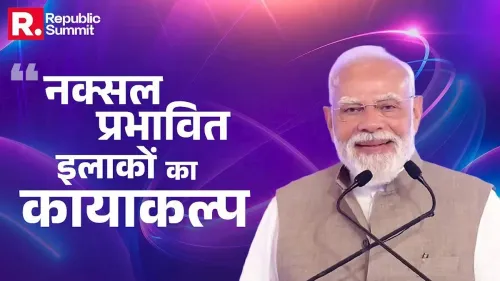
Prime Minister Narendra Modi travelled to Bastar, Chhattisgarh on Diwali 2026 to celebrate with security forces in the region, framing the visit as a salute to their sacrifices and a marker of reclaimed ground from Left Wing Extremism.
Key Takeaways
PM Modi announced on 8 November 2026 that he was heading to Bastar, Chhattisgarh to celebrate Diwali with deployed security forces.
Bastar was long one of India's most active Left Wing Extremism zones; Modi framed the visit as a marker of progress against Naxalism.
The government's LWE strategy combines counter-insurgency operations with infrastructure delivery under schemes including the Integrated Action Plan for LWE-affected areas .
Official data over the past decade have recorded declining violence incidents across the LWE-affected belt in Chhattisgarh, Jharkhand and Odisha .
Modi specifically cited the 'sacrifices, selfless service and unwavering devotion' of security personnel, spotlighting a theatre that has historically received lower national visibility.
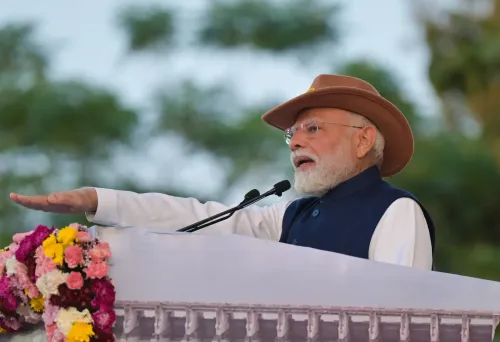
On the morning of Diwali, 8 November 2026, Prime Minister Narendra Modi announced he was travelling to Bastar, Chhattisgarh — once one of India's most volatile Naxal strongholds — to mark the festival with the security personnel who have held the line there for years. It is the kind of gesture that speaks louder than a press release: a sitting Prime Minister, on the country's biggest festival, choosing a forward operational zone over a ceremonial stage.
Posting on X, Modi wrote: 'Heading to Bastar to celebrate Diwali with our brave security forces. This is an area where Naxalism once held sway and now, development is flourishing. I am going to salute our brave security personnel for their sacrifices, selfless service and unwavering devotion to the nation.' In Hindi he added: 'कल तक जहां नक्सलियों का कहर था वहां आज विकास की बहार है' — 'where the terror of Naxalites reigned until yesterday, the bloom of development flourishes today.'
From insurgency heartland to festival ground
Bastar — a sprawling division of densely forested districts in southern Chhattisgarh — spent the better part of two decades as the epicentre of Left Wing Extremism in India. At its peak, Maoist cadres controlled vast stretches of the region, disrupted state administration, and inflicted heavy casualties on security forces and civilians alike. The human cost — measured in ambushes, displacement, and development denied — made Bastar shorthand for one of independent India's most intractable internal security challenges.
The central government's response, anchored since the early 2000s in what policy planners call a 'whole-of-government' dual strategy, combined intensified counter-insurgency operations with accelerated infrastructure delivery — roads, schools, health centres, mobile connectivity — under frameworks including the Integrated Action Plan for LWE-affected areas. Official data over the past decade have recorded a gradual decline in violent incidents across the LWE-affected belt spanning Chhattisgarh, Jharkhand and Odisha, with Bastar division among the areas cited in government progress reports.
Saluting the men and women on the ground
The visit places Modi alongside Central Armed Police Forces jawans and state police personnel who have served in one of the country's most demanding postings — often away from family for months, through monsoons and operations alike. Senior leaders visiting forward locations during Diwali has become a deliberate signal in Indian political communication: it frames the festival not just as a civilian celebration but as a moment of solidarity with uniformed service.
Modi's framing — 'sacrifices, selfless service and unwavering devotion' — reflects the government's consistent effort to publicly honour the LWE-theatre security personnel, a cohort that has historically received less national visibility than counterparts on the northern or western borders.
Development as the other pillar
The Prime Minister's explicit pairing of security progress with development is not incidental. The government's strategic argument has always been that lasting peace in Bastar requires not just the rollback of Maoist presence but the visible delivery of roads, electricity, banking, and connectivity to communities that felt abandoned by the state. Whether the pace and depth of that delivery fully matches the official framing remains a live question — one that the Ministry of Home Affairs periodic LWE district reviews are expected to continue addressing.
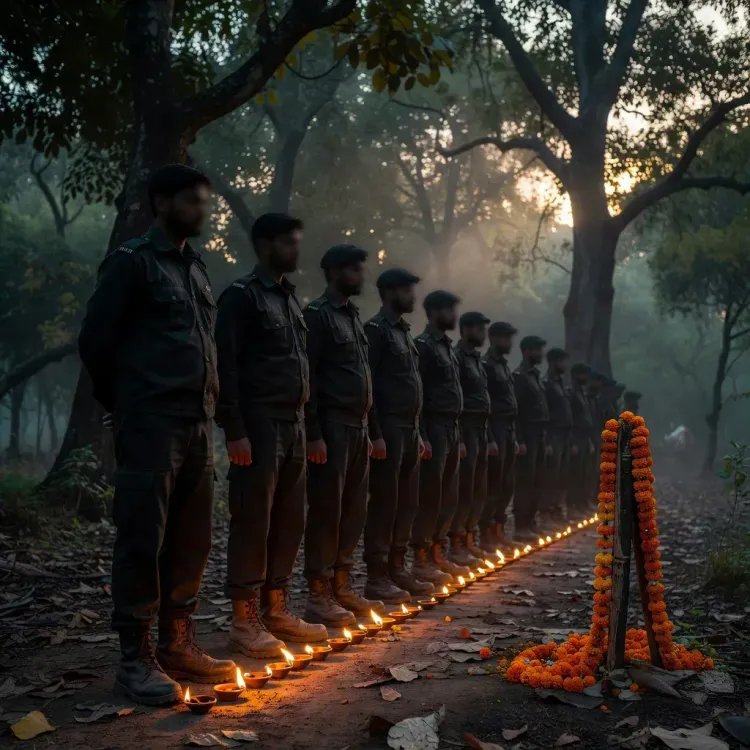
What is clear this Diwali morning is the symbolism Modi is choosing to project: a Prime Minister flying into what was once considered enemy territory to light diyas alongside the people who made it accessible enough for him to do so. That image — the festival arriving in Bastar — is itself the message.
Point of View
Modi is making a political argument through geography: that the dual strategy of force and development has turned a corner. The visit also speaks to the BJP's sustained effort to broaden the optics of Diwali beyond ceremonial trappings, linking the festival to national security themes. Longer-term, the Ministry of Home Affairs' next LWE coverage review will be watched to see whether on-ground conditions in Bastar division substantiate the confidence the visit projects.
NationPress
8 Nov 2026
Frequently Asked Questions
Why did PM Modi go to Bastar on Diwali 2026?
PM Modi travelled to Bastar, Chhattisgarh to celebrate Diwali with security forces deployed there, describing it as a salute to their sacrifices and a recognition of progress in an area once dominated by Naxalite insurgency.
What is the significance of Bastar in India's internal security?
Bastar is a division in southern Chhattisgarh that was for decades the epicentre of Left Wing Extremism in India, where Maoist insurgents controlled large areas and security forces suffered significant casualties.
What is India's strategy against Naxalism in Chhattisgarh?
The central government has pursued a dual approach combining security operations with development programmes — including the Integrated Action Plan for LWE-affected areas — to reduce Maoist influence and deliver infrastructure to affected communities.
Has Naxal violence in Bastar actually decreased?
Official government data over the past decade have shown a gradual reduction in violent incidents across the LWE-affected belt in Chhattisgarh, Jharkhand and Odisha, though independent assessments of on-ground conditions continue to be a subject of review.
Which security forces are deployed in Bastar?
Central Armed Police Forces — including the CRPF and other paramilitary units — alongside Chhattisgarh state police are deployed in Bastar division for counter-insurgency operations against Left Wing Extremism.