CM Sai: Chhattisgarh Writing New Chapter Free from Naxalism
Synopsis
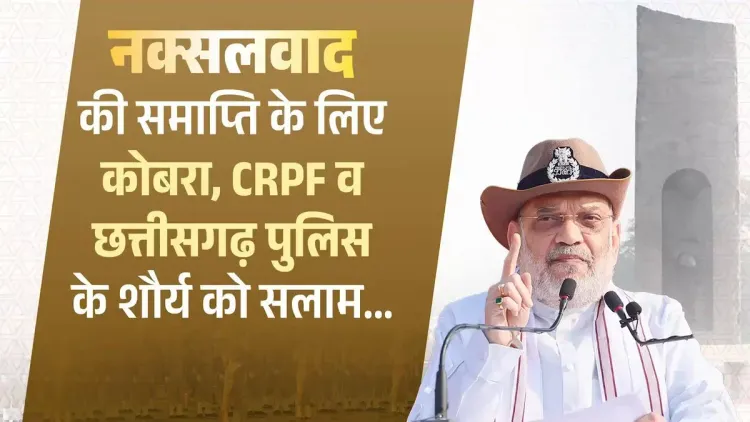
Chhattisgarh CM Vishnu Deo Sai on 21 October 2026 saluted COBRA, CRPF, and state police troopers, declaring that Bastar — long the heartland of India's Naxalite insurgency — is now entering a new era of peace and development under PM Modi and Home Minister Amit Shah's direction.
Key Takeaways
CM Vishnu Deo Sai declared on 21 October 2026 that Chhattisgarh is 'freed from Naxalism' and writing a new development chapter.
He credited PM Narendra Modi's guidance and Union Home Minister Amit Shah's resolve for the transformation.
The COBRA battalion , CRPF , and Chhattisgarh Police were specifically honoured for their role in counter-insurgency operations.
Bastar division , southern Chhattisgarh, was identified as the primary zone of change — shifting from fear to peace and opportunity.
India's 2015 National Policy and Action Plan combined security operations with development in Naxal-affected districts, forming the policy backbone of the effort.
A formal district-wise Naxal-free declaration from the Ministry of Home Affairs remains the institutional benchmark yet to be confirmed.
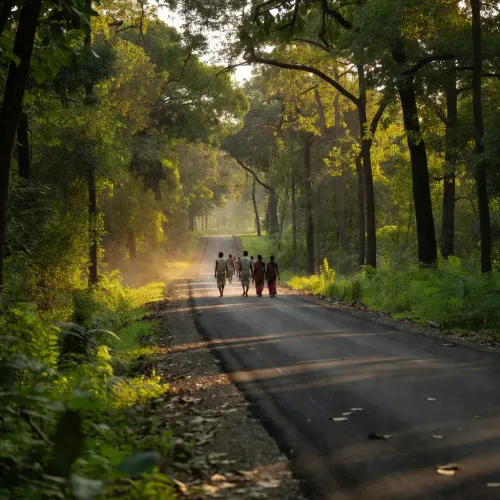
Where fear once ruled the forest paths of Bastar, children now carry dreams — that is the declaration Chhattisgarh Chief Minister Vishnu Deo Sai made on Wednesday, 21 October 2026, honouring the security forces he credits with turning the tide against decades of Naxalite insurgency in the state.
In a post addressed to Prime Minister Narendra Modi and Union Home Minister Amit Shah, CM Sai wrote in Hindi: 'Hamaara Chhattisgarh aaj Naxalwad se mukt hokar vikas ka naya adhyaay likh raha hai' — 'Our Chhattisgarh today, freed from Naxalism, is writing a new chapter of development.' The message was as much a tribute as it was a political milestone, saluting the troopers of COBRA (Commando Battalion for Resolute Action), the CRPF, and the Chhattisgarh Police who, in his words, 'staked their lives in the most difficult conditions, away from their own families, so that peace and prosperity could return to every family in Bastar.'
Bastar's Long Shadow — and What Changed
Bastar division, a sprawling forested expanse in southern Chhattisgarh, has been the primary theatre of India's Left Wing Extremism conflict for more than three decades. Maoist cadres exploited the region's dense terrain, historical governance gaps, and tribal grievances to entrench a parallel authority that at its peak stretched across what security planners called the 'Red Corridor' — running from the Nepal border to Andhra Pradesh.
India's coordinated counter-insurgency framework, anchored by the 2015 National Policy and Action Plan to combat Left Wing Extremism, paired aggressive security operations with targeted development: roads into previously inaccessible villages, mobile connectivity, and welfare delivery in districts long starved of state presence. The COBRA battalion — a specialised jungle-warfare unit carved out of the CRPF — became the operational tip of that effort in forested terrain.
The Political Frame: Modi, Shah, and a BJP Governance Claim
CM Sai explicitly situated the claimed transformation inside a Modi-government narrative, crediting the Prime Minister's 'guidance' and Home Minister Shah's 'resolve' (sankalp shakti). Amit Shah has made the elimination of Naxalism a stated priority of his tenure at the Ministry of Home Affairs, repeatedly setting public timelines for clearing affected districts. BJP-governed states have consistently framed security gains in insurgency zones as proof of development-oriented governance — and Sai's post fits squarely within that tradition.
It is worth noting that the research base flags the post's claim of Chhattisgarh being fully Naxal-free as unverified; a formal district-wise declaration from the Ministry of Home Affairs remains the benchmark the security establishment typically uses.
A Salute to Sacrifice — and a Promise
The emotional core of the post was a bow to the fallen. 'In every smile in Bastar, there is a share of the sacrifice, dedication, and martyrdom of these brave soldiers,' CM Sai wrote. He pledged to build a 'peaceful, prosperous, and developed Chhattisgarh' as a tribute to their supreme sacrifice, closing with 'Jai Hind!'
The statement tagged @CGPoliceDept and @crpfindia — a deliberate institutional acknowledgement of the two pillars on which Bastar's security architecture has rested. For the families of troopers who served in some of the most treacherous conditions in Indian counter-insurgency history, the Chief Minister's message carried a straightforward weight: the nation, he said, 'will remain forever indebted to these brave soldiers and their families.'
Whether Bastar's calm holds — and whether the Ministry of Home Affairs follows with a formal status upgrade and fresh development funding — is the question that now hangs over the next chapter CM Sai promises is already being written.
Point of View
Making it resonate with a public that has followed the human cost of Bastar's long conflict. The unanswered question is institutional verification: until the Ministry of Home Affairs formally designates districts as Naxal-free and unlocks corresponding development funding, the 'new chapter' remains a political assertion rather than an administrative milestone. If and when that formal status comes, Chhattisgarh becomes a template the BJP will deploy nationally as proof that the Modi-Shah security doctrine delivers.
NationPress
21 Oct 2026
Frequently Asked Questions
Has Chhattisgarh been officially declared Naxal-free in 2026?
CM Vishnu Deo Sai's post on 21 October 2026 claims Chhattisgarh is now free from Naxalism, but a formal district-wise declaration from the Ministry of Home Affairs — the standard official benchmark — has not been confirmed in available records.
What is COBRA and what role did it play in Bastar?
COBRA stands for Commando Battalion for Resolute Action, a specialised jungle-warfare unit of the CRPF created specifically for anti-Naxal operations in forested terrain. It has been one of the primary forces deployed in Bastar, Chhattisgarh.
What is India's policy for fighting Naxalism?
India's 2015 National Policy and Action Plan to combat Left Wing Extremism combines security operations with development programmes — roads, connectivity, and welfare delivery — in affected districts, aiming to eliminate both the armed threat and the conditions that sustain it.
Why is Bastar significant in the context of Naxalism?
Bastar division in southern Chhattisgarh has been the most entrenched theatre of India's Maoist insurgency for over three decades, due to its dense forest cover, historical governance gaps, and the Maoist strategy of building a base among tribal communities.
Who is Vishnu Deo Sai and when did he become CM of Chhattisgarh?
Vishnu Deo Sai is a BJP leader who became Chief Minister of Chhattisgarh in December 2023 following the party's victory in the state assembly elections. He has focused on post-insurgency development, particularly in the Bastar region.