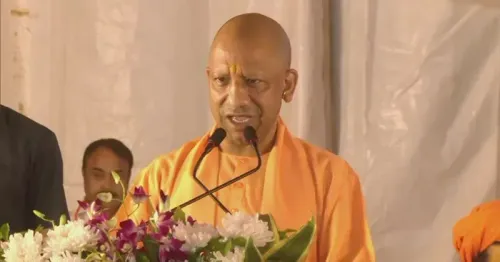
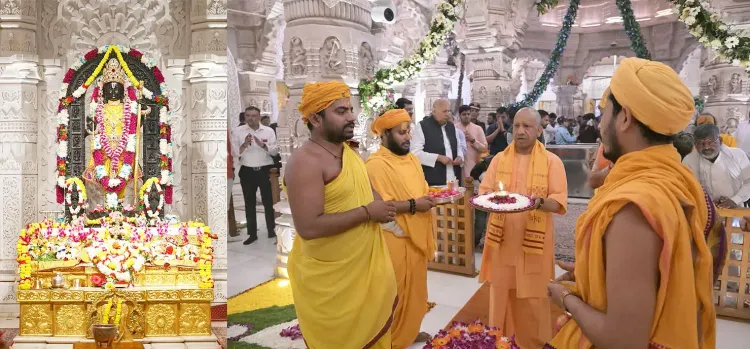
CM Yogi offers prayers at Ayodhya Ram Temple on Diwali
Synopsis
Uttar Pradesh Chief Minister Yogi Adityanath marked Diwali 2026 with a visit to Ayodhya Dham to offer prayers before Shri Ramlala, praying for national progress, societal welfare, and universal well-being, reinforcing Ayodhya's centrality in both his spiritual and governance vision.
Key Takeaways
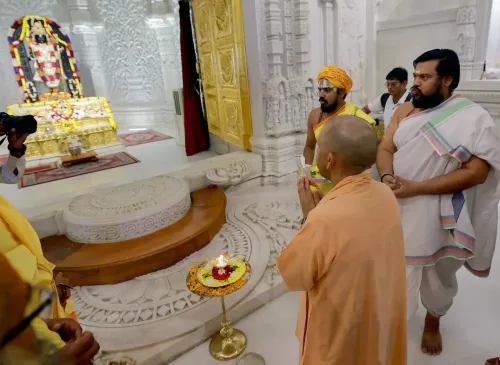
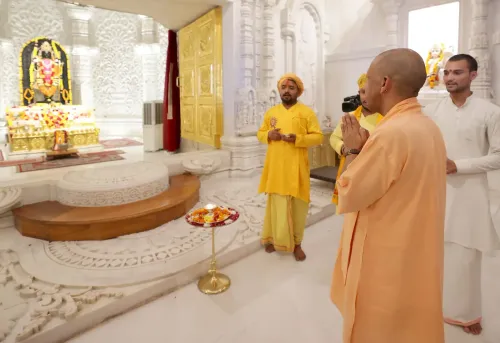
CM Yogi Adityanath visited Ayodhya Dham on Diwali to perform darshan-pujan before Shri Ramlala .
He opened his post with a Sanskrit devotional shloka saluting Lord Ram as the supreme refuge and consort of Sita.
He described Diwali as a festival embodying Sanatan culture, dharma, truth, and India's spiritual heritage.
His prayers were offered for the 'nation's progress, society's welfare, and universal well-being.' The visit follows the consecration of the Ram Temple at Ayodhya on 22 January 2024 and ongoing state-led development of Ayodhya as a heritage destination.
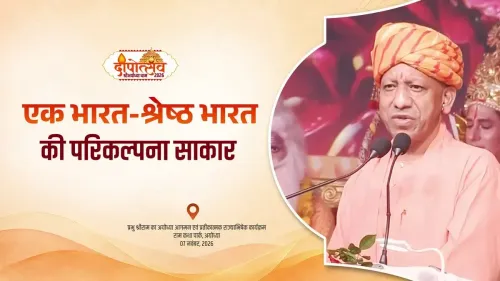
On the morning of Diwali, Uttar Pradesh Chief Minister Yogi Adityanath travelled to Ayodhya Dham to offer darshan-pujan (prayers and worship) before Shri Ramlala, seeking blessings for the nation's progress, societal welfare, and universal well-being.
Opening with the Sanskrit shloka 'Ramaya Ramabhadraya Ramachandraya vedhase, Raghunathaaya naathaaya Sitayah pataye namah' — a devotional salutation to Lord Ram as the supreme, the refuge, and the consort of Sita — the Chief Minister framed Diwali not merely as a festival of lights but as the living expression of Sanatan Sanskriti (the eternal Sanatana civilisation): a celebration of dharma, truth, and spiritual heritage embodied in the ideals of Maryada Purushottam (the exemplar of virtue), Lord Shri Ram.
Prayers at the heart of the Ram Temple
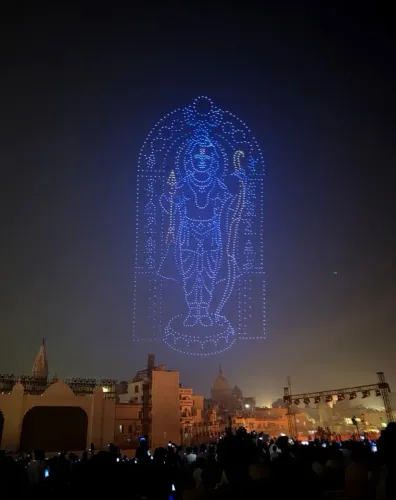
The visit to Ayodhya Dham — the ancient city in Uttar Pradesh revered as Lord Ram's birthplace — carries particular weight in the post-consecration era. The Ram Temple was consecrated on 22 January 2024, a moment that redefined Ayodhya's place on India's spiritual and political map. Since then, the Uttar Pradesh government has aggressively expanded infrastructure and tourism development around the site, positioning the city as a premier pilgrimage destination.
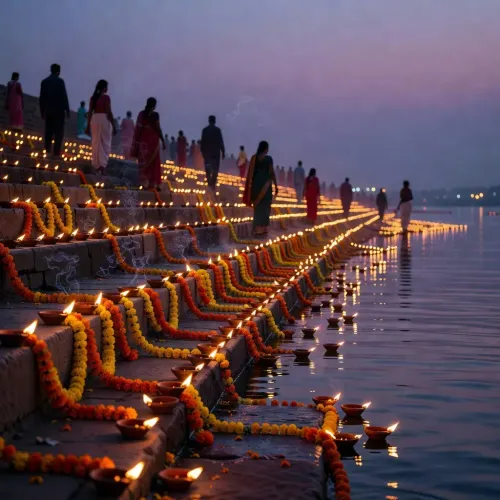
Diwali's traditional narrative — celebrating Lord Ram's return to Ayodhya after fourteen years of exile and his victory over Ravana — makes the city the natural epicentre of the festival. For Chief Minister Adityanath, heading the Gorakhnath Math as well as the state government, performing darshan here on this day fuses personal devotion with public symbolism in a single gesture.
Ram-centric symbolism as a governance signature
This Diwali visit is consistent with a recurring pattern in CM Yogi Adityanath's public conduct: invoking Ram-centric and Sanatan cultural values at major festivals to underscore both spiritual continuity and the state government's development mission in Ayodhya. The post concludes with the salutation 'Jai Shri Ram' — three words that, in contemporary Uttar Pradesh, carry resonance far beyond religious greeting.
With Ayodhya's transformation into a year-round pilgrimage hub still unfolding, every high-profile visit by the Chief Minister doubles as a signal to devotees, tourists, and investors alike: the state's commitment to this city as India's spiritual capital is not seasonal — it is structural.
This Diwali, the diyas lit at Ramlala's sanctum burn with more than tradition — they illuminate a chapter of Ayodhya's story that is still being written.
Point of View
' the Chief Minister signals a consistent ideological register that distinguishes UP's governance identity from other BJP-led states. At a time when Ayodhya's tourism and infrastructure buildout remains a work in progress, the optics of the Chief Minister at Ramlala's sanctum on Diwali morning serve both devotional and developmental messaging simultaneously.
NationPress
8 Nov 2026
Frequently Asked Questions
Where did CM Yogi Adityanath go on Diwali 2026?
CM Yogi Adityanath visited Ayodhya Dham on Diwali 2026 to offer darshan-pujan (prayers and worship) before Shri Ramlala at the Ram Temple.
What did CM Yogi pray for at the Ram Temple on Diwali?
He prayed for the nation's progress ('rashtra ke utthan'), societal welfare ('samaj ke kalyan'), and universal well-being ('sarvatra mangal').
What is the significance of Diwali in Ayodhya?
Diwali traditionally celebrates Lord Ram's return to Ayodhya after fourteen years of exile and his victory over Ravana, making Ayodhya the spiritual heart of the festival.
When was the Ram Temple at Ayodhya consecrated?
The Ram Temple at Ayodhya was consecrated on 22 January 2024, after which the Uttar Pradesh government accelerated infrastructure and tourism development around the site.
What Sanskrit shloka did CM Yogi Adityanath quote in his Diwali post?
He quoted the shloka 'Ramaya Ramabhadraya Ramachandraya vedhase, Raghunathaaya naathaaya Sitayah pataye namah' — a devotional salutation to Lord Ram as the supreme, the refuge, and the consort of Sita.