CM Yogi, VP Radhakrishnan Light Up Ayodhya's Deepotsav 2026
Synopsis
Chief Minister Yogi Adityanath, Vice President C.P. Radhakrishnan, and Governor Anandiben Patel gathered at Ram Ki Paidi in Ayodhya for Deepotsav 2026, marking the festival's tenth consecutive year and reinforcing the city's stature as India's premier pilgrimage destination.
Key Takeaways
Deepotsav 2026 was held on 8 November 2026 at Ram Ki Paidi , Ayodhya.
Chief Minister Yogi Adityanath , Vice President C.P.
Radhakrishnan , and Governor Anandiben Patel attended together.
The 2026 edition marks ten consecutive years of Deepotsav, commemorated with the hashtag #deepostav1dasak .
Uttar Pradesh has organised Deepotsav annually since 2017 as part of its Ayodhya cultural-tourism push.
The festival follows the 2024 Ram Temple consecration , which significantly elevated Ayodhya's national and religious profile.
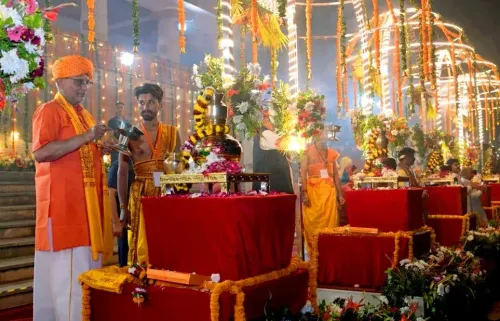
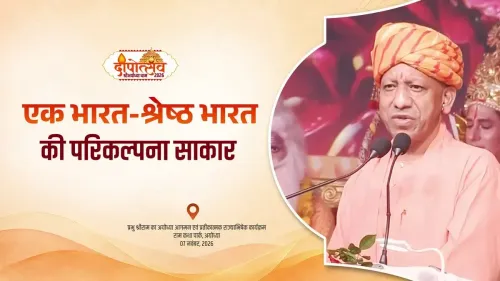
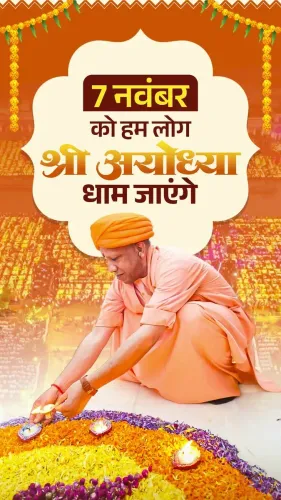
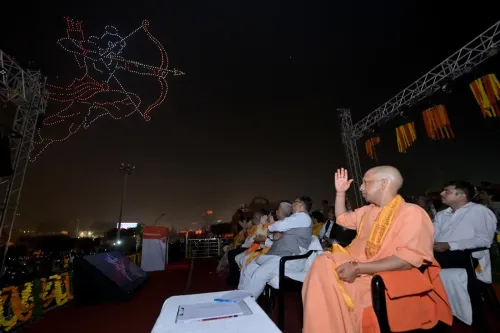
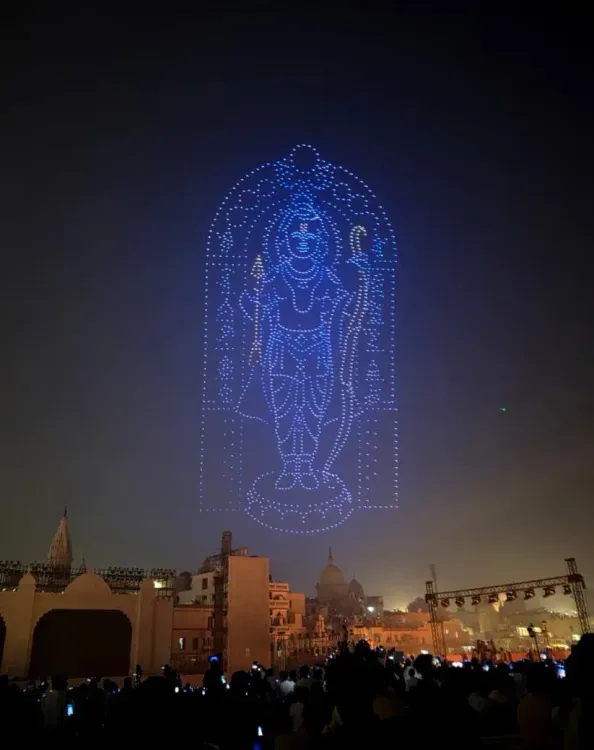
A verse from the Ramcharitmanas set the tone — 'sagun hohin sundar sakal, man prasann sab ker' (all omens are auspicious, every heart is glad) — and on the night of 8 November 2026, the ghats of Ayodhya lived up to every syllable of it. The Chief Minister's Office of Uttar Pradesh confirmed that Chief Minister Yogi Adityanath, Vice President C.P. Radhakrishnan, and Governor Anandiben Patel jointly attended the grand Deepotsav 2026 celebration at Ram Ki Paidi, marking a decade of the festival's unbroken run.
A Decade on the Banks of the Sarayu
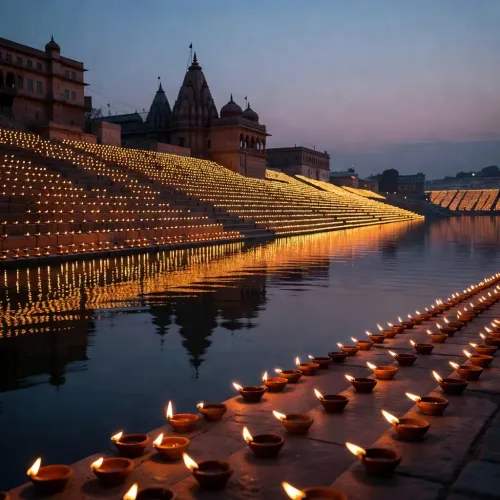
The hashtag #deepostav1dasak — 'one decade of Deepotsav' — tells the story in a single tag. Since 2017, the Uttar Pradesh government has staged this festival of lamps on the Sarayu riverfront every year without interruption, steadily scaling it into one of India's most photographed public spectacles. What began as a cultural statement has grown into an annual assertion of Ayodhya's identity as the country's pre-eminent pilgrimage city.
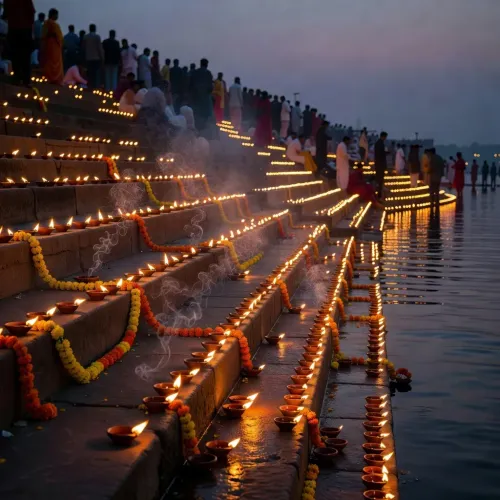
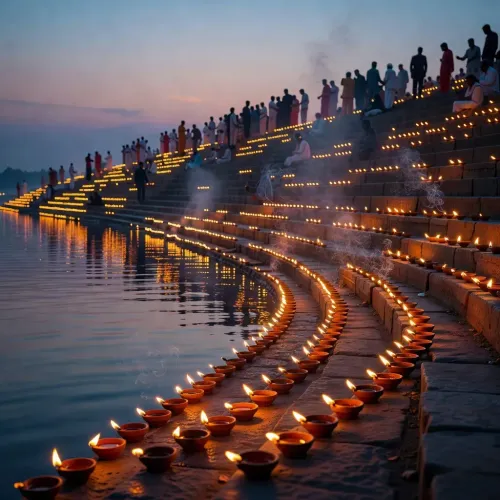
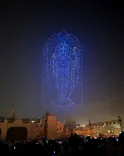
Ram Ki Paidi, the historic stepped ghat that serves as the festival's central stage, transforms each year into a river of flame — thousands of earthen diyas arranged along the waterfront in patterns visible from the air. The 2026 edition carries the added weight of being the first Deepotsav to complete a full decade, lending the gathering of constitutional dignitaries an unmistakably ceremonial gravity.
Three Constitutional Offices, One Riverbank
The presence of Vice President Radhakrishnan alongside the Governor and the Chief Minister is not incidental. When the second-highest constitutional office in the land shares a dais at a state cultural festival, it signals that Ayodhya's reinvention has moved well beyond regional politics into the national imagination. High-level attendance of this kind has been a deliberate feature of successive Deepotsav editions — a way of broadcasting the event's scale to a national audience.
The 2024 Ram Temple consecration sharpened that signal considerably. With the temple now open to pilgrims, each subsequent Deepotsav doubles as a showcase for the broader tourism and infrastructure investment the state government has poured into the city — new ghats, riverfront promenades, and connectivity upgrades that together aim to handle a sustained surge in footfall.
What the Tenth Edition Means for Ayodhya's Tourism Arc
A ten-year festival cycle is long enough to measure real change. Uttar Pradesh's sustained push to position Ayodhya as a major religious tourism destination has made Deepotsav its most visible annual proof point — a live demonstration, repeated every November, that the city can host spectacle at scale. Visitor numbers, illumination records, and any infrastructure or tourism announcements tied to the 2026 edition will be the metrics that tell whether the decade of investment is compounding.
For now, the diyas are lit, the dignitaries are present, and the Sarayu reflects it all back. Ten years in, Deepotsav is no longer just a festival — it is Ayodhya's annual report to the nation.
Point of View
Footfall, and political will. The simultaneous presence of the Vice President, Governor, and Chief Minister at the tenth edition elevates it from state ceremony to a national-level endorsement. Coming two years after the Ram Temple consecration, the 2026 festival tests whether Ayodhya's infrastructure can absorb the pilgrimage surge that consecration unlocked. The decade milestone also gives the ruling dispensation a clean narrative arc: ten years, one city, a visible before-and-after.
NationPress
8 Nov 2026
Frequently Asked Questions
What is Deepotsav 2026 and where was it held?
Deepotsav 2026 is the tenth edition of Uttar Pradesh's annual festival of lamps, held at Ram Ki Paidi on the Sarayu riverfront in Ayodhya on 8 November 2026.
Who attended Deepotsav 2026?
Chief Minister Yogi Adityanath, Vice President C.P. Radhakrishnan, and Governor Anandiben Patel attended the Deepotsav 2026 celebrations at Ram Ki Paidi, Ayodhya.
When did Deepotsav start in Ayodhya?
The Uttar Pradesh government launched Deepotsav in 2017 as an annual celebration on the Sarayu ghats to promote Ayodhya's cultural heritage and religious tourism.
What is Ram Ki Paidi in Ayodhya?
Ram Ki Paidi is a historic stepped ghat on the banks of the Sarayu river in Ayodhya and serves as the main venue for the Deepotsav illumination ceremony each year.
Why is Deepotsav 2026 significant?
Deepotsav 2026 marks the festival's tenth consecutive year, celebrated under the hashtag #deepostav1dasak, and is the second Deepotsav since the 2024 Ram Temple consecration, making it a key showcase for Ayodhya's religious tourism ambitions.