CM Yogi, VP Join Saryu Aarti at Ayodhya Deepotsav 2026
Synopsis
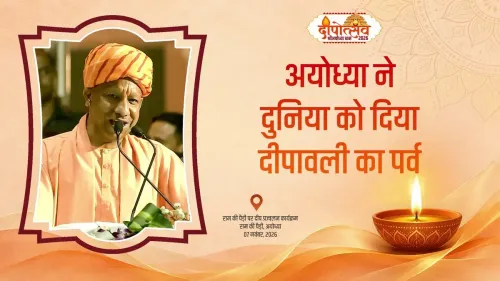
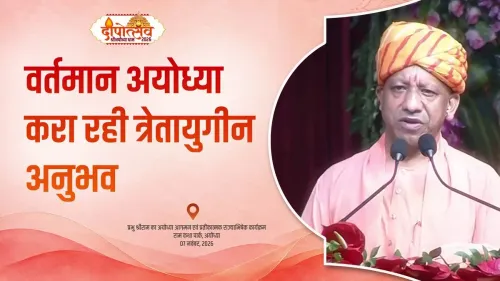
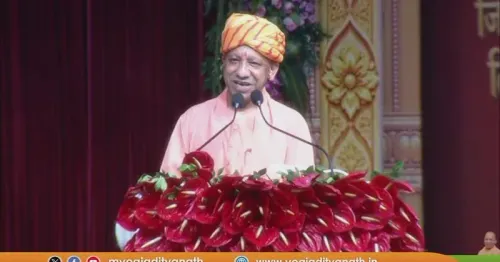
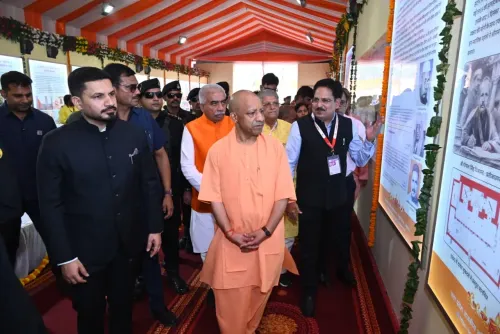
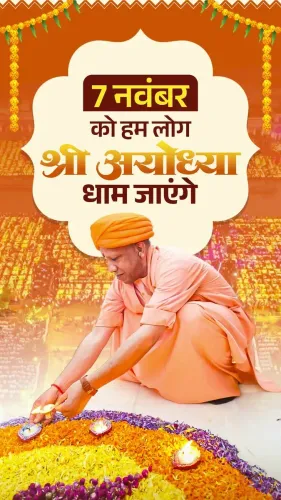
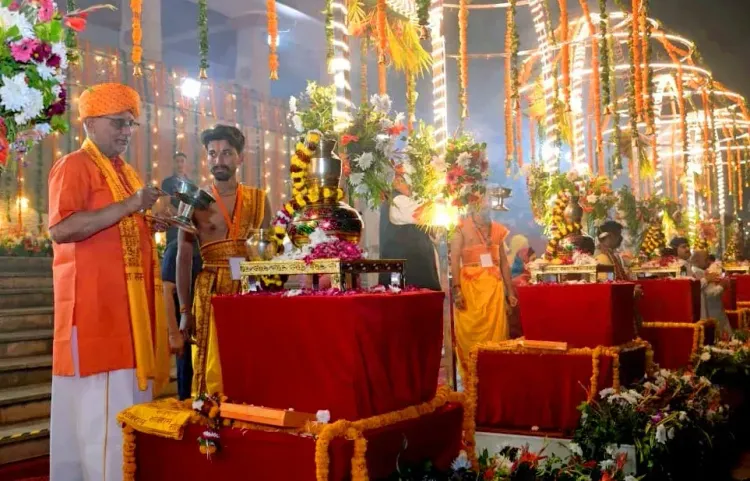
Chief Minister Yogi Adityanath and Vice President C.P. Radhakrishnan joined the divine Saryu river aarti at Ayodhya's Deepotsav 2026 on November 7, marking what appears to be the festival's tenth edition and one of its most prominent gatherings yet.
Key Takeaways
CM Yogi Adityanath and Vice President C.P.
Radhakrishnan participated together in the Saryu aarti at Ayodhya Dham on November 7, 2026 .
Deepotsav 2026 carries the hashtag #deepostav1dasak , indicating the festival is marking its tenth year .
Deepotsav was first launched in Ayodhya in 2017 as a state-supported annual festival of lights along the Saryu river.
The Chief Minister's Office opened its post with a verse from the Ramcharitmanas , anchoring the event in classical devotional literature.
The Vice President's attendance elevates the 2026 edition to a national-level occasion, reflecting Ayodhya's growing prominence as a pilgrimage and cultural destination.
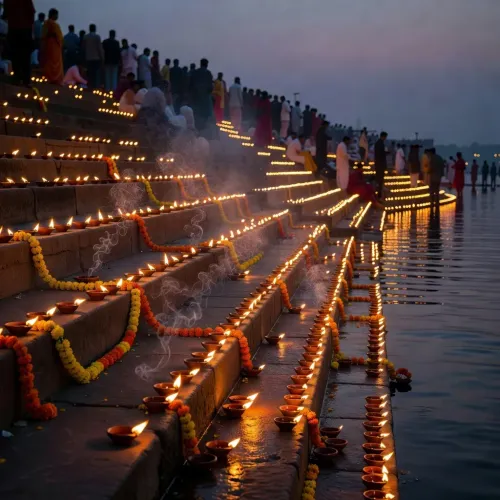
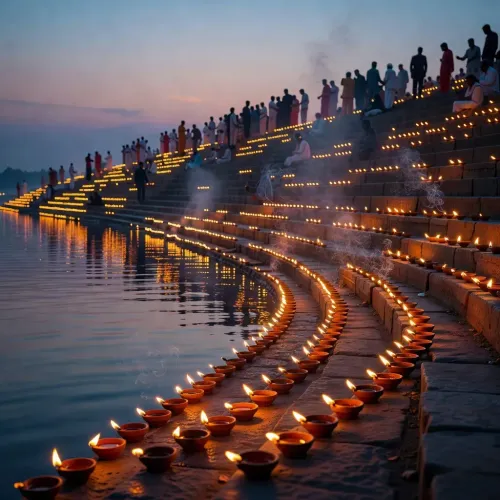
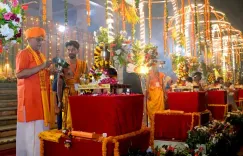
On the banks of the sacred Saryu river in Ayodhya, flames multiplied by the thousands on the evening of Saturday, November 7, 2026 — as Chief Minister Yogi Adityanath and the Vice President of India, C.P. Radhakrishnan, stood together for the divine aarti of Punya Salila Maa Saryu, the river long woven into the spiritual fabric of this ancient city.
The Chief Minister's Office of Uttar Pradesh shared the moment on X, opening with a verse from the Ramcharitmanas — 'Saraju naam sumangal moola, lok bed mat manjul koola' — meaning 'The Saryu, whose very name is the root of all auspiciousness, whose banks are celebrated in scripture and in the hearts of the people.' The post confirmed both leaders participated in the Deepotsav 2026 celebrations under the hashtags #Deepotsav2026 and #deepostav1dasak, the latter suggesting this edition marks a decade of the festival.
A Decade of Diyas: Deepotsav Turns Ten
Deepotsav was launched as a state-supported cultural event in Ayodhya in 2017, the same year CM Yogi Adityanath assumed office. What began as a symbolic rekindling of Ayodhya's religious identity has grown into one of the largest festival-of-lights spectacles in the country, with hundreds of thousands of earthen lamps lit along the Saryu ghats each year. The hashtag #deepostav1dasak — referencing one decade — lends the 2026 edition a milestone weight that sets it apart from previous years.
The Vice President's presence alongside the Chief Minister elevates this year's event to a national occasion, signalling that Ayodhya's cultural resurgence has moved firmly from state ambition to the centre of India's civilisational narrative.
Ayodhya's Transformation as the Stage
Ayodhya, regarded as the birthplace of Lord Rama, has been the focal point of Uttar Pradesh's religious tourism push since 2017. The inauguration of the Ram Mandir added further momentum to what was already a sustained infrastructure and pilgrimage-development drive. Deepotsav sits at the heart of that effort — a cultural event engineered to draw pilgrims, tourists, and national attention to the city's riverfront simultaneously.
Each edition has attempted to outscale the last, whether in the number of diyas lit, the length of the illuminated ghats, or the prominence of guests in attendance. A Vice Presidential visit to the aarti suggests 2026 is no exception.
The Saryu Aarti: Ritual at the Centre of It All
The aarti of the Saryu — performed at dusk with lamps, incense, and Sanskrit chants — is not a new tradition. What is new is its scale and its political visibility. The Tulsidas verse chosen to open the official post is deliberate: it frames the river not merely as geography but as scripture, anchoring the state's celebration in classical devotional literature. For pilgrims arriving in Ayodhya Dham, the sight of a Chief Minister and a Vice President standing at the riverbank with the same flame they carry is a powerful image of institutional reverence for living tradition.
As the tenth Deepotsav closes its curtains on the Saryu ghats, the question the next edition will have to answer is simple: how do you outshine a decade?
Point of View
Transforming a local river ritual into a nationally televised spectacle. The Vice President's participation in 2026 marks a step-change in the event's institutional stature, suggesting the Centre views Ayodhya's cultural revival as a shared national project rather than purely a state initiative. Hitting a decade also gives the Yogi administration a milestone to consolidate its narrative around Ayodhya's transformation — from a contested city to what the state explicitly brands 'Ayodhya Dham.' The scale and guest list of future editions will indicate whether this momentum continues to build or has reached a plateau.
NationPress
7 Nov 2026
Frequently Asked Questions
What is Deepotsav in Ayodhya?
Deepotsav is an annual festival of lights held in Ayodhya, Uttar Pradesh, featuring the mass lighting of earthen diyas along the Saryu river. It was launched in 2017 to celebrate Ayodhya's religious and cultural heritage and has grown into one of India's largest such events.
Who attended Deepotsav 2026 in Ayodhya?
Chief Minister Yogi Adityanath and Vice President C.P. Radhakrishnan both attended the Deepotsav 2026 celebrations in Ayodhya, participating in the divine aarti of the Saryu river on November 7, 2026.
Is Deepotsav 2026 the tenth edition of the festival?
The hashtag '#deepostav1dasak' used in the official post suggests that the 2026 edition marks one decade of Deepotsav, which was first held in 2017 after CM Yogi Adityanath took office in Uttar Pradesh.
Where is the Saryu river aarti held during Deepotsav?
The Saryu river aarti is held at the ghats of Ayodhya Dham in Uttar Pradesh, along the banks of the Saryu (also spelled Sarayu) river, which holds deep significance in Hindu scripture and the Ramcharitmanas.
Why is Ayodhya important for Uttar Pradesh tourism?
Ayodhya is regarded as the birthplace of Lord Rama and is home to the Ram Mandir. The Uttar Pradesh government has invested heavily in religious infrastructure and events like Deepotsav to position it as a premier pilgrimage and cultural tourism destination.