CM Yogi Calls Shri Ram the Soul of India at Deepotsav 2026
Synopsis
Chief Minister Yogi Adityanath declared Shri Ram the consciousness and self-respect of India at Deepotsav 2026 in Ayodhya, as the Uttar Pradesh government marked the tenth year of the annual festival and reaffirmed the city's primacy among the Sapta Puri.
Key Takeaways
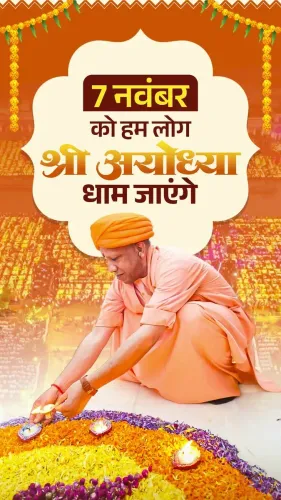
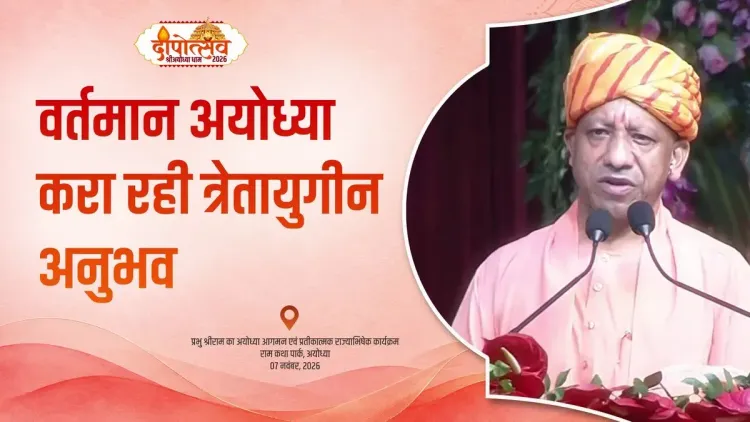
CM Yogi Adityanath addressed Deepotsav 2026 in Ayodhya on 7 November 2026 .
He described Shri Ram as the life-force ( praan ) and self-respect ( aatmsamman ) of the Indian nation.
The Chief Minister cited scriptural tradition placing Ayodhya Dham first among the Sapta Puri — seven sacred cities of Hinduism.
The hashtag #deepostav1dasak marks ten years of the state-organised Deepotsav festival, running since 2017 .
The event forms part of Uttar Pradesh 's ongoing effort to promote Ayodhya as both a cultural and tourism destination.
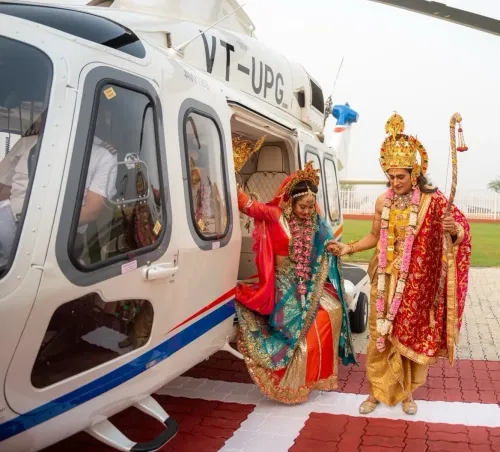
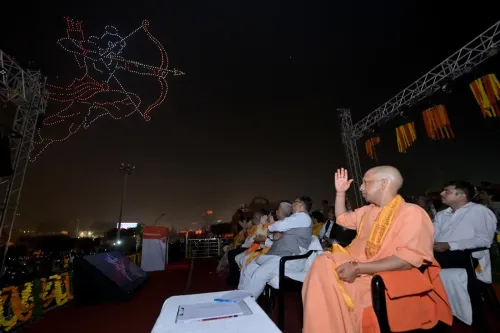
Ayodhya lit up for a tenth consecutive year as Chief Minister Yogi Adityanath anchored the Deepotsav 2026 celebrations with a sweeping declaration of cultural identity — positioning Shri Ram not merely as a deity but as the living consciousness of the Indian nation.
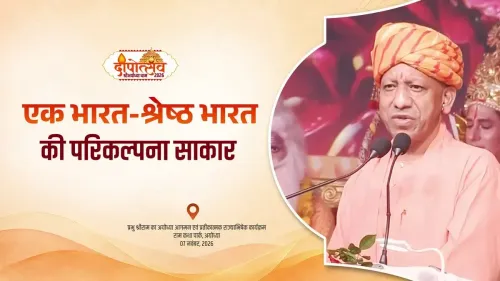
Speaking at the event on Saturday, 7 November 2026, CM Yogi stated: 'Prabhu Shri Ram ki chetna vastav mein Bharat ki chetna hai' — 'The consciousness of Lord Shri Ram is truly the consciousness of India.' He went on to describe Shri Ram as both the praan (life-force) and the aatmsamman (self-respect) of the Indian nation, grounding the remark in scriptural authority: ancient texts recognise Ayodhya Dham as the foremost of the Sapta Puri — the seven sacred cities of Hindu tradition.
A Decade of Deepotsav: How Ayodhya Became Uttar Pradesh's Cultural Flagship
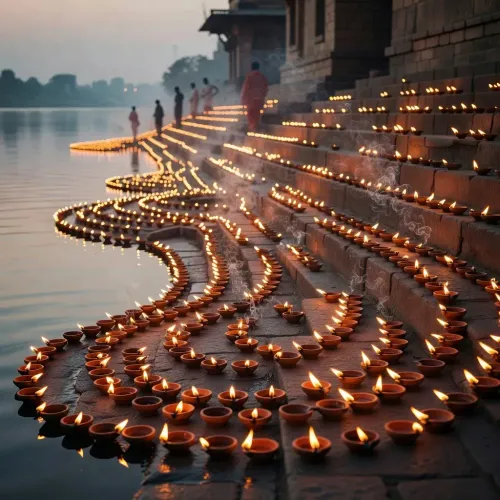
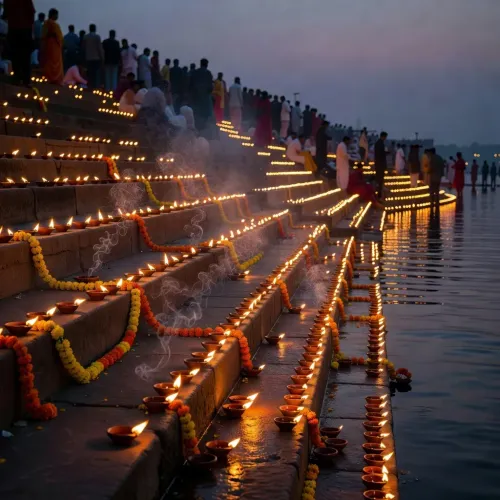
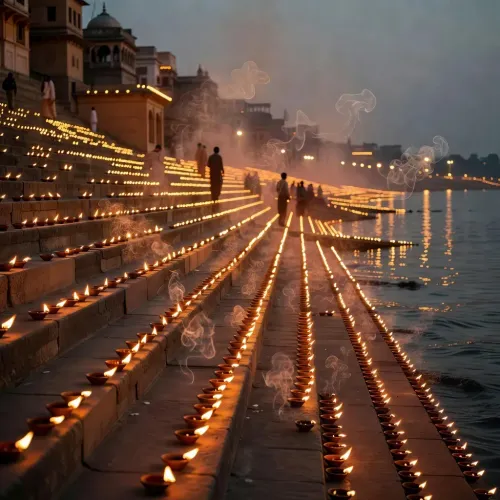
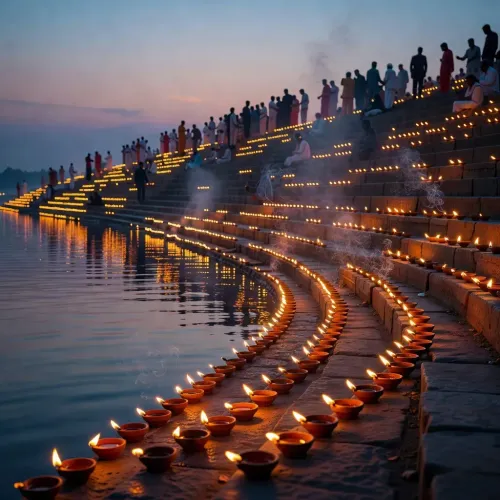
The hashtag #deepostav1dasak — marking one decade of the festival — frames this edition as a milestone. The Uttar Pradesh government has staged Deepotsav in Ayodhya every year since 2017, steadily scaling the event into a nationally watched spectacle of earthen lamps, cultural performances, and official messaging centred on the city's religious primacy.
That decade-long arc is deliberate. When the Yogi administration first organised the festival, Ayodhya was undergoing a transformation from a contested pilgrimage town into a state-promoted cultural destination. The Ram Temple, whose construction became the defining event of the intervening years, gave the annual festival a sharper gravitational pull — drawing pilgrims, tourists, and political symbolism in equal measure.
Sapta Puri and the Politics of Sacred Geography
CM Yogi's invocation of the Sapta Puri — the canonical seven holy cities that include Ayodhya, Mathura, Haridwar, Varanasi, Kanchipuram, Ujjain, and Dwarka — situates the state government's cultural project within a centuries-old religious framework. By quoting scriptural precedent, the statement reaches beyond routine festival messaging into a larger argument: that Ayodhya's spiritual seniority is not invented by policy but inherited from tradition.
That framing has real tourism and development consequences. Official emphasis on Ayodhya's sacred rank has aligned with infrastructure investment in the city — improved road and rail connectivity, an international airport, and hospitality expansion — all aimed at converting religious footfall into an economic driver for the region.
At its tenth edition, Deepotsav is no longer just a festival. It is Uttar Pradesh's most visible annual argument that culture, heritage, and governance can share the same stage — and that Ayodhya is where that argument is made most loudly.
Point of View
The administration links state expenditure on Ayodhya's infrastructure to a tradition far older than any political party. The 'tenth edition' branding also serves a longitudinal purpose: a decade of consistent messaging converts an annual event into an institution, making future discontinuation politically costly. What the statement does not address — deliberately — is the contested, pluralistic nature of Indian civilisational identity, a silence that will keep this strand of cultural politics energetically debated.
NationPress
8 Nov 2026
Frequently Asked Questions
What is Deepotsav 2026 in Ayodhya?
Deepotsav 2026 is the tenth edition of an annual festival of lights organised by the Uttar Pradesh government in Ayodhya, held on 7 November 2026. The event involves the lighting of large numbers of earthen lamps and cultural programmes celebrating Ayodhya's religious heritage.
What did CM Yogi say about Shri Ram at Deepotsav 2026?
Chief Minister Yogi Adityanath stated that the consciousness of Shri Ram is truly the consciousness of India, calling Shri Ram both the life-force and the self-respect of the Indian nation.
What is the Sapta Puri and why is Ayodhya significant?
The Sapta Puri are seven cities considered most sacred in Hindu tradition. Ayodhya is traditionally recognised as the foremost among them, regarded as the birthplace of Shri Ram.
When did the Uttar Pradesh government start Deepotsav?
The Uttar Pradesh government began organising Deepotsav in Ayodhya in 2017, the year CM Yogi Adityanath first took office. The 2026 edition marks ten consecutive years of the festival.
How does Deepotsav connect to Ayodhya's development and tourism?
The annual festival is part of a broader state strategy to promote Ayodhya as a leading cultural and pilgrimage destination. It has been accompanied by infrastructure investment including road, rail, and airport development aimed at boosting religious tourism.