CM Sai: Bastar Free from Naxal Shadow on I-Day 2026
Synopsis
On Independence Day 2026, Chhattisgarh CM Vishnu Deo Sai declared Bastar freed from Maoist darkness, pointing to PM Modi's security push and a mass Tiranga Yatra as proof of a historic shift in India's most Naxal-affected region.
Key Takeaways
CM Vishnu Deo Sai on 15 August 2026 declared Bastar freed from Maoist control, citing decisive anti-Naxal success under PM Narendra Modi .
Residents of Bastar participated in a Tiranga Yatra (tricolour march) as a symbol of freedom, peace, and development.
The central government's SAMADHAN doctrine (2017) combined security operations with development delivery in Left Wing Extremism-affected zones.
The government set a target of a Naxal-free India by 2025 , with Chhattisgarh historically accounting for the highest share of Maoist violence.
The next test is rollout of centrally sponsored schemes in newly secured Bastar blocks and any revision of the LWE-affected districts list.
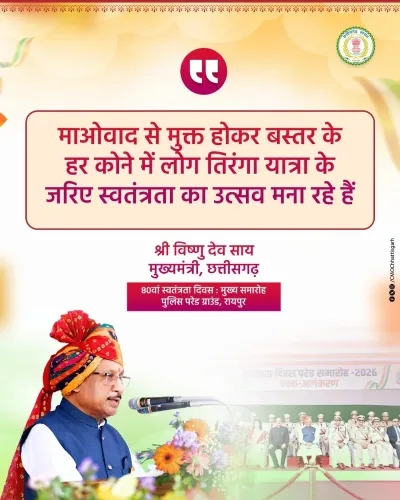
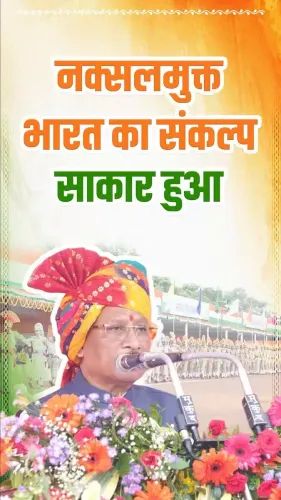
On a Independence Day that carries uncommon weight for Chhattisgarh, Chief Minister Vishnu Deo Sai declared that the long-contested forests of Bastar are now part of the republic's celebration — not its crisis map. The message, posted on 15 August 2026, frames the moment as a civilisational turn: residents of a region that once lived under the shadow of Maoist violence are, he says, marching under the tricolour.
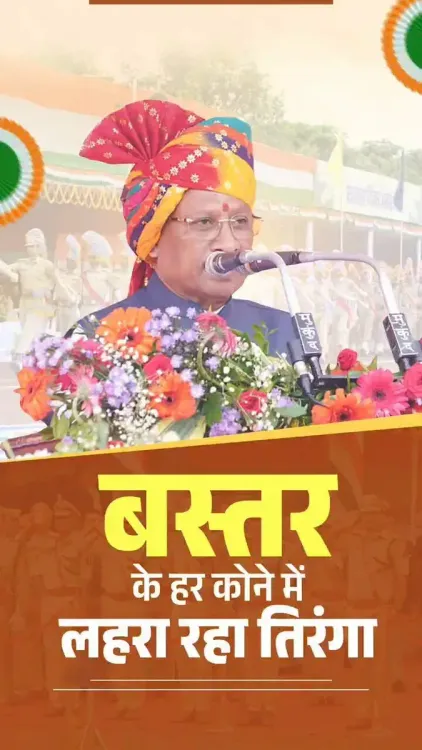
Writing in Hindi, CM Sai said the anniversary brings 'a message of historic achievements and new confidence for the country,' crediting Prime Minister Narendra Modi's 'courageous leadership' for what he called a 'decisive victory against Naxalism.' The post describes the Tiranga Yatra — tricolour march — sweeping through Bastar as a living symbol of 'freedom, peace, and development.'
Bastar's Long Road Out of the Red Corridor
Bastar, a sprawling division of seven districts in southern Chhattisgarh, has been the most violent theatre of Left Wing Extremism in India for decades. The region sits at the heart of what security planners called the 'Red Corridor' — a belt of Maoist influence stretching from Chhattisgarh through Jharkhand and into Andhra Pradesh. Ambushes on security forces, forced displacement of tribal communities, and attacks on infrastructure defined daily life in its interior blocks for a generation.
The central government's SAMADHAN doctrine, formally articulated by the Ministry of Home Affairs in 2017, brought a structured dual approach: intensified counter-insurgency operations alongside accelerated welfare and infrastructure delivery in LWE-affected zones. By 2021, the government had set an explicit target — a Naxal-free India by 2025. Documented incident counts and the geographic shrinkage of the Red Corridor since the mid-2010s show a real downward trend, even as Chhattisgarh has consistently recorded the highest share of Maoist-related violence among all states.
The Tiranga Yatra as Political and Symbolic Statement
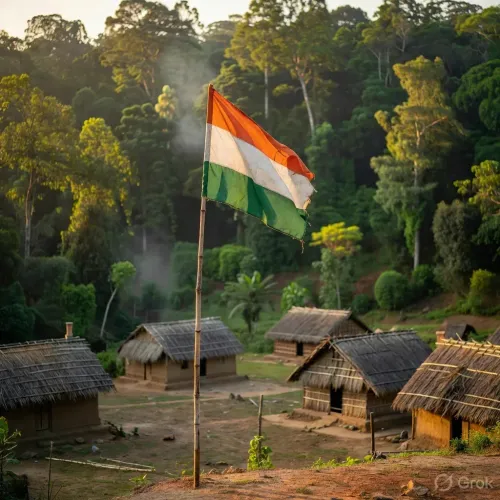
The Tiranga Yatra — a mass tricolour procession — is not merely ceremonial. In a district where hoisting the national flag was once an act that could draw Maoist reprisal, the image of ordinary residents marching with the tricolour is a deliberate, visible counter-narrative. CM Sai's post leans into that symbolism hard: 'the people of Bastar, freed from the darkness of Maoism, are participating in the celebration of freedom, peace, and development.'
The claim of liberation carries political significance beyond Chhattisgarh. The BJP government, which took office in the state in December 2023 with Sai as Chief Minister, has staked considerable credibility on accelerating security gains in Bastar and converting them into visible development. Any official revision of the list of LWE-affected districts — which unlocks or withdraws special central funding — will be the concrete policy test of whether the security narrative translates into administrative reality.
What Follows a Cleared Bastar
The harder question now is delivery. Security clearance is the precondition; what comes next is the rollout of roads, schools, health centres, and livelihood schemes in blocks that were inaccessible for years. Tribal communities in Bastar — the real stakeholders behind every headline — have waited through decades of conflict for that sequence to complete. The Tiranga Yatra is a powerful image. The infrastructure that follows it will be the lasting measure.
Point of View
Less than three years into its term. By invoking PM Modi's leadership and the imagery of tribal residents marching with the tricolour, the message connects local governance to the national narrative of a 'New India.' The real test will come in administrative follow-through: whether newly secured blocks receive the roads, schools, and welfare schemes that convert a security milestone into a lasting political dividend for the region's tribal communities.
NationPress
30 Sept 2026
Frequently Asked Questions
Is Bastar now free from Naxalism?
Chhattisgarh CM Vishnu Deo Sai claimed on Independence Day 2026 that Bastar has been freed from Maoist control, citing the central government's intensified anti-Naxal operations. The exact operational status cannot be independently verified, but documented incident counts across the region have declined significantly since the mid-2010s.
What is the SAMADHAN doctrine?
SAMADHAN is the Ministry of Home Affairs' structured strategy against Left Wing Extremism, formally articulated in 2017. It combines intensified security operations with accelerated development delivery — roads, schools, and welfare schemes — in Maoist-affected districts.
What is the Tiranga Yatra in Bastar?
The Tiranga Yatra is a mass tricolour procession held on Independence Day. In Bastar, where hoisting the national flag was once dangerous due to Maoist presence, the march carries deep symbolic weight as a sign of restored peace and civic normalcy.
When did Vishnu Deo Sai become Chief Minister of Chhattisgarh?
Vishnu Deo Sai became Chief Minister of Chhattisgarh in December 2023 after the BJP won the state assembly elections.
What is India's target for becoming Naxal-free?
The central government announced in 2021 a target to make India Naxal-free by 2025 through coordinated security operations and development measures under the SAMADHAN framework.