CM Sai: Bastar Celebrates Freedom with Tiranga Yatra
Synopsis
On Independence Day 2026, Chhattisgarh CM Vishnu Deo Sai's office declared that Bastar — long gripped by Maoist insurgency — is celebrating freedom through public Tiranga Yatras, framing the marches as proof of restored peace and state presence in the tribal-majority region.
Key Takeaways
The Chief Minister's Office of Chhattisgarh posted on 15 August 2026 that Bastar residents are holding Tiranga Yatras to mark Independence Day.
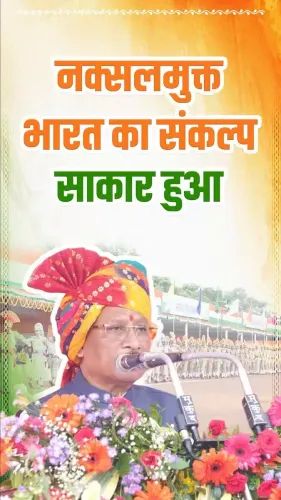
CM Vishnu Deo Sai (BJP) framed the marches as evidence of Bastar being freed from Maoist influence.
Bastar is a tribal-majority division in southern Chhattisgarh and has been the focal point of left-wing extremism since the state's formation in 2000 .
The post was tagged #ViksitChhattisgarh , linking security gains to the state's development agenda.
Public civilian marches with the tricolour represent a symbolic shift from the era when only security-force flag marches were possible in the region.
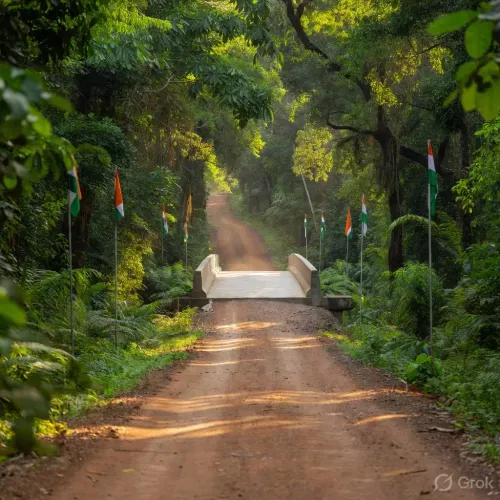
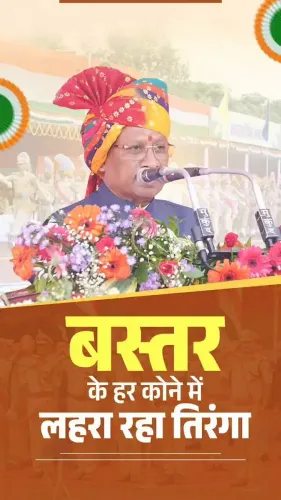
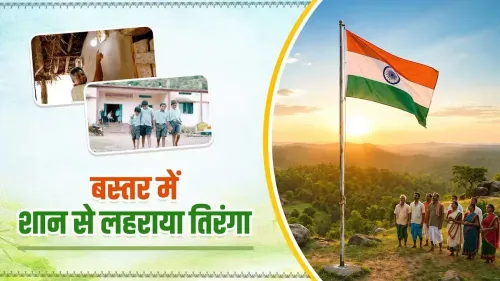
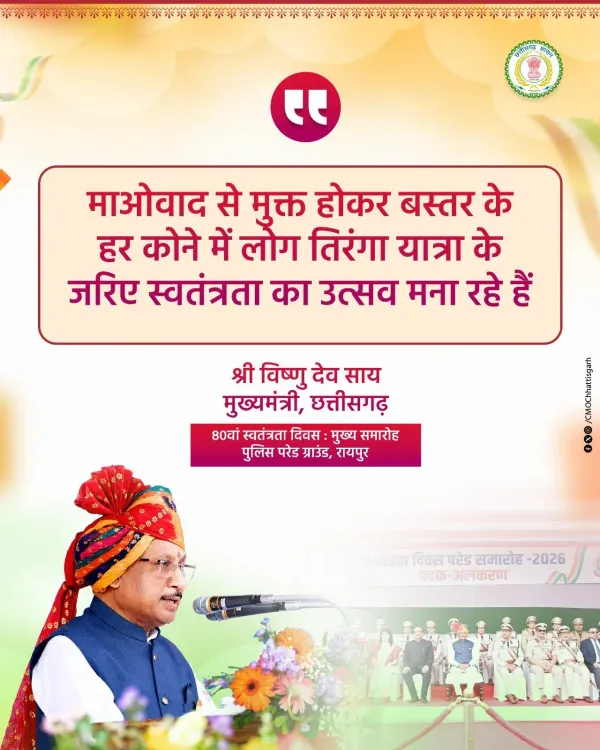
On Independence Day, 15 August 2026, the Chief Minister's Office of Chhattisgarh declared that every corner of Bastar — long synonymous with Maoist conflict — is now celebrating freedom through Tiranga Yatras (tricolour marches), signalling what the state government frames as a historic shift in one of India's most contested regions.
The post, shared by the Chief Minister's Office of Chhattisgarh and attributed to Chief Minister Vishnu Deo Sai, declared in Hindi: 'Maovaad se mukt hokar Bastar ke har kone mein log Tiranga Yatra ke zariye swatantrata ka utsav mana rahe hain' — 'Freed from Maoism, people in every corner of Bastar are celebrating independence through the Tiranga Yatra.' The message was hashtagged #ViksitChhattisgarh (Developed Chhattisgarh) and #NationFirst, framing the occasion within the state's broader development narrative.
Bastar's Long Road from Conflict to Celebration
Bastar, a tribal-majority division in southern Chhattisgarh, has been the epicentre of left-wing extremism since the state's formation in 2000. For decades, Independence Day in its deep forests carried a different weight — security lockdowns, cancelled public gatherings, and the constant threat of ambush. Flag marches by security forces, not civilian processions, were often the only tricolour visible.
Successive Chhattisgarh governments — across party lines — have combined paramilitary operations with infrastructure investment and welfare outreach to gradually reduce militant influence. The pattern is familiar across insurgency-affected Indian states: roads into forests, new police camps, and school programmes follow each security gain, attempting to convert cleared ground into governed territory.
Tiranga Yatra as a Symbol of State Presence
The use of a Tiranga Yatra — a public, civilian march carrying the national flag — is a deliberate symbolic choice. Where the state once had to send armed columns to assert its presence, public marches signal that ordinary residents feel safe enough to gather and celebrate openly. For CM Vishnu Deo Sai, who took office after the BJP's 2023 assembly election victory in Chhattisgarh, the imagery of Bastar residents marching with the tricolour is a political and administrative statement in one.
The #ViksitChhattisgarh hashtag ties the moment to the state's development agenda — the argument that security gains are only meaningful when paired with economic opportunity for Bastar's tribal communities, who have long been caught between insurgent pressure and state authority.
Whether Bastar's transformation is as complete as the post suggests remains a question the ground will answer — but the sight of tricolour marches where silence once ruled is, by any measure, a changed picture.
Point of View
Civilian Tiranga Yatras in former conflict zones are powerful optics — they signal that the state has succeeded where previous governments struggled. However, analysts would note that framing a region as entirely 'free' from insurgency risks overstating progress; Bastar's transformation has been gradual and uneven, and the tribal communities at its centre still await the full dividend of development. The hashtag pairing of #NationFirst and #ViksitChhattisgarh reveals the dual audience: national pride for the broader electorate, development promise for Bastar's residents.
NationPress
30 Sept 2026
Frequently Asked Questions
What is a Tiranga Yatra?
A Tiranga Yatra is a public march or procession in which participants carry the Indian national flag (tricolour) to celebrate national occasions such as Independence Day or Republic Day. In conflict-affected regions like Bastar, such civilian marches are seen as a symbol of restored peace and normalcy.
Is Bastar really free from Maoists?
The Chhattisgarh government has claimed significant reductions in Maoist activity in Bastar, and public Independence Day celebrations are cited as evidence. However, independent verification of a complete end to Maoist presence in the region as of 2026 is not available; security analysts have historically described progress as gradual and uneven.
Who is Vishnu Deo Sai?
Vishnu Deo Sai is the Chief Minister of Chhattisgarh from the Bharatiya Janata Party (BJP). He was sworn in following the BJP's victory in the 2023 Chhattisgarh state assembly elections.
Why is Bastar significant in India's Maoist conflict?
Bastar is a tribal-majority division in southern Chhattisgarh that has been the epicentre of left-wing extremism (Naxalism) for decades. Its dense forests and remote terrain made it a stronghold for Maoist groups, and it has seen some of the deadliest attacks on security forces in India's history.
What is Viksit Chhattisgarh?
'Viksit Chhattisgarh' translates to 'Developed Chhattisgarh' and is a governance and branding theme used by the Sai administration to connect security improvements in conflict zones with broader economic development and welfare delivery for the state's tribal and rural communities.