CM Sai Hails Modi's Diwali With Bastar Security Forces
Synopsis
Chhattisgarh CM Vishnu Deo Sai praised PM Modi's Diwali celebration with Bastar security forces on November 8, 2026, calling it a tribute to their sacrifice and pledging to make Bastar India's most developed tribal division.
Key Takeaways
CM Vishnu Deo Sai posted on November 8, 2026 hailing PM Modi's Diwali visit to security forces in Bastar, Chhattisgarh .
Sai called the visit a symbol of gratitude toward soldiers 'whose sacrifices have brought a new dawn of peace to Bastar.' Bastar division — comprising districts including Sukma, Dantewada, and Bijapur — has been the central theatre of India's Left Wing Extremism conflict for decades.
The central government's National Policy and Action Plan for LWE since 2014 integrates security operations with infrastructure and welfare delivery in affected districts.
The Aspirational Districts Programme (2018) specifically targeted Naxal-affected Chhattisgarh districts to improve last-mile governance.
CM Sai pledged to make Bastar 'the country's most developed tribal division' under PM Modi's leadership.
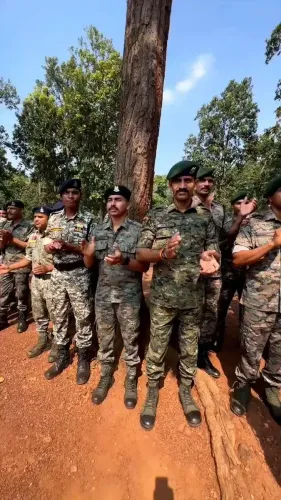
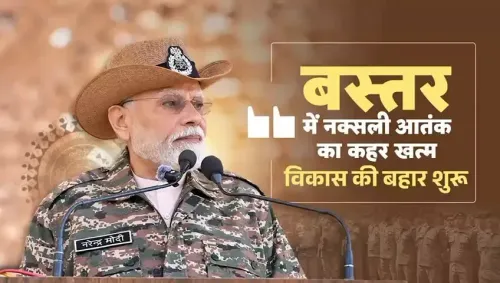
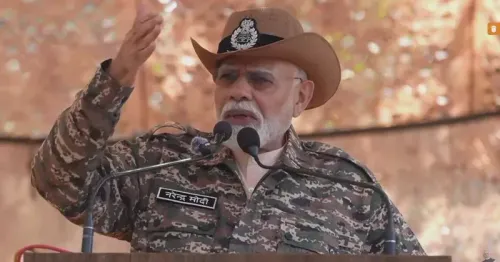
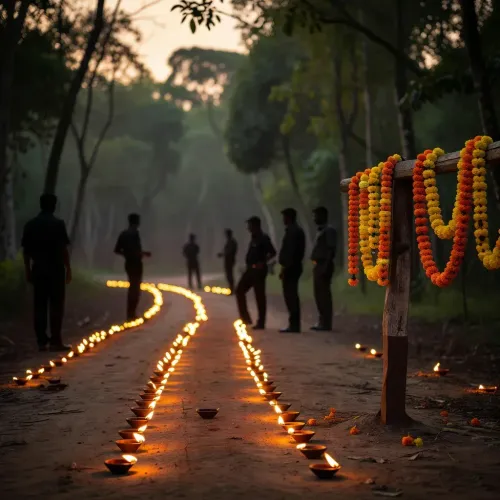
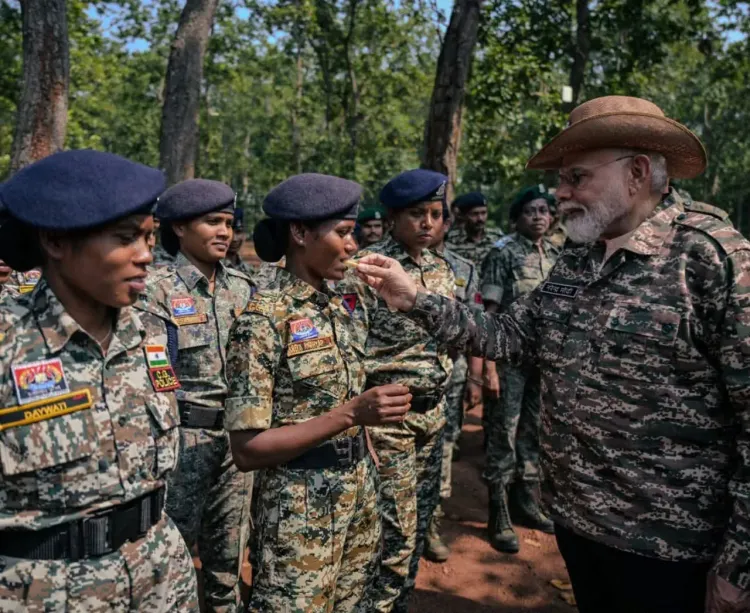
A region once synonymous with landmine ambushes and jungle warfare is now being held up as a symbol of turning tides — and on Diwali 2026, Chhattisgarh Chief Minister Vishnu Deo Sai marked the moment by saluting Prime Minister Narendra Modi's decision to celebrate the festival alongside security forces deployed in Bastar, the southern division that has been the most contested theatre of India's decades-long conflict with Naxal-Maoist insurgency.
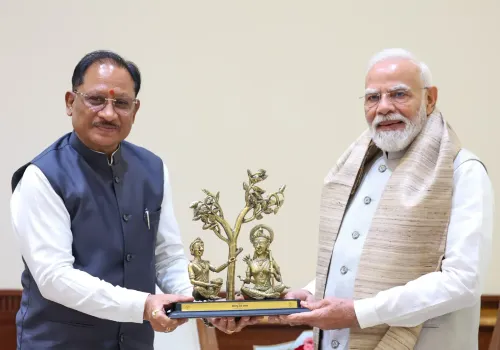
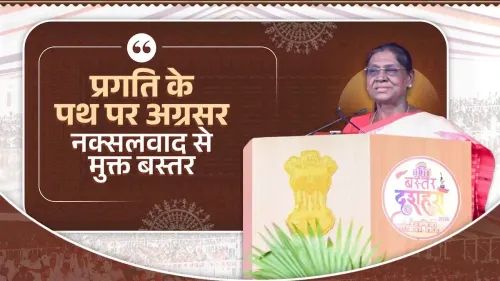
Posting on X on November 8, 2026, CM Sai wrote in Hindi: 'Bastar naksalvaad ke andhakaar se nikalkar shanti-samridhi ki raah par hai' — 'Bastar is emerging from the darkness of Naxalism onto the path of peace and prosperity.' He described Modi's presence among jawans as 'an emotionally charged moment of respect for their courage, sacrifice, and service to the nation,' adding that it stood as a symbol of gratitude toward the soldiers 'whose sacrifices have brought a new dawn of peace to Bastar.'
Modi in Bastar: What the Visit Signals to the Force
High-level visits to active conflict zones on festival days carry a specific strategic weight — they are as much about morale as optics. For the CRPF personnel and Chhattisgarh state police deployed across Bastar's dense forests and remote outposts, a Prime Minister's presence on Diwali night — when most personnel are away from family — sends an unambiguous message: the deployment matters, and the Centre is watching.
Bastar has historically been the heartland of Left Wing Extremism (LWE) in India, with a geography of seven districts — including Sukma, Dantewada, Bijapur, and Narayanpur — that have seen some of the most lethal encounters between security forces and Maoist cadres. Periodic high-level visits, rooted in a broader counter-insurgency doctrine, are used deliberately to sustain operational morale and signal political commitment.
The Security-Plus-Development Doctrine in Bastar
The strategic architecture behind Bastar's transformation is not new, but its pace has accelerated. Since 2014, the central government has pursued an integrated approach under the National Policy and Action Plan for Left Wing Extremism — combining intensified security operations with infrastructure investment in roads, telecom connectivity, and welfare delivery.
The Aspirational Districts Programme, launched in 2018, specifically targeted several Naxal-affected districts in Chhattisgarh to improve governance indicators and ensure last-mile service delivery reached tribal households. Bastar's tribal population — which forms the demographic bedrock of the region — has long been the stated focus of rehabilitation and development pledges from both state and central governments.
CM Sai framed this trajectory in his post with a clear political pledge: under Modi's leadership, his government is 'committed to bringing the light of development to every village in Bastar and making it the country's most developed tribal division.' The ambition is specific — not just reduced violence, but a top-ranked tribal administrative zone.
From Conflict Zone to 'Most Developed Tribal Division'
That pledge is the most consequential line in Sai's post — and the hardest to deliver. Bastar's tribal communities have lived at the intersection of insurgency, displacement, and contested governance for over three decades. Roads that connect villages also enable force movement; mobile towers that bring connectivity also serve as intelligence infrastructure. Every development project carries a dual ledger.
What to watch now: whether the development projects announced for Bastar actually reach individual villages, and whether official data on Naxal violence incidents and surrender-rehabilitation numbers reflects the narrative of a 'new dawn.' The metrics will matter more than the symbolism.
A Prime Minister celebrating Diwali in a jungle outpost is a powerful image. The harder act is the one CM Sai is now on the record promising — turning that image into electricity, roads, and livelihoods in every last Bastar village.
Point of View
' Sai raises the political stakes for the BJP government in Chhattisgarh, tying its electoral credibility to measurable development outcomes in the state's most challenging geography. The gesture of a PM visiting jawans on Diwali is symbolically powerful, but it also creates a benchmark: the tribal communities of Bastar will now watch whether the promised 'light of development' follows the festival lights. The dual-track security-plus-development doctrine has been the stated policy for over a decade — what distinguishes this moment is the explicitness of the target and the public accountability CM Sai has now accepted.
NationPress
8 Nov 2026
Frequently Asked Questions
Why did PM Modi visit Bastar on Diwali 2026?
PM Modi celebrated Diwali with security forces deployed in Bastar, Chhattisgarh — a gesture to honour the CRPF and state police personnel stationed away from their families in one of India's most active counter-insurgency zones. CM Vishnu Deo Sai described it as a mark of respect for their courage and sacrifice.
What is the current situation of Naxalism in Bastar?
Bastar in southern Chhattisgarh has been the heartland of Left Wing Extremism in India for decades, encompassing districts like Sukma, Dantewada, and Bijapur. Gradual reductions in violence have been reported in recent years, supported by intensified security operations and infrastructure development programmes.
What is Chhattisgarh's plan for Bastar's development?
CM Vishnu Deo Sai has pledged to bring development to every village in Bastar and make it India's most developed tribal division. This aligns with the central government's Aspirational Districts Programme launched in 2018 and the National Policy and Action Plan for LWE, which integrates security operations with welfare and infrastructure delivery.
What is the Aspirational Districts Programme and how does it apply to Bastar?
The Aspirational Districts Programme, launched in 2018, targets underdeveloped districts — including several Naxal-affected ones in Chhattisgarh — to improve governance, healthcare, education, and last-mile service delivery. Bastar districts fall within its ambit as part of the broader LWE reduction strategy.
Who is Vishnu Deo Sai and what is his role in Chhattisgarh?
Vishnu Deo Sai is the Chief Minister of Chhattisgarh and a senior BJP leader. He took office in December 2023 after the party won the state assembly elections. He belongs to a tribal community and has made the development of Bastar's tribal population a central plank of his administration.