Yadav: Naxals Weakened, But Ideological Threat Persists
Synopsis
Union Environment Minister Bhupender Yadav cautioned that while Naxalite armed structures have been significantly degraded, an ideological threat to India's Constitution and democracy persists — calling on citizens to identify, counter, and defeat it.
Key Takeaways
Union Environment Minister Bhupender Yadav posted on November 8, 2026 warning that the Naxalite threat has not fully passed despite military setbacks to CPI (Maoist).
He stated that surviving elements are actively inciting people against India's Constitution and democratic institutions.
The government's SAMADHAN strategy , launched in 2017 , combines security operations, development, and rehabilitation across Left Wing Extremism-affected districts.
Chhattisgarh remains a central theatre of both residual Naxal presence and ongoing security operations.
Yadav's statement reflects BJP's broader cross-ministry framing of internal security as a constitutional challenge, not merely a law-and-order issue.
The Ministry of Home Affairs' upcoming revision of the LWE-affected district list will be a key indicator of actual ground progress.
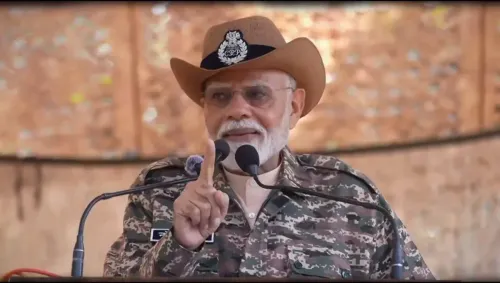
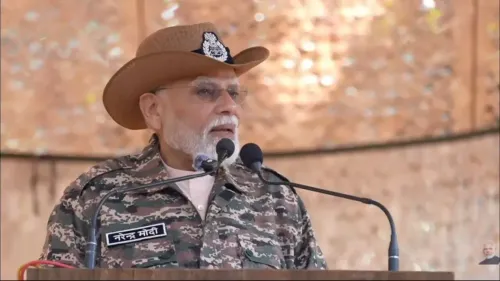
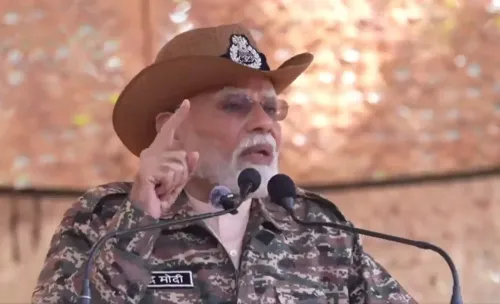
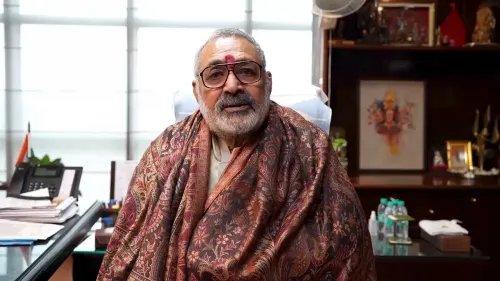
The guns may have fallen largely silent across the old Red Corridor, but Union Environment Minister Bhupender Yadav is warning that the battle is far from over — warning on Sunday, November 8, 2026 that surviving Naxalite elements are still actively working to turn citizens against India's Constitution and democratic institutions.
Posting on X, the senior BJP leader declared: 'नक्सली खत्म हुए हैं, लेकिन खतरा अभी टला नहीं है…' — 'The Naxals have been finished, but the threat has not yet passed… they are still inciting people against the country's Constitution and democracy. We must identify them, defeat them, and secure the nation.'
From the Red Corridor to the ideological underground
For decades, CPI (Maoist) cadres held sway across a crescent of forested districts stretching from Chhattisgarh through Jharkhand, Odisha, and into Telangana — territory once grimly dubbed the Red Corridor. Coordinated central-state operations, sustained infrastructure investment in Left Wing Extremism-affected districts, and aggressive rehabilitation drives have dramatically compressed that footprint, with successive administrations reporting year-on-year declines in violence and a shrinking list of affected districts.
But Yadav's framing signals a new phase of concern: the shift from armed insurrection to what security planners call the 'ideological residue' — networks of sympathisers, front organisations, and urban facilitators who keep the Maoist narrative alive without firing a shot. It is a threat harder to map on a district-level chart, and harder still to defeat through security operations alone.
The SAMADHAN playbook and what comes after
The strategic architecture for countering Left Wing Extremism has been anchored since 2017 in the Ministry of Home Affairs' SAMADHAN doctrine — an acronym-driven framework combining kinetic pressure, targeted development, and voluntary surrender schemes. The approach has been credited with accelerating the decline in Maoist-held territory and bringing thousands of cadres back into the mainstream.
What Yadav's statement underlines is that SAMADHAN's development and ideological dimensions must now carry more of the weight. When armed structures are degraded, the remaining challenge is persuasion — countering anti-constitutional messaging in tribal heartlands, schools, and, increasingly, online spaces where Maoist sympathisers recruit and radicalise.
A cross-ministry warning on internal security
It is notable that the alert comes not from the Home Minister's office but from the Environment Ministry. Senior BJP leaders have increasingly framed internal security as a whole-of-government responsibility, with ministers from non-security portfolios amplifying the constitutional-threat narrative. For Yadav — whose ministry oversees the forest lands and tribal ecosystems at the geographic heart of the LWE belt — the overlap is not purely rhetorical. Forest governance, land rights, and tribal welfare in Chhattisgarh and neighbouring states remain fault lines that Maoist networks have historically exploited.
The Ministry of Home Affairs is expected to revise its list of LWE-affected districts in coming months — a move that will test whether the government's confidence in the security gains is matched by the ground reality in the most resistant pockets of the old corridor. That revision, and parliamentary scrutiny of residual Maoist networks, will be the next hard measure of how far the threat has truly receded.
The Naxal movement has been cornered — but cornered movements don't simply disappear. They adapt. India's security establishment knows the next chapter will be written not in the jungle, but in the minds of those they left behind.
Point of View
Educators, and local governance. By invoking the Constitution and democracy rather than body counts, the BJP is broadening the political coalition against Maoism to include anyone who values constitutional order, not just those in conflict-affected zones. The Environment Minister's entry into the internal-security conversation also signals a deliberate whole-of-government messaging effort ahead of likely parliamentary scrutiny of LWE district reclassification. The harder question the government will face is whether its development and welfare record in tribal heartlands has actually addressed the grievances that Maoist recruiters continue to exploit.
NationPress
8 Nov 2026
Frequently Asked Questions
What did Bhupender Yadav say about Naxals on November 8 2026?
Yadav declared that while Naxalite armed structures have been largely dismantled, surviving elements are still inciting people against India's Constitution and democracy, and called on citizens to identify and defeat this ideological threat.
What is the SAMADHAN strategy against Naxals?
SAMADHAN is a Ministry of Home Affairs framework launched in 2017 that combines security operations, infrastructure development, and rehabilitation schemes to counter Left Wing Extremism across affected districts in central and eastern India.
Which states are most affected by Naxalism in India?
Chhattisgarh has historically been the most affected state, with significant presence also in Jharkhand, Odisha, and parts of Telangana — a region once called the Red Corridor.
Is the Naxal problem in India over?
Security data shows a sharp decline in Naxal-related violence and a reduced number of affected districts, but the government continues to warn of an ideological residue — sympathiser networks and front organisations that operate outside the armed movement.
Why is the Environment Minister commenting on Naxals?
Senior BJP ministers from non-security portfolios have increasingly joined the internal-security conversation; Yadav's ministry also oversees forest lands and tribal ecosystems at the geographic core of Left Wing Extremism-affected regions, making the overlap substantive as well as rhetorical.