CM Mohan Yadav Launches 'Naxal Mukt Bharat' Book in Bhopal
Synopsis
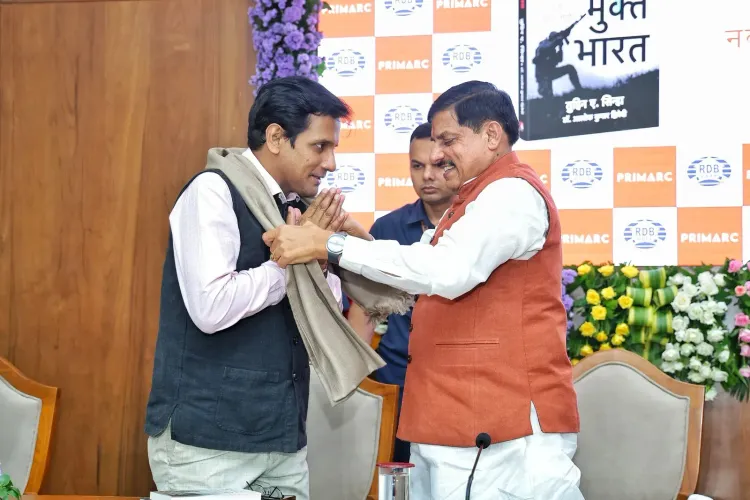
Madhya Pradesh CM Dr. Mohan Yadav launched 'Naxal Mukt Bharat' by Tuhin A. Sinha and Dr. Alok Kumar Dwivedi at Bhopal Niwas on 11 August 2026, framing the book as a critical ideological counter to Naxalism that blocked tribal development for decades.
Key Takeaways
Mohan Yadav launched 'Naxal Mukt Bharat' at his official residence, Bhopal Niwas , on 11 August 2026 .
The book is authored by Tuhin A.
Sinha and co-authored by Dr.
Alok Kumar Dwivedi , examining Naxal ideology, its consequences in tribal areas, and prevention measures.
CM Yadav described Naxalism as an obstacle to tribal development for decades and called the book crucial for public awareness.
Naxal-affected districts in India fell from 126 in 2009 to under 40 by the early 2020s under the SAMADHAN doctrine launched in 2017 .
The launch is part of a broader BJP-led effort to frame Naxalism's defeat as both operational and ideological.
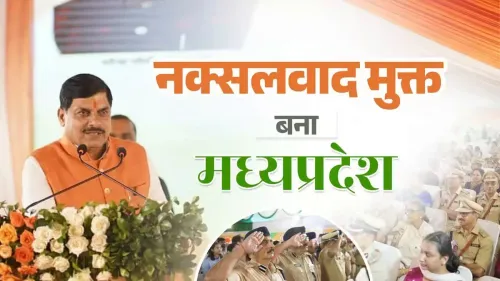
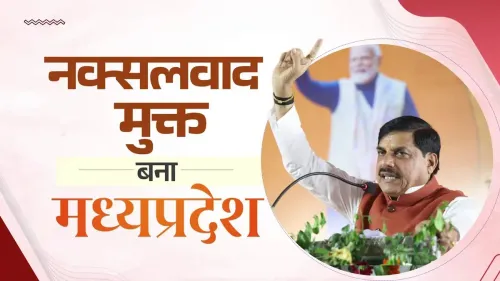
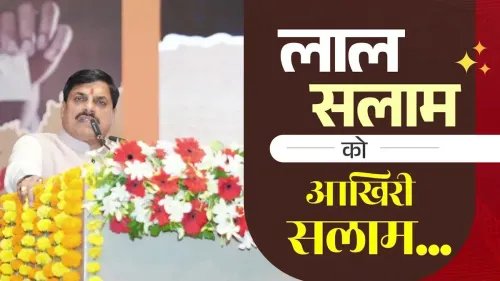
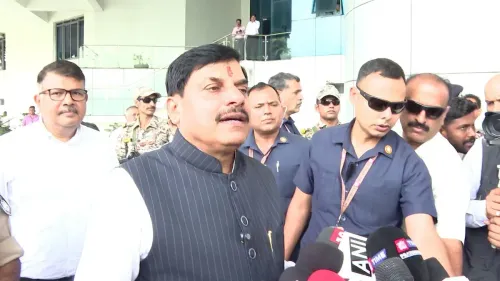
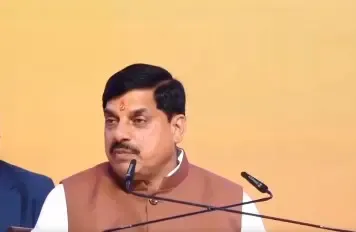
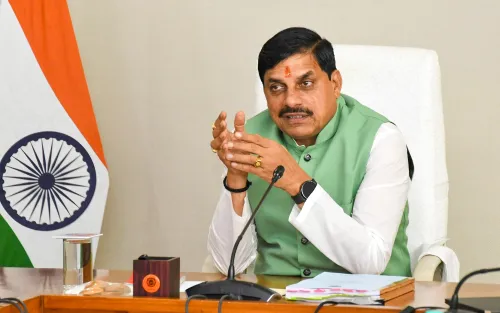
Decades of insurgency, scorched tribal futures, and a long war of ideas — Madhya Pradesh Chief Minister Dr. Mohan Yadav brought all of it into sharp focus on Tuesday, 11 August 2026, when he launched 'Naxal Mukt Bharat' ('A Naxal-Free India') at his official residence in Bhopal, signalling that the battle against Left Wing Extremism is now being fought as much in print as in the field.
The book, authored by Tuhin A. Sinha and co-authored by Dr. Alok Kumar Dwivedi, examines the ideology behind Naxalism, the damage it inflicted on tribal communities across central India, and the policy measures needed to prevent its resurgence. Launching it, CM Yadav said the movement had 'remained an obstacle to development in tribal areas for decades' and described the work as one that will 'play an important role in creating awareness in society.'
What the Book Takes On — and Why Bhopal Is the Right Stage
Madhya Pradesh sits at the edge of the so-called Red Corridor that once stretched through Chhattisgarh, Jharkhand, Odisha and into parts of the state's own southern tribal belt. The book's three-part framing — ideology, consequences, prevention — maps directly onto the challenge governments have wrestled with since the 1960s. Tuhin A. Sinha is known for politically-engaged non-fiction on national security themes; Dr. Dwivedi brings a policy-analysis lens to the co-authorship.
The launch at Bhopal Niwas, the Chief Minister's residence, was not incidental. Hosting a book event at the seat of executive power is a deliberate act of framing — positioning the intellectual counter-narrative alongside the operational one.
From 126 Districts to Under 40: The Shrinking Red Map
The backdrop to the launch is a measurable shift on the ground. The Ministry of Home Affairs reported that Naxal-affected districts fell from 126 in 2009 to fewer than 40 by the early 2020s, driven by the SAMADHAN doctrine introduced in 2017 — a framework combining security operations, development investment, and rehabilitation of surrendered cadres.
Central Indian states including Madhya Pradesh, Chhattisgarh and Jharkhand have pursued parallel tracks: intensified area-domination drives by security forces alongside roads, schools and welfare schemes pushed into former strongholds. The argument the book appears to advance — that ideological awareness must accompany operational gains to prevent regrowth — echoes exactly that dual-track logic.
The Narrative Offensive BJP Governments Are Waging
Literary events like this one are increasingly a feature of BJP-led state governments seeking to cement a story of Naxalism's ideological defeat, not just its military rollback. The symbolism is pointed: if security forces clear the jungle, books like 'Naxal Mukt Bharat' are meant to clear the mind. Whether tribal communities in affected districts see matching gains in rehabilitation and infrastructure will be the harder, slower test of that claim.
For now, the message from Bhopal is unambiguous — the Chief Minister wants the idea of a Naxal-free India treated not as a distant aspiration but as a project already in motion, documented, argued, and ready for public debate.
Point of View
Framing Naxalism's decline as an ideological victory, not just a military one, serves a dual purpose: it consolidates the party's national-security credentials and pre-empts any resurgence narrative by embedding awareness in public discourse. The real test, however, will be whether the shrinking of the Red Corridor is matched by tangible rehabilitation and development outcomes in Madhya Pradesh's tribal belts — the deficit that originally sustained the insurgency.
NationPress
26 Sept 2026
Frequently Asked Questions
What is the book 'Naxal Mukt Bharat' about?
'Naxal Mukt Bharat' examines the ideology behind Naxalism, the damage it caused to tribal communities in central India, and the measures needed to prevent its resurgence. It is authored by Tuhin A. Sinha and co-authored by Dr. Alok Kumar Dwivedi.
Where and when was 'Naxal Mukt Bharat' launched?
The book was launched on 11 August 2026 at Bhopal Niwas, the official residence of Madhya Pradesh Chief Minister Dr. Mohan Yadav, in Bhopal.
Who are the authors of 'Naxal Mukt Bharat'?
The book is written by Tuhin A. Sinha, an author and political commentator known for works on national security, and co-authored by Dr. Alok Kumar Dwivedi, who focuses on Naxal issues and policy analysis.
How many districts in India are still affected by Naxalism?
According to the Ministry of Home Affairs, Naxal-affected districts fell from 126 in 2009 to fewer than 40 by the early 2020s, driven by the SAMADHAN doctrine introduced in 2017.
What is the SAMADHAN doctrine on Naxalism?
SAMADHAN is a framework introduced by the Ministry of Home Affairs in 2017 that combines security operations, development investment in tribal areas, and rehabilitation of surrendered Naxal cadres to counter Left Wing Extremism.