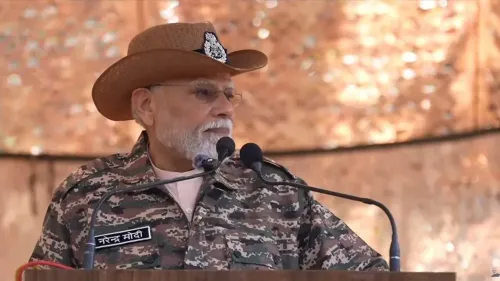
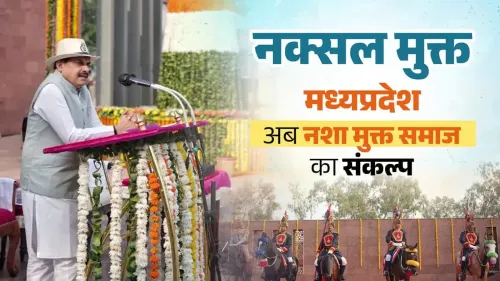
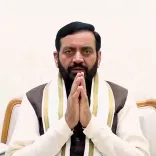
CM Mohan Yadav Highlights Scale of India's Naxal Fight
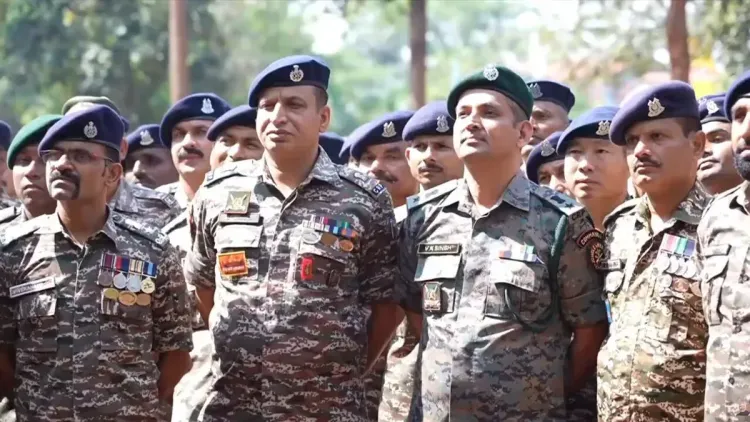
Synopsis
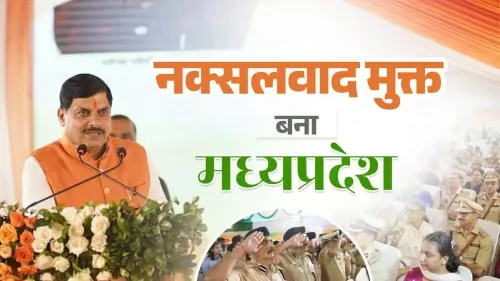
MP Chief Minister Dr. Mohan Yadav amplified PM Modi's words on 8 November 2026, recalling that Naxalism once engulfed over 230 districts in nearly 20 states — including Bihar, Maharashtra, Odisha, MP, and Chhattisgarh — to frame India's hard-won progress against left-wing extremism.
Key Takeaways
Mohan Yadav on 8 November 2026 quoted Prime Minister Narendra Modi on India's anti-Naxal fight.
The post cited 230-plus districts across nearly 20 states as once being affected by left-wing extremism.
States named include Bihar, Maharashtra, Odisha, Madhya Pradesh, and Chhattisgarh .
The Maoist insurgency traces its roots to the Naxalbari uprising of 1967 in West Bengal.
In 2006 , PM Manmohan Singh called Naxalism India's 'single biggest internal security challenge'.
The BJP frames subsequent reductions in affected districts as a product of coordinated security operations and tribal development programmes under Modi's government .
The numbers tell a story that most Indians lived rather than read about — nearly 230 districts across 20 states once held hostage to Maoist violence, entire swaths of central and eastern India where the writ of the state barely reached. Madhya Pradesh Chief Minister Dr. Mohan Yadav invoked that history on Sunday, 8 November 2026, quoting Prime Minister Narendra Modi to frame how far India has come in its battle against left-wing extremism.
Sharing Prime Minister Modi's words, CM Yadav wrote: 'माओवादी आतंक और नक्सलवाद के खिलाफ ये लड़ाई आसान नहीं थी' — 'This fight against Maoist terror and Naxalism was not easy.' The post named Bihar, Maharashtra, Odisha, Madhya Pradesh, and Chhattisgarh as states that bore the brunt of a movement that defined India's internal security conversation for decades.
The Red Corridor's long shadow
The Maoist insurgency is not a recent wound. Rooted in the peasant uprising at Naxalbari, West Bengal, in 1967, left-wing extremism spread through tribal and rural belts across central and eastern India over six decades, exploiting poverty, land disputes, and weak governance. Chhattisgarh became the insurgency's heartland — the epicentre of what security analysts called the 'Red Corridor', a contiguous stretch of districts where armed cadres operated with near-impunity.
The scale of the challenge was acknowledged across party lines. In 2006, then Prime Minister Manmohan Singh described Naxalism as India's 'single biggest internal security challenge' — a rare moment of bipartisan candour about a threat that had outlasted multiple governments and counter-strategies.
BJP's security-and-development framing
CM Yadav's post fits a deliberate political narrative that the BJP has built since 2014: contrasting the pre-Modi era's sprawling Naxal footprint with subsequent reductions achieved through coordinated security operations and development programmes in former Red Corridor districts. The Ministry of Home Affairs has periodically reported declining numbers of Naxal-affected districts, attributing the trend to both sustained paramilitary pressure and infrastructure outreach in tribal areas.
Madhya Pradesh itself was once listed among affected states — a detail CM Yadav's amplification implicitly underscores. The state's exit from that category is part of the larger arc the post points to.
The tribals and forest-dwelling communities caught in the crossfire between state forces and Maoist cadres remain the story's most consequential stakeholders — their safety, livelihoods, and access to basic services the ultimate measure of whether the gains hold.
India has spent decades learning that guns alone do not end insurgencies. The real test of this chapter closing is whether the districts once mapped red can be redrawn in something permanent.
Point of View
CM Yadav reinforces a core BJP electoral narrative: that decisive central leadership after 2014 reversed a decades-long security failure that multiple governments could not crack. The move also subtly positions Madhya Pradesh's own graduation out of the affected-districts list as a governance achievement. However, independent assessments of Naxal decline weigh security operations alongside long-run development deficits in tribal regions — suggesting the story is more complex than a single political arc can contain. The tribals living in formerly affected districts remain the definitive scoreboard.
NationPress
8 Nov 2026
Frequently Asked Questions
How many districts in India were affected by Naxalism at its peak?
Chief Minister Dr. Mohan Yadav's post, quoting PM Modi, cited over 230 districts across nearly 20 states as having been affected by Naxalism at its height. This figure reflects the insurgency's wide geographic spread across central and eastern India.
Which states were most affected by Naxalism in India?
Chhattisgarh, Jharkhand, Odisha, Bihar, Maharashtra, Madhya Pradesh, and Andhra Pradesh were among the states most severely affected. Chhattisgarh was considered the epicentre of the so-called Red Corridor.
When did the Naxalite movement start in India?
The Naxalite movement originated in 1967 with a peasant uprising in Naxalbari, a small town in West Bengal. It gradually spread through tribal and rural belts across central and eastern India over the following decades.
What did Manmohan Singh say about Naxalism?
In 2006 , then Prime Minister Manmohan Singh publicly described Naxalism as India's 'single biggest internal security challenge', signalling the seriousness with which the central government viewed the insurgency.
What is the BJP's approach to ending Naxalism in India?
The BJP under PM Modi has pursued a twin-track strategy combining coordinated security operations by central paramilitary and state police forces with development programmes targeting tribal and rural communities in formerly affected districts, aiming to address both the violent insurgency and its underlying socio-economic drivers.