Will India Achieve a LWE-Free Status by March 2026?
Synopsis
Union Home Minister Amit Shah asserts that the destructive Maoist ideology has led to Left Wing Extremism in India, impacting tribal communities for generations. He emphasizes a commitment to eradicate Naxalism by March 2026, urging those involved to surrender and embrace better futures under the BJP government.
Key Takeaways
Maoist ideology is the root cause of LWE in India.
The government aims for a Naxal-free India by March 2026.
Surrendering Naxalites will be offered a chance for a better future.
Chhattisgarh and Madhya Pradesh are key states in this initiative.
Recent operations have significantly weakened the Maoist insurgency.
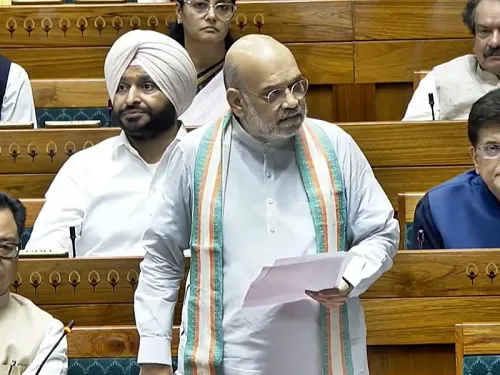
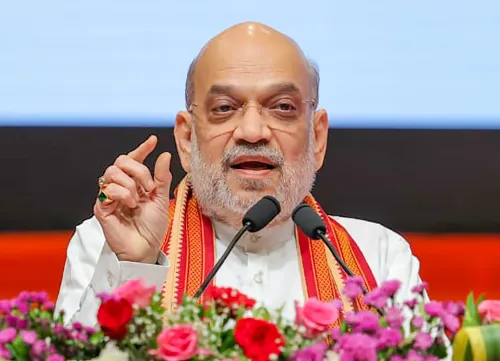
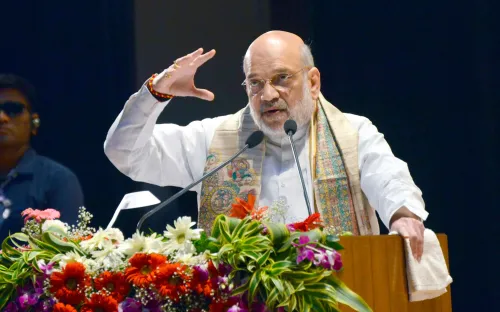
Raipur, Feb 8 (NationPress) Union Home Minister Amit Shah stated on Sunday that the primary cause of Left Wing Extremism (LWE) in India is rooted in Maoist ideology. This harmful ideology, he noted, has devastated the lives of three generations of tribal communities in various states, particularly in Chhattisgarh and Madhya Pradesh.
The Home Minister emphasized that Maoist ideology has compelled innocent tribal individuals to resort to violence, perpetuating a misleading narrative that Naxalism arose due to “development deficits” and “law-and-order challenges.” He affirmed that the government, under the BJP, is committed to eradicating Naxalism by March 31, 2026.
“I urge those participating in Naxal activities to lay down their arms and surrender to the authorities. I specifically appeal to young tribal women, assuring them that the BJP administration has progressive plans for their future,” he remarked.
“I wholly reject the notion that Naxalism stems from development issues or law and order concerns. The rise of Naxalism is rooted in a conspiracy fueled by Maoist ideology, a claim I can substantiate with evidence. If it were merely a matter of development, many districts at that time faced conditions far worse than those in Bastar. Similarly, if it were a law and order issue, several districts experienced even poorer conditions,” asserted Home Minister Shah.
He highlighted the need for society to recognize that Maoist ideology, which has devastated the lives of innocent tribal children by equipping them with weapons, destroyed educational institutions, and impeded development for over forty years, represents a path of destruction.
On this occasion, Home Minister Shah also discussed the strong ties between the neighboring states of Chhattisgarh and Madhya Pradesh, emphasizing their mutual progress and solidarity.
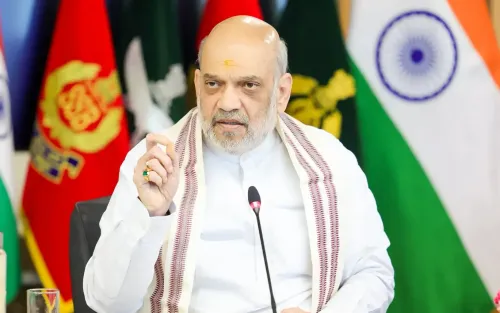
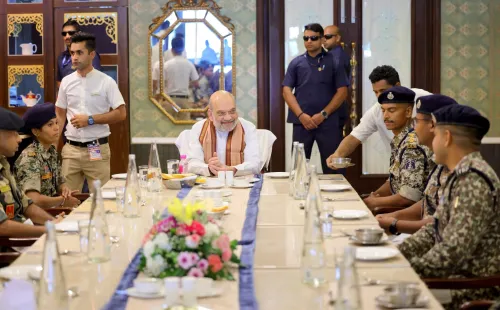
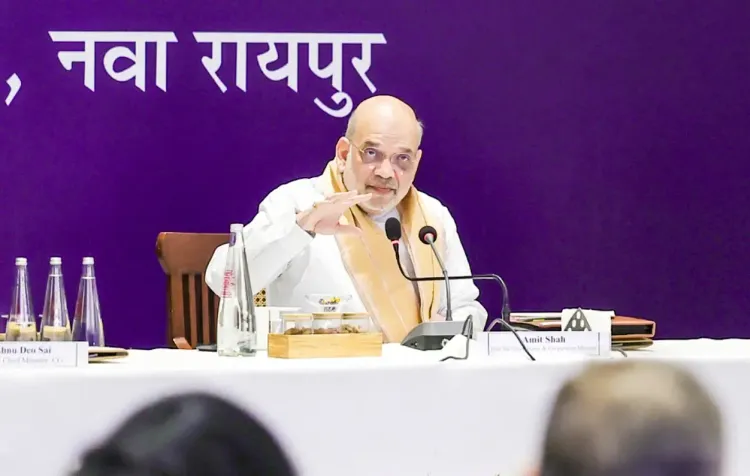
Prior to the event, Amit Shah convened a high-level security review meeting focused on Left-Wing Extremism (LWE) in Raipur, Chhattisgarh, just weeks before the government's deadline for extinguishing the Maoist insurgency.
This meeting took place at a hotel in Nava Raipur Atal Nagar and was attended by Chief Minister Vishnu Deo Sai, Deputy Chief Minister Vijay Sharma, the Union Home Secretary, the Director of the Intelligence Bureau (IB), and the Special Secretary for Internal Security from the Ministry of Home Affairs.
Also present were the Directors General of the Central Reserve Police Force (CRPF), Border Security Force (BSF), Indo-Tibetan Border Police (ITBP), and National Investigation Agency (NIA), alongside the police chiefs from Chhattisgarh, Odisha, Maharashtra, Jharkhand, and Telangana, as well as other senior officials.
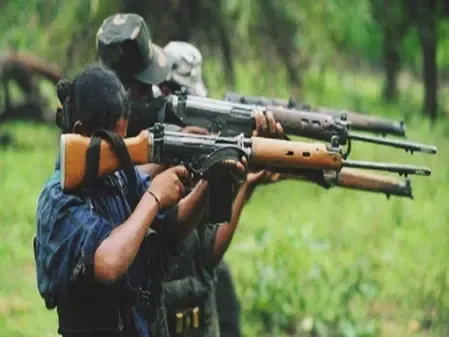
Chhattisgarh's Bastar region, which includes seven districts and shares borders with Maharashtra, Telangana, Andhra Pradesh, and Odisha, has historically been regarded as a bastion for Maoists. However, enhanced anti-Naxal operations in recent years have considerably weakened the insurgent presence.
Since January 2024, over 500 Naxalites, including prominent leaders like CPI (Maoist) general secretary Nambala Keshava Rao alias Basavaraju, have been eliminated in encounters within Chhattisgarh. During this timeframe, approximately 1,900 Naxalites have been apprehended, and over 2,500 have surrendered in the state.
Importantly, Madhya Pradesh, which has also faced the challenges of Naxalism for nearly four decades, has already been declared Naxal-free, ahead of the March 31, 2026, target.
Point of View
It's imperative to highlight that the government's commitment to addressing Left Wing Extremism is significant for national security and tribal welfare. The emphasis on development and unity among states is essential in combating the challenges posed by Maoist ideology. Our nation must rally together to support these initiatives.
NationPress
1 Oct 2026