MP becomes India's first Naxal-free state, says CM Yadav
Synopsis
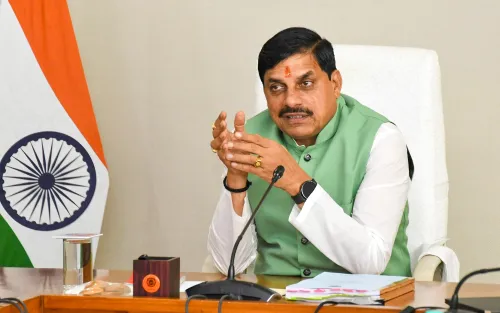
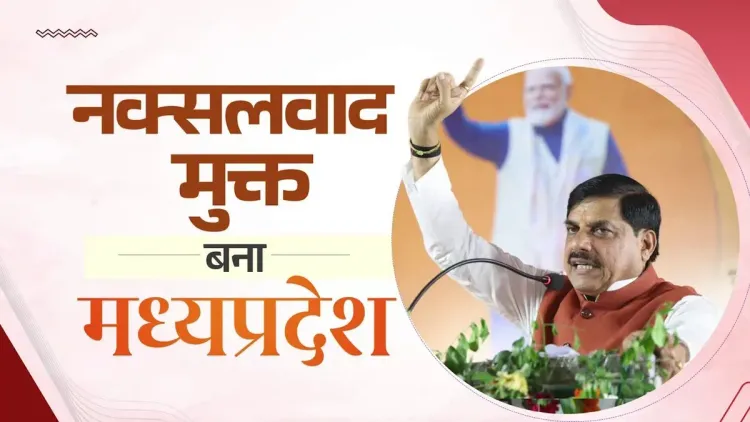
The Chief Minister's Office of Madhya Pradesh announced on 17 July 2026 that the state has become India's first to be completely free of Naxal influence. CM Dr Mohan Yadav credited the achievement to national anti-Naxal campaigns led by PM Modi and Home Minister Amit Shah, calling it a historic milestone for peace and development.
Key Takeaways
Madhya Pradesh has been declared the first state in India to be completely free of Naxal influence, as announced on 17 July 2026 .
CM Dr Mohan Yadav attributed the achievement to anti-Naxal campaigns led by PM Narendra Modi and Union Home Minister Amit Shah .
The state's historically Naxal-affected districts included Balaghat and Mandla , located on the edge of the Red Corridor.
The Union government's SAMADHAN doctrine (introduced 2017 ) combined security operations with development and rehabilitation to address Left Wing Extremism nationally.
The Communist Party of India (Maoist) has been banned under anti-terror laws since 2009 , with the ban periodically renewed.
The declaration is expected to unlock faster infrastructure investment and welfare delivery for tribal and forest-fringe communities in the affected districts.
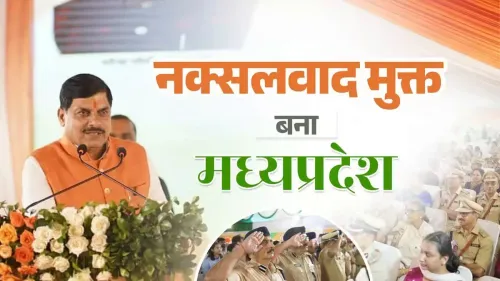
The Chief Minister's Office of Madhya Pradesh declared on 17 July 2026 that Madhya Pradesh has become the first state in India to be completely free of Naxal influence, with Chief Minister Dr Mohan Yadav describing the milestone as a historic step toward peace, security, and development in the state.
Context
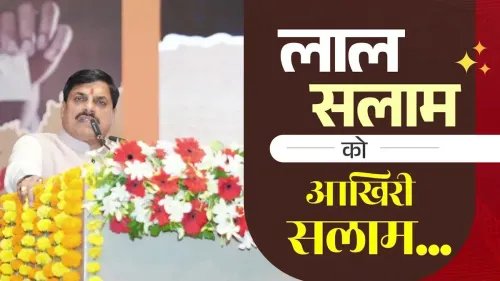
CM Yadav's post, shared from the official @CMMadhyaPradesh handle, credited the achievement to national anti-Naxal campaigns led by Prime Minister Narendra Modi and Union Home Minister Amit Shah. In his words, the state has bid 'Lal Salaam ko aakhiri salaam' — a final farewell to the 'Red Salute', the rallying cry of Maoist insurgents — making it the country's first state to do so. The announcement carries significant symbolic weight, marking the end of a decades-long security challenge in parts of the state.
Policy Backdrop
Madhya Pradesh had historically recorded Naxal activity in its forested districts, particularly Balaghat and Mandla, which formed the eastern fringe of the so-called Red Corridor. The Union government's SAMADHAN doctrine, introduced in 2017, combined kinetic security operations with infrastructure development and rehabilitation programmes to shrink insurgent influence across affected states. The Communist Party of India (Maoist) has remained banned as an unlawful association under anti-terror laws since 2009, with the ban periodically extended.
Over the past decade, official data have shown a steady decline in Left Wing Extremism (LWE)-related violence and in the number of districts classified as Naxal-affected. Madhya Pradesh's declaration follows a broader national trend of progressive containment, with individual districts in other states such as Chhattisgarh and Jharkhand also reporting reductions in Naxal presence.
Stakeholders and Impact
The communities most directly affected by this shift are tribal populations in the erstwhile Naxal-affected districts, who bore the brunt of both insurgent activity and counter-insurgency operations for years. Security forces — including state police, the Central Reserve Police Force, and specialised units — have sustained prolonged deployments in these regions. A Naxal-free certification opens the door to accelerated infrastructure investment, improved governance delivery, and rehabilitation for surrendered cadres in these areas.
For the Mohan Yadav government, the announcement is a significant political and administrative achievement, reinforcing the ruling party's narrative of decisive governance on internal security. Rural and forest-fringe communities stand to benefit from increased connectivity and welfare access that security constraints had previously slowed.
What's Next
Attention will now turn to whether other heavily affected states — particularly Chhattisgarh and Jharkhand — can replicate Madhya Pradesh's trajectory. Parliamentary updates on the Security Related Expenditure (SRE) scheme and the national surrender-cum-rehabilitation policy are expected to reflect the changed ground situation in the state. The Centre's LWE division is likely to formally revise the list of Naxal-affected districts, which carries direct implications for central funding allocations to these regions.
Point of View
Arriving at a moment when the Centre has been keen to demonstrate measurable results from the SAMADHAN framework. By crediting PM Modi and Home Minister Shah explicitly, CM Yadav aligns the achievement with the national BJP leadership's internal security narrative ahead of any future electoral cycle. The announcement also signals a likely shift in central resource allocation — districts no longer classified as LWE-affected lose access to certain security-linked grants, meaning the government must now demonstrate development delivery to sustain the claim. Whether the declaration holds on the ground will be the real test, as premature de-listing has in the past allowed dormant networks to revive.
NationPress
16 Oct 2026
Frequently Asked Questions
Has Madhya Pradesh really become Naxal free?
The Chief Minister's Office of Madhya Pradesh officially declared on 17 July 2026 that the state is completely free of Naxal influence, making it the first state in India to achieve this status according to the state government. The claim has been made by CM Dr Mohan Yadav and is yet to be formally verified through a central government notification.
Which districts in Madhya Pradesh were affected by Naxalism?
The historically Naxal-affected districts in Madhya Pradesh included Balaghat and Mandla, which formed part of the eastern fringe of the Red Corridor. Progressive security operations and development initiatives have been credited with eliminating insurgent presence in these areas.
What is the SAMADHAN doctrine?
SAMADHAN is the Union government's anti-Naxal strategy introduced in 2017 that combines kinetic security action with infrastructure development and rehabilitation programmes. It is coordinated by the Union Home Ministry and implemented across Left Wing Extremism-affected states.
Who is CM Mohan Yadav?
Dr Mohan Yadav is the Chief Minister of Madhya Pradesh, having assumed office in December 2023. He has been at the forefront of highlighting the state's security and development achievements under the central government's anti-Naxal framework.
Which states still have Naxal presence in India?
States such as Chhattisgarh and Jharkhand continue to record significant Naxal activity and remain classified as Left Wing Extremism-affected. Security analysts and the Union Home Ministry are monitoring progress in these states following Madhya Pradesh's declaration.