Rijiju flags India's push to become sports superpower by 2036
Synopsis
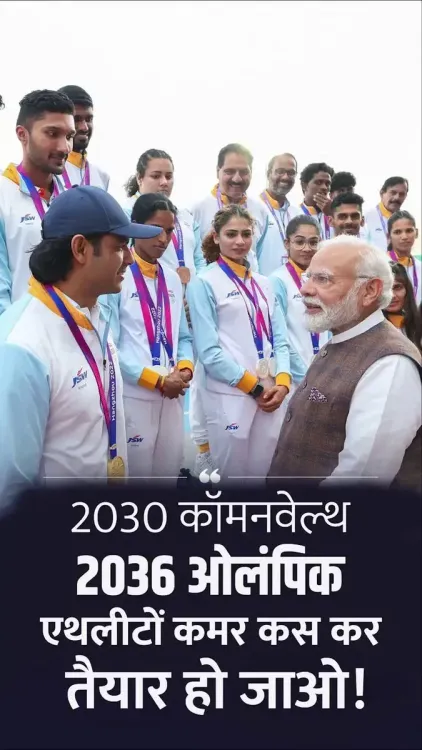
Union Minister Kiren Rijiju on 17 July 2026 spotlighted India's bilateral sports partnerships with Indonesia, Australia and New Zealand, anchoring the push within the Khelo India and TOPS frameworks as India targets podium finishes at the 2030 Commonwealth Games and a strong showing at the 2036 Olympics.
Key Takeaways
Union Minister Kiren Rijiju declared on 17 July 2026 that India is 'on the path to becoming a sports superpower.' Bilateral sports cooperation with Indonesia , Australia , and New Zealand is being highlighted as central to improving athlete preparation.
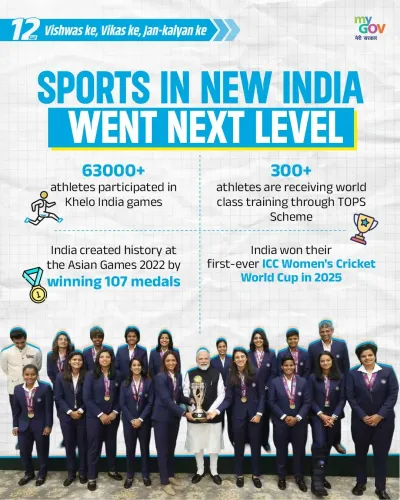
The Khelo India scheme (launched 2017 ) and the Target Olympic Podium Scheme (TOPS) (launched 2014 ) are the government's primary instruments for this push.
India's stated targets are improved performance at the 2030 Commonwealth Games and a strong medal tally at the 2036 Olympics .
India formally announced its intent to bid for the 2036 Olympics at the 2023 National Sports Summit .
The campaign is framed under the Viksit Bharat 2047 vision of positioning India among the world's top sporting nations.
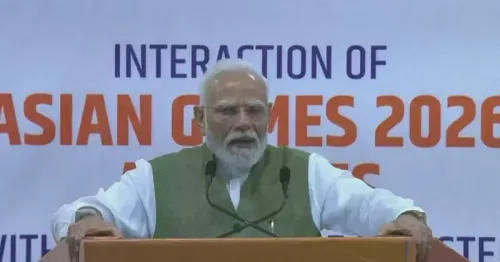
Union Parliamentary Affairs Minister Kiren Rijiju on Friday, 17 July 2026, highlighted India's growing sports cooperation with Indonesia, Australia, and New Zealand, framing it as a key pillar in the country's ambition to become a global sports superpower ahead of the 2030 Commonwealth Games and the 2036 Olympics.
Posting in Hindi on X, Rijiju wrote: 'Bharat khel mahashakti banne ki raah par!' ('India is on the path to becoming a sports superpower!'), adding that expanding bilateral sports cooperation and world-class training are giving Indian athletes 'a new flight.' He specifically cited the Khelo India scheme and the Target Olympic Podium Scheme (TOPS) as the twin engines driving this ambition.
Context
Rijiju's post comes as India's sports diplomacy has gathered pace over recent years, with bilateral agreements covering coaching exchanges, high-performance centres, and athlete training camps. The minister tagged the Sports Authority of India (SAI), the official Khelo India handle, and India Sports in his post, signalling institutional coordination behind the messaging. The hashtags #ViksitBharat and #TeamIndia link the sporting push to the government's broader Viksit Bharat 2047 development vision.
Policy Backdrop
The Khelo India scheme, launched in 2017, was designed to build a pyramid of sports development stretching from school-level participation to elite competition, with talent identification and infrastructure creation at its core. Complementing it, the Target Olympic Podium Scheme (TOPS), introduced in 2014, provides targeted financial and logistical support — including international training exposure and specialised coaching — to athletes identified as realistic medal prospects at the Olympics and Paralympics.
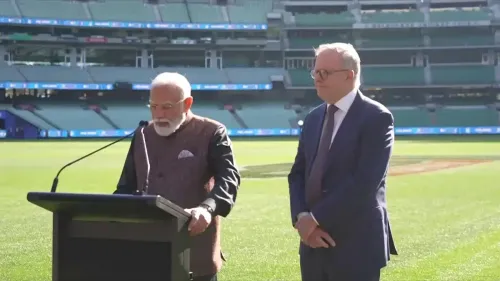
India has maintained sports cooperation agreements with Australia since 2018, with a renewed agreement in 2023 focusing on training facilities and coach exchange. The government formally announced its intent to bid for the 2036 Olympics during the 2023 National Sports Summit, a commitment that has since shaped several policy and diplomatic decisions in the sports sector.
Stakeholders and Impact
The primary beneficiaries of these programmes are Indian athletes across disciplines who gain access to superior coaching infrastructure, sports science support, and international competitive exposure that was historically difficult to secure domestically. Sports federations, state governments running Khelo India academies, and the Sports Authority of India are the institutional actors responsible for translating these bilateral partnerships into on-ground training outcomes.
For India's sporting ecosystem, the partnerships with Indonesia, Australia, and New Zealand — countries with established high-performance cultures in specific disciplines — are intended to address longstanding gaps in coaching depth and sports-science capability. The 2030 Commonwealth Games are seen as an intermediate benchmark before the higher-stakes target of a strong medal haul at the 2036 Olympics, for which India is actively pursuing a hosting bid.
What's Next
Parliamentary debates on the annual sports budget and any formal announcement of India's 2036 Olympic bid committee will be closely watched as indicators of how substantively these ambitions are being institutionalised. The Sports Authority of India is expected to roll out further details on international training tie-ups under the TOPS framework. With the 2030 Commonwealth Games now within the four-year preparation window, performance benchmarks for TOPS-supported athletes are likely to come under increased scrutiny in the months ahead.
Point of View
Tying bilateral partnerships with three Indo-Pacific nations to India's long-running ambition of converting economic heft into Olympic medals. The framing under #ViksitBharat is deliberate — it places sports achievement within the ruling party's flagship development narrative ahead of the 2036 Olympic bid decision. The explicit mention of Khelo India and TOPS suggests the minister is building a public record of policy continuity, useful both domestically and in international bid lobbying. Whether the partnerships with Indonesia and New Zealand translate into measurable performance gains will ultimately be tested at the 2030 Commonwealth Games, making that event a critical political as well as sporting benchmark.
NationPress
16 Oct 2026
Frequently Asked Questions
What is the Khelo India scheme and how does it help athletes?
Khelo India is a central government scheme launched in 2017 to develop grassroots sports talent through infrastructure creation, annual talent identification programmes, and financial support to promising young athletes at the school and college level.
What is the Target Olympic Podium Scheme (TOPS)?
TOPS, introduced in 2014, is a Ministry of Youth Affairs and Sports programme that provides elite Indian athletes with funding for international training camps, specialised coaching, equipment, and sports science support to help them win medals at the Olympics and Paralympics.
Is India bidding for the 2036 Olympics?
India announced its intent to bid for the 2036 Olympics during the 2023 National Sports Summit; the formal bid process and committee announcement are still awaited as of mid-2026.
What sports agreements does India have with Australia?
India and Australia have maintained sports cooperation agreements since 2018, with a renewed pact in 2023 covering training facility access, coach exchange programmes, and high-performance centre collaboration.
What are India's targets for the 2030 Commonwealth Games?
The Indian government has identified the 2030 Commonwealth Games as an intermediate performance benchmark, with athletes supported under Khelo India and TOPS expected to significantly improve on previous medal tallies.