CM Himanta's Assam Budget 2026 to post MBBS doctors at sub-centres
Synopsis
Assam Chief Minister Himanta Biswa Sarma announced on 17 July 2026 that the Assam Budget 2026 provides for trained MBBS doctors to be posted at every Health Sub-Centre in the state, aiming to deliver qualified medical care to Assam's most remote communities.
Key Takeaways
Assam Budget 2026 includes a provision for appointing trained MBBS doctors at every Health Sub-Centre in the state.
CM Himanta Biswa Sarma made the announcement on 17 July 2026 , framing it as a step toward last-mile quality healthcare.
Health Sub-Centres are India's lowest-tier public health facilities, traditionally staffed by paramedics rather than graduate physicians.
The move builds on the Ayushman Bharat framework launched in 2018 , which upgraded sub-centres into Health and Wellness Centres .
Rural retention of MBBS doctors remains a known challenge; implementation will depend on recruitment and incentive structures rolled out in 2026-27 .
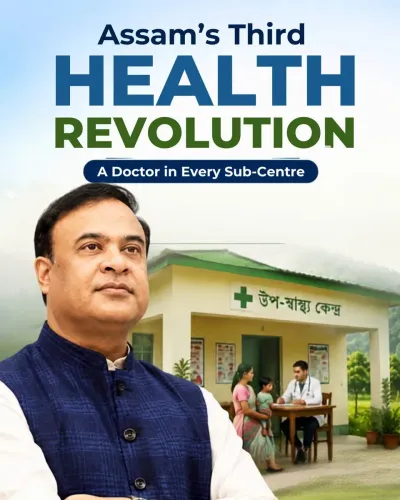
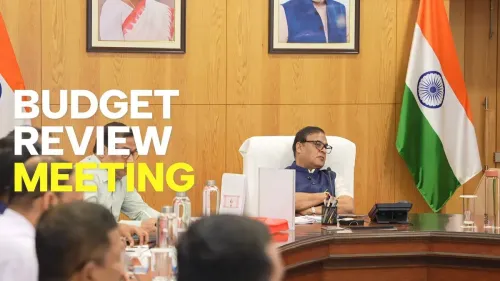
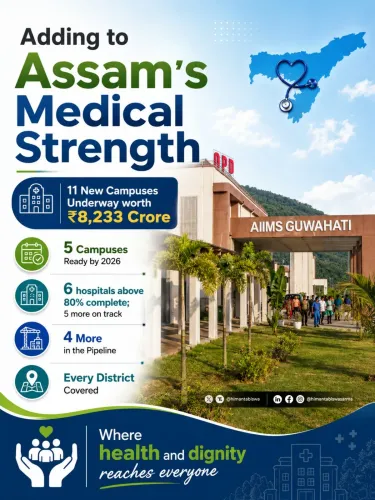
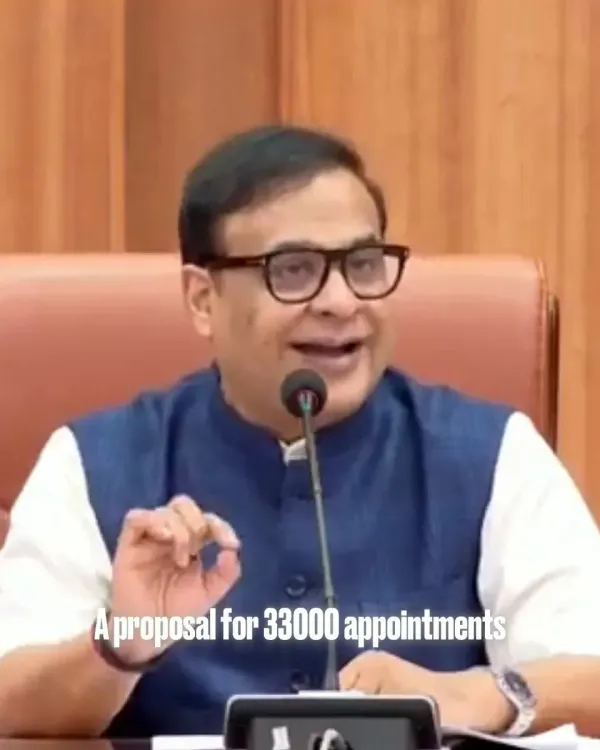
Assam Chief Minister Himanta Biswa Sarma on Friday, 17 July 2026, announced that the #AssamBudget2026 provides for the deployment of trained MBBS doctors at every Health Sub-Centre across the state, a move aimed at bringing qualified medical care to the most remote communities in the region.
Context
Posting on X, CM Sarma stated that the budget 'paves the way for the appointment of trained MBBS doctors at each Health Sub-Centre, ensuring quality healthcare is available to people where they need it the most.' The announcement signals a significant structural shift in how Assam intends to staff its lowest-tier public health facilities, which have historically been managed by paramedics and auxiliary nurse-midwives rather than graduate physicians.
Health Sub-Centres are the first point of contact between the formal healthcare system and rural populations in India. Staffing them with MBBS-qualified doctors would represent a leap beyond what most states have attempted under existing national health frameworks.
Policy Backdrop
India's primary healthcare architecture has evolved through two major central initiatives. The National Rural Health Mission (NRHM), launched in 2005 and later subsumed under the National Health Mission (NHM) in 2013, sought to strengthen sub-centres with additional staff and infrastructure funding. A decade later, the Ayushman Bharat programme announced in 2018 upgraded sub-centres into Health and Wellness Centres (HWCs), expanding their service scope to include non-communicable diseases, maternal health, and basic diagnostics.
Despite these upgrades, the physical presence of a qualified MBBS doctor at the sub-centre level has remained an unfulfilled goal across most Indian states. Assam's budget proposal, if implemented, would operationalise this aspiration within the framework of the post-2018 Ayushman Bharat architecture.
Stakeholders and Impact
Rural residents of Assam — particularly those in remote and hilly districts of the northeast — stand to be the primary beneficiaries. Access to a trained physician at the sub-centre level could reduce dependence on distant district hospitals and cut delays in diagnosis and referral. Medical graduates would see new rural posting opportunities, though retaining MBBS doctors in remote postings has historically been a challenge for northeastern states.
The move aligns with a broader national pattern in which state governments use annual budgets to push beyond paramedic-led primary care toward physician-led models. Similar efforts have been undertaken in other states, but implementation pace has varied sharply depending on recruitment infrastructure and incentive structures.
What's Next
Attention will now turn to the Assam state assembly debates on the health budget and the release of phased recruitment notifications for the 2026-27 fiscal period. The scale of deployment — covering every sub-centre in the state — will test both the government's administrative capacity and its ability to design retention incentives strong enough to keep qualified doctors in rural postings. Progress on these fronts will determine whether the budget provision translates into on-ground change for Assam's rural populations.
Point of View
Going a step beyond the paramedic-upgrade model that defined the Ayushman Bharat rollout. For CM Sarma, it reinforces a governance narrative built around visible welfare delivery in a state where healthcare access gaps have long been a political pressure point. The critical test, however, lies not in the budget line but in the recruitment pipeline and rural retention policy that must follow — areas where similar announcements in other states have stalled. If Assam can demonstrate a working deployment model, it could set a replicable template for other NHM-dependent states across the northeast.
NationPress
16 Oct 2026
Frequently Asked Questions
What is the Assam Budget 2026 health announcement about?
The Assam Budget 2026 provides for the appointment of trained MBBS doctors at every Health Sub-Centre in the state, as announced by CM Himanta Biswa Sarma on 17 July 2026 .
What is a Health Sub-Centre in India?
A Health Sub-Centre is the lowest tier of India's public healthcare system, designed to serve rural and remote populations with basic medical services. They have traditionally been staffed by auxiliary nurse-midwives and paramedics rather than graduate doctors.
How does this relate to Ayushman Bharat?
The Ayushman Bharat programme launched in 2018 upgraded sub-centres into Health and Wellness Centres with expanded services. Assam's budget proposal builds on this framework by adding MBBS -qualified doctors to these facilities.
Will MBBS doctors actually stay in rural Assam postings?
Rural retention of MBBS doctors is a well-documented challenge across India, including in northeastern states. The success of the initiative will depend on the incentive structures and service conditions that the Assam government attaches to these postings in the 2026-27 recruitment cycle.
When will MBBS doctors be deployed at Assam sub-centres?
Specific timelines have not been confirmed. Implementation details are expected to emerge through state assembly debates on the health budget and official recruitment notifications during the 2026-27 fiscal period.