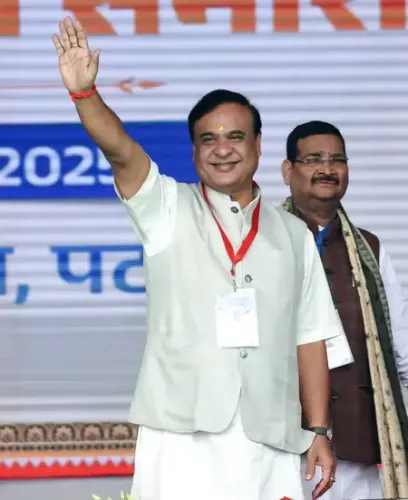
CM Himanta Targets 2 Lakh More PMAY-G Houses in 100 Days

Synopsis
Assam Chief Minister Himanta Biswa Sarma has announced a 100-day drive to construct 2 lakh additional PMAY-G rural houses, following the reported completion of 22 lakh homes under the central scheme. The time-bound push underscores the BJP-led state government's focus on housing saturation in the northeast.
Key Takeaways
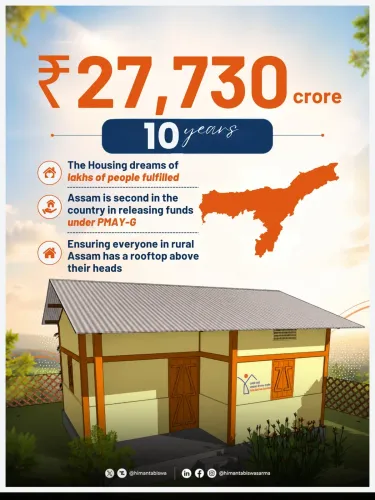
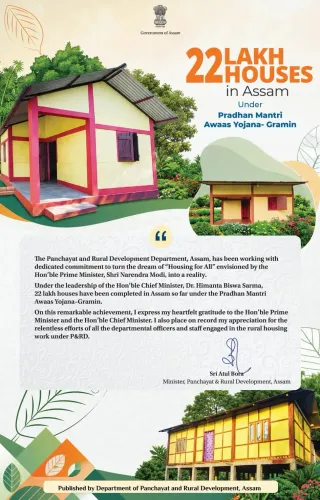
Assam has reported completing 22 lakh houses under the Pradhan Mantri Awas Yojana-Gramin (PMAY-G) .
CM Himanta Biswa Sarma has set a target of 2 lakh additional houses to be built within the next 100 days .
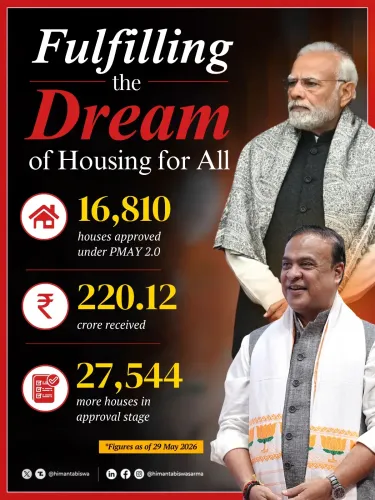
PMAY-G is a central rural housing scheme launched in April 2016 , now in an extended phase targeting 1.95 crore additional homes nationally .
Northeast states , including Assam, have received prioritised central funding under the scheme since 2014.
The 100-day timeline implies construction of roughly 2,000 houses per day , placing significant pressure on state delivery machinery.
Progress is expected to be reviewed at upcoming Assam Legislative Assembly sessions and central Ministry of Rural Development scheme reviews.
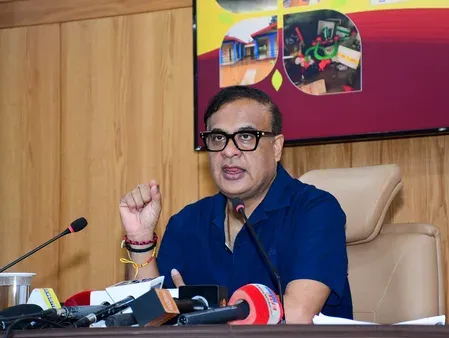
Assam Chief Minister Himanta Biswa Sarma announced on Friday, 17 July 2026 that the state has completed 22 lakh houses under the Pradhan Mantri Awas Yojana-Gramin (PMAY-G) and has set a fresh target of building 2 lakh additional houses within the next 100 days. The announcement signals a renewed push to achieve saturation coverage of the rural housing scheme across Assam.
Context
In his post, CM Sarma stated: 'After successfully completing 22 lakh PMAY-G houses in Assam, we are now determined to build 2 lakh more in the next 100 days.' The declaration positions Assam as one of the more aggressive implementers of the centrally sponsored rural housing programme in the northeast. The 100-day framing introduces a concrete, time-bound accountability measure for the state's rural development machinery.
PMAY-G was launched in April 2016 under the Ministry of Rural Development with an initial target of one crore pucca houses for rural beneficiaries by 2022. Following near-completion of that phase, the scheme received an additional target of 1.95 crore houses nationally in 2022, extending its mandate and drawing in states like Assam for fresh allocations.
Policy Backdrop
PMAY-G provides financial assistance to eligible rural households to construct all-weather, structurally sound homes, with funds shared between the central and state governments. Northeast states have received focused central funding and expedited targets under the regional development priorities that have guided policy since 2014. Assam, as the largest state in the northeast by population, carries a disproportionately large share of the region's housing burden.
The BJP-led government in Assam, under CM Sarma since 2021, has repeatedly cited PMAY-G delivery as a key governance benchmark. Saturation reporting — announcing that an entire eligible population within a scheme has been covered — has become a standard metric that state governments use to demonstrate administrative efficiency and political will ahead of budget reviews and election cycles.
Stakeholders and Impact
The primary beneficiaries are rural households in Assam who remain without pucca housing and are registered on the scheme's awaiting list. State-level rural development departments, gram panchayats, and district collectors are the key executing arms responsible for beneficiary verification, fund disbursal, and construction monitoring. A target of 2 lakh houses in 100 days translates to an average of roughly 2,000 houses per day — a pace that will test administrative bandwidth significantly.
For the broader northeast, Assam's delivery record under PMAY-G carries weight as CM Sarma also convenes the North-East Democratic Alliance (NEDA), the BJP's political grouping across the region. A demonstrable housing milestone in Assam reinforces the alliance's governance narrative in states where elections are periodically due.
What's Next
Progress against the 100-day target is likely to be tracked through the Ministry of Rural Development's AwaasSoft monitoring portal, which records house completion stages in real time. Any shortfall or revision to the target could surface during the next Assam Legislative Assembly budget session or at central scheme review meetings where state-wise performance is benchmarked. CM Sarma is expected to provide periodic updates as the deadline approaches, given the public commitment made through the post. Successful delivery would strengthen the case for further housing allocations to Assam under any future extension of the scheme.
Point of View
Housing delivery doubles as political currency: with NEDA states watching, a credible saturation claim in the northeast's largest state reinforces the alliance's administrative narrative. The scale of the fresh target — 2 lakh homes in roughly three months — is ambitious by any administrative benchmark, and the gap between announcement and verified completion will be the metric that matters. If delivery falls short, it risks becoming a liability in future scheme allocation negotiations with the Ministry of Rural Development.
NationPress
16 Oct 2026
Frequently Asked Questions
What is the PMAY-G scheme and how does it work in Assam?
PMAY-G, or Pradhan Mantri Awas Yojana-Gramin, is a central government scheme launched in April 2016 that provides financial assistance to eligible rural households to build pucca (all-weather) homes. In Assam, the state government works with district administrations and gram panchayats to identify beneficiaries, disburse funds in instalments, and monitor construction through the AwaasSoft portal.
How many PMAY-G houses has Assam completed so far?
According to a post by Assam Chief Minister Himanta Biswa Sarma dated 17 July 2026, the state has completed 22 lakh houses under PMAY-G.
What is Assam's new housing target under PMAY-G?
CM Himanta Biswa Sarma has announced a target of 2 lakh additional PMAY-G houses to be completed within the next 100 days.
Why is the northeast getting special focus under PMAY-G?
Northeast states have received prioritised central funding and expedited targets under PMAY-G as part of the central government's broader regional development push since 2014. Assam, as the largest state in the region by population, carries a significant share of the northeast's rural housing demand.
What happens after Assam meets its PMAY-G target?
Once the 100-day target is met, the state's performance will likely be reviewed at central Ministry of Rural Development scheme meetings. Strong delivery could support Assam's case for further housing allocations under any future extension of the PMAY-G programme.