CM Himanta Highlights 74% Women Ownership Under PMAY-Gramin
Synopsis
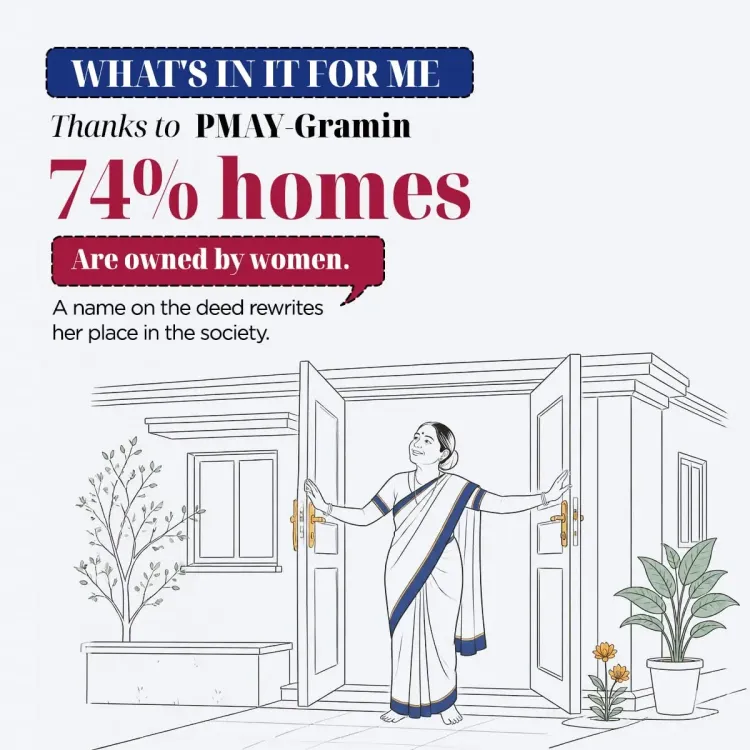
Assam Chief Minister Himanta Biswa Sarma cited a nearly 74 per cent women-ownership rate under PMAY-Gramin on June 12, 2026, linking the statistic to PM Modi's 12-year Nari Shakti agenda and the scheme's policy mandate of registering rural homes in women's names.
Key Takeaways
Assam CM Himanta Biswa Sarma posted on June 12, 2026 that nearly 74% of PMAY-Gramin homes are owned by women.
PMAY-Gramin , launched in 2015 , has mandated preference for women-headed households and joint property registration since 2016 .
The post is part of the #12YearsOfNariShakti campaign marking over a decade of women-centric welfare schemes under PM Narendra Modi .
Property title in a woman's name improves her legal standing, credit profile, and financial independence — the stated rationale behind the PMAY-G gender mandate.
The Ministry of Rural Development is the implementing body; its next gender-disaggregated report will be key to verifying the cited ownership figure.
Sarma's amplification as NEDA convenor signals the Northeast's alignment with the central government's rural welfare narrative.
Assam Chief Minister Himanta Biswa Sarma on Friday, June 12, 2026, highlighted that nearly 74 per cent of homes sanctioned under the Pradhan Mantri Awas Yojana-Gramin (PMAY-G) are owned by women, framing the statistic as a measure of Prime Minister Narendra Modi's commitment to female empowerment under the #12YearsOfNariShakti campaign.
Context
Sarma's post states: 'Under PMAY-Gramin, nearly 74% of homes are owned by Bharat's Nari Shakti.' He adds that 'property ownership strengthens financial security, social standing and long-term empowerment,' crediting Prime Minister Modi for taking 'all steps to empower the women of India.' The post is part of a coordinated BJP campaign marking 12 years of Nari Shakti initiatives under the central government.
The #12YearsOfNariShakti hashtag signals a broader party-wide communication drive timed to mark over a decade of welfare and empowerment programmes attributed to the Modi government since 2014.
Policy Backdrop
PMAY-Gramin is the rural housing arm of the Pradhan Mantri Awas Yojana, launched nationwide in 2015 with the goal of providing pucca (permanent) homes to eligible poor households. The Ministry of Rural Development, which implements the scheme, built a gender-priority framework into PMAY-G guidelines from 2016 onward, mandating preference for women-headed households and encouraging joint property registration — known as joint pattas — to promote female asset ownership.
The policy rationale is that placing a home in a woman's name confers legal standing, improves her credit profile, and provides a degree of financial independence. This design principle was carried forward across parallel central schemes such as Pradhan Mantri Ujjwala Yojana and Pradhan Mantri MUDRA Yojana, all of which register primary entitlements in women's names.
Stakeholders and Impact
The primary beneficiaries are rural women and women-headed households across India, particularly in economically weaker sections. For many of these families, a government-built home is the single largest asset they will ever own, making the gender of the title-holder a consequential economic and social variable.
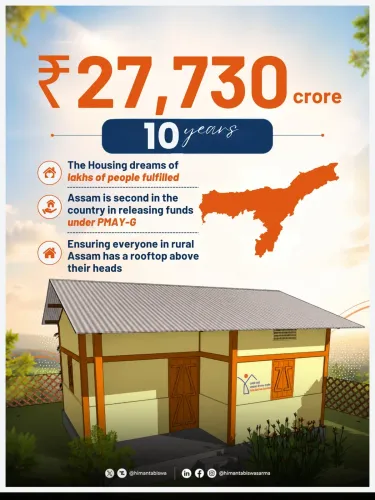
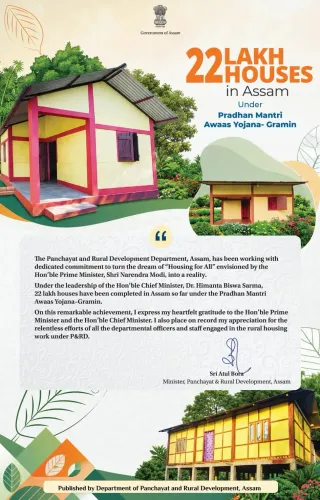
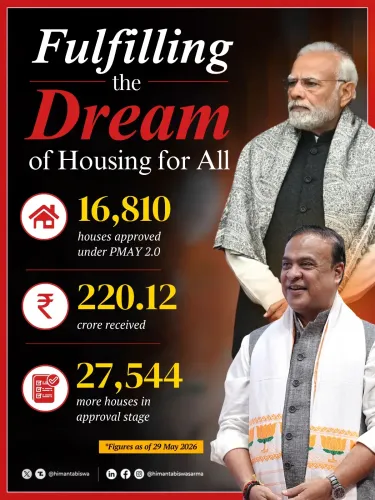
As NEDA convenor, Sarma's amplification of this data point also carries a regional dimension, signalling the Northeast's alignment with the central government's welfare narrative. Assam, like other northeastern states, has seen significant PMAY-G allocations, and the Chief Minister's post implicitly underscores delivery on the ground in his home state and region.
What's Next
Attention will turn to the Ministry of Rural Development's next gender-disaggregated completion report, which will either corroborate or contextualise the 74 per cent ownership figure cited by Sarma. Any Assam-specific update on joint patta legislation or state-level housing targets is also expected to follow as part of the broader Nari Shakti communication cycle.
If the central government formalises the 74 per cent figure in an official release, it would set a measurable benchmark for women's property ownership in rural India — one that future housing policy and welfare audits will be held against.
Point of View
If officially substantiated, would be a significant policy achievement, but its circulation via social media ahead of any formal ministry release reflects how welfare data is increasingly managed as political communication. As NEDA convenor, Sarma's endorsement also reinforces the Northeast as a region where central welfare delivery is framed as both effective and gender-sensitive. The #12YearsOfNariShakti campaign suggests the party is building a consolidated record ahead of future electoral cycles, with asset ownership under PMAY-G as a centrepiece argument.
NationPress
24 Sept 2026
Frequently Asked Questions
What is PMAY-Gramin and who benefits from it?
PMAY-Gramin (Pradhan Mantri Awas Yojana-Gramin) is the rural housing component of the central government's PMAY scheme, launched in 2015 to provide permanent homes to eligible poor households. Women-headed households are prioritised, and homes are encouraged to be registered in women's names or jointly.
What does the 74% women ownership figure under PMAY-Gramin mean?
Assam CM Himanta Biswa Sarma cited that nearly 74 per cent of homes sanctioned under PMAY-Gramin are owned by women, reflecting the scheme's policy mandate of registering rural homes in female beneficiaries' names to promote financial security and empowerment.
What is the #12YearsOfNariShakti campaign?
#12YearsOfNariShakti is a BJP-led campaign marking over 12 years of women-centric welfare initiatives under PM Narendra Modi's government since 2014, highlighting schemes such as PMAY-G, Ujjwala, and MUDRA that register entitlements primarily in women's names.
Why does registering a home in a woman's name matter?
Legal property ownership in a woman's name strengthens her financial security, improves access to credit, enhances social standing, and provides a degree of independence — which is why PMAY-G guidelines from 2016 onward made women's ownership a priority condition.
What is Himanta Biswa Sarma's role beyond being Assam CM?
Besides serving as Chief Minister of Assam, Himanta Biswa Sarma is the convenor of the North-East Democratic Alliance (NEDA), the BJP-led political grouping that coordinates governance and electoral strategy across northeastern states.