CM Himanta Reaffirms Assam Govt's Commitment to Women's Development
Synopsis
Assam Chief Minister Himanta Biswa Sarma on 18 June 2026 declared that women power is driving the state's development and pledged his government's commitment to fulfilling women's aspirations, reinforcing a sustained policy focus on women-centric welfare in the northeastern state.
Key Takeaways
CM Himanta Biswa Sarma on 18 June 2026 publicly reaffirmed the Assam government's commitment to women's empowerment and development.
He stated that the 'Nari Shakti' of Assam is giving new momentum to the state's overall growth.
Assam launched the Orunodoi scheme in 2020 to provide monthly financial assistance to women from economically weaker households.
CM Sarma has led the BJP government in Assam since 2021 and also serves as convenor of the North-East Democratic Alliance (NEDA) .
Women voters and rural women beneficiaries of state welfare schemes are the primary stakeholders of this policy direction.
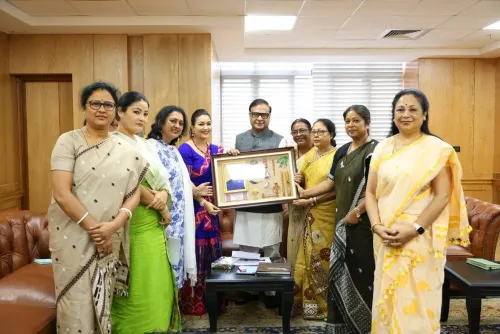
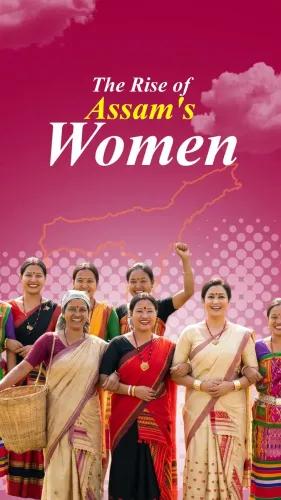
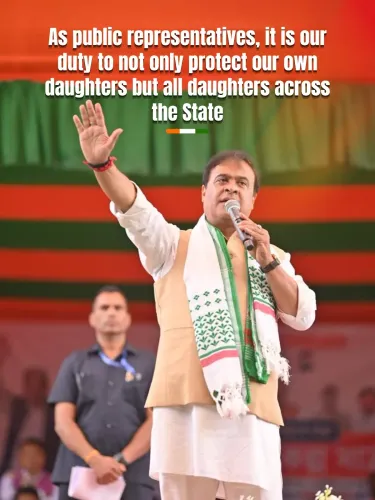
Assam Chief Minister Himanta Biswa Sarma on Thursday, 18 June 2026, reaffirmed his government's commitment to fulfilling the hopes and aspirations of women in the state, saying that the 'Nari Shakti' — women power — of Assam is giving new momentum to the state's overall development.
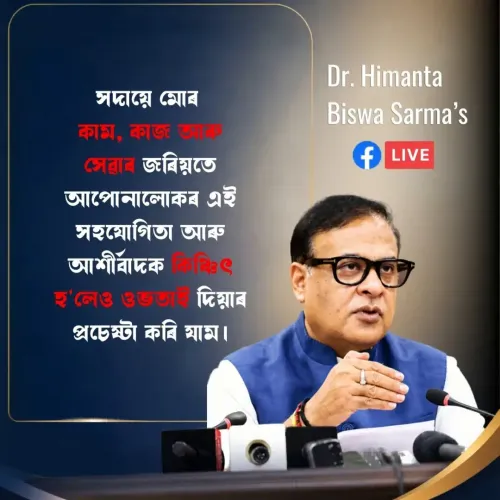
Posting on X, CM Sarma wrote in Hindi: 'असम की नारी शक्ति राज्य के विकास को एक नयी गति दे रही है और हमारी सरकार उनकी आशा और आकांक्षाओं को पूरा करने के लिए प्रतिबद्ध है।' — translated: 'The women power of Assam is giving a new momentum to the state's development, and our government is committed to fulfilling their hopes and aspirations.'
Context
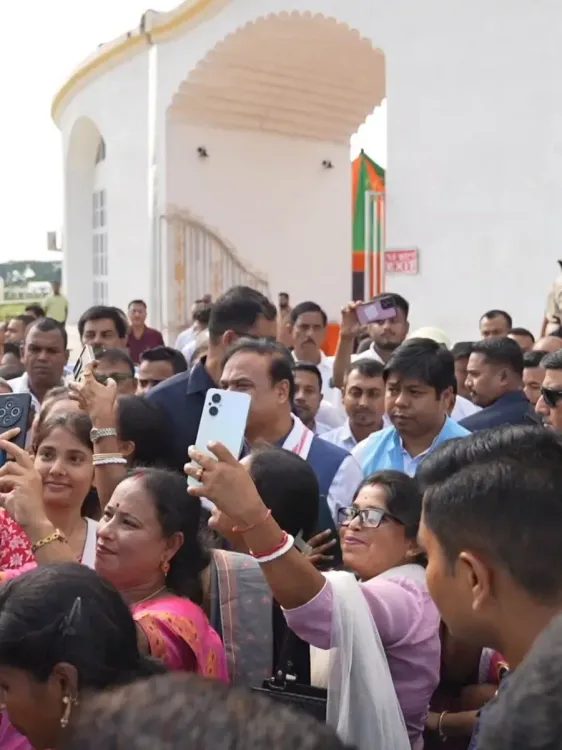
The statement comes as successive governments in Assam have placed women's welfare and economic participation at the centre of their development agenda. CM Sarma, who has led the Bharatiya Janata Party (BJP) government in the state since 2021, has consistently framed women's empowerment as integral to Assam's growth story. The post, accompanied by a video, underscores the government's continued public messaging around women-centric governance.
Policy Backdrop
Assam launched the Orunodoi scheme in 2020, which provides monthly direct financial assistance to women from economically weaker households — one of the flagship welfare measures aimed at improving the financial independence of women in the state. The scheme has been cited repeatedly by the state government as evidence of its commitment to grassroots women's empowerment. State governments in BJP-ruled northeastern states have broadly framed women's economic participation as central to their development vision, linking welfare delivery to tangible quality-of-life improvements for families.
Stakeholders and Impact
The primary beneficiaries of this policy direction are women across Assam, particularly those in rural and semi-urban areas who depend on state-run welfare schemes for financial support. Wider stakeholders include self-help groups, women entrepreneurs, and civil society organisations engaged in women's livelihood programmes in the state. Messaging of this nature also carries significance for women voters, who represent a substantial and increasingly decisive demographic in Assam's electoral landscape.
What's Next
Observers will watch for concrete follow-through in the form of state budget allocations, new scheme announcements, or implementation updates for existing women-centric programmes in Assam. Any expansion of the Orunodoi scheme or launch of allied initiatives would be a direct measure of the government's stated commitment. The broader trajectory of women-focused governance in northeastern India will also be shaped by how NEDA-aligned states coordinate on shared welfare frameworks under CM Sarma's convener role.
Point of View
He aligns Assam's state-level framing with the national BJP vocabulary around women's empowerment, lending it ideological coherence. The absence of specific scheme names or statistics in the post suggests this is principally a reaffirmation of intent rather than a policy announcement. The real test will lie in budget allocations and scheme expansions that follow such public commitments.
NationPress
18 Sept 2026
Frequently Asked Questions
What did Assam CM Himanta Biswa Sarma say about women's empowerment?
On 18 June 2026, CM Himanta Biswa Sarma stated that the women power of Assam is giving new momentum to the state's development and that his government is committed to fulfilling women's hopes and aspirations.
What is the Orunodoi scheme in Assam?
The Orunodoi scheme, launched in 2020, is an Assam government initiative that provides monthly direct financial assistance to women from economically weaker households to improve their financial independence.
What is Nari Shakti in the context of Assam politics?
'Nari Shakti' means women power and is a term used by the Assam government and BJP leaders to describe women's contribution to the state's social and economic development.
Who is Himanta Biswa Sarma?
Himanta Biswa Sarma is the Chief Minister of Assam since 2021, a senior BJP leader, and the convenor of the North-East Democratic Alliance (NEDA), which coordinates BJP-aligned governments across northeastern India.
What women welfare schemes does the Assam government run?
The Assam government's most prominent women welfare scheme is the Orunodoi programme, which offers monthly financial support to women from low-income families; the state has also run various livelihood and self-help group initiatives targeting women's economic participation.