CM Himanta Reaffirms Assam's Commitment to Girl-Child Welfare
Synopsis
Assam Chief Minister Himanta Biswa Sarma on 31 May 2026 reaffirmed his government's commitment to women and girl-child welfare under the #AssamRises narrative, building on flagship schemes like Orunodoi and expanded girls' scholarships introduced since 2021.
Key Takeaways
CM Himanta Biswa Sarma posted on 31 May 2026 reaffirming commitment to the welfare of women and girls in Assam.
The message was shared under the #AssamRises hashtag, the Sarma administration's signature development branding.
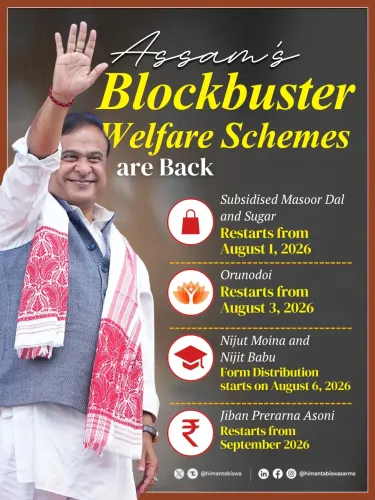
The Orunodoi scheme , launched in 2020-21 , provides Rs 1,250 per month to women from economically weaker households across Assam.
Budget expansions from 2021-22 onwards have funded girls' scholarships and residential schools to improve female literacy and enrolment.
Assam's women-welfare push aligns with the national Beti Bachao Beti Padhao programme while targeting state-specific gender gaps.
Future budgets and social sector outcome reports will be key indicators of whether stated commitments translate into measurable gains.
Assam Chief Minister Himanta Biswa Sarma on Sunday, 31 May 2026, reaffirmed his government's commitment to the welfare and advancement of women and girls in the state, posting a message of intent on X under the #AssamRises banner.
Context
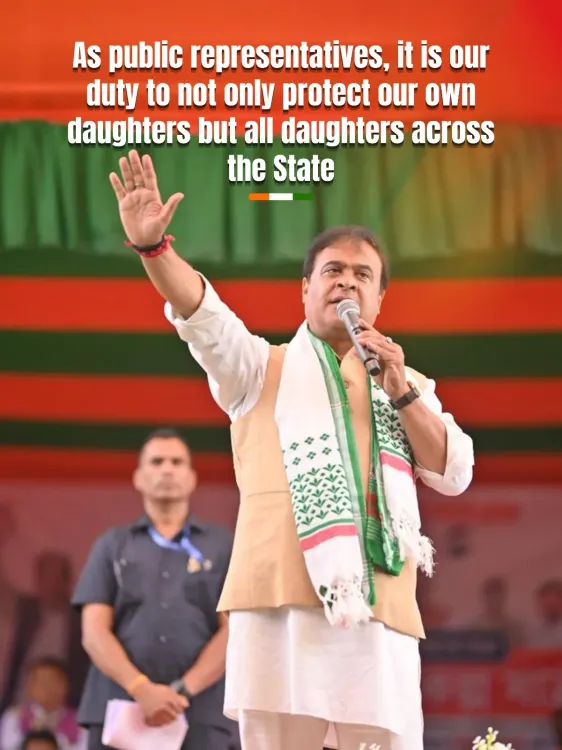
The Chief Minister's message — 'We are committed to building a future where our daughters thrive, shine and excel' — arrives as the BJP-led Assam government continues to position women's empowerment as a central pillar of its governance narrative. The post carries no reference to a specific scheme launch or event, but it aligns with a sustained pattern of public messaging linking social sector investment to the broader 'Assam Rising' development framework.
The hashtag #AssamRises has become a signature marker for the Sarma administration's communications, used across announcements spanning infrastructure, health, and social welfare.
Policy Backdrop
The Assam government's record on girl-child welfare is anchored by several flagship initiatives. The Orunodoi scheme, launched in 2020-21, provides monthly cash assistance of Rs 1,250 to women from economically weaker households across the state, making it one of the most expansive direct-benefit transfers targeting women in the North-East.
Subsequent budget cycles under the Sarma administration, beginning 2021-22, expanded girls' scholarships and funded residential school infrastructure aimed at improving female literacy and retention rates. These measures align with national programmes such as Beti Bachao Beti Padhao while addressing Assam-specific gaps in gender parity across education and health indicators.
Himanta Biswa Sarma has served as Chief Minister since May 2021 and also serves as convenor of the North-East Democratic Alliance (NEDA), giving his statements on women's welfare a regional resonance beyond Assam's borders.
Stakeholders and Impact
The primary beneficiaries of the Assam government's women-focused policies are women and girls across the state, particularly those from lower-income households in rural districts. The Orunodoi scheme alone reaches a significant portion of eligible households, providing direct income support that officials argue translates into improved nutrition, school enrolment, and healthcare access.
Civil society groups tracking gender outcomes in Assam have noted incremental improvements in female school enrolment figures, though workforce participation and maternal health metrics remain areas requiring sustained policy attention.
What's Next
Observers will look to the next Assam state budget and forthcoming social sector outcome reports for concrete data on female literacy rates, school enrolment, and workforce participation — the metrics that will ultimately determine whether the government's stated commitment translates into measurable change on the ground. Any expansion of the Orunodoi scheme or introduction of new girl-child welfare programmes would be the clearest signal of policy follow-through.
Point of View
The message broadens its emotional appeal while keeping the government's welfare credentials front of mind. It fits a consistent pattern in which the 'Assam Rising' narrative is used to frame social spending as transformational rather than transactional. The real test will come when outcome data on female literacy, enrolment, and workforce participation is published — numbers that will either validate or complicate this messaging.
NationPress
14 Oct 2026
Frequently Asked Questions
What is the Orunodoi scheme in Assam?
The Orunodoi scheme is a flagship Assam government welfare programme launched in 2020-21 that provides monthly cash assistance of Rs 1,250 to women from economically weaker sections of society across the state.
What has Himanta Biswa Sarma done for women's welfare in Assam?
Since taking office in May 2021, CM Himanta Biswa Sarma has continued the Orunodoi cash-transfer scheme, expanded girls' scholarships, and funded residential schools to improve female literacy and school retention rates in Assam.
What does #AssamRises mean?
#AssamRises is a hashtag used by the Assam government under CM Himanta Biswa Sarma to brand its development and welfare communications, covering areas from infrastructure to social sector schemes.
Is Assam aligned with the Beti Bachao Beti Padhao programme?
Yes, Assam's girl-child welfare initiatives align with the national Beti Bachao Beti Padhao programme while also addressing state-specific gender gaps in literacy, health, and economic participation.
What should we watch for next on Assam women's welfare policy?
The next Assam state budget and social sector outcome reports tracking female literacy, school enrolment, and workforce participation will be the key indicators of the government's follow-through on its stated commitment to women's welfare.