CM Himanta Upgrades 3,800 Anganwadis Across Assam
Synopsis
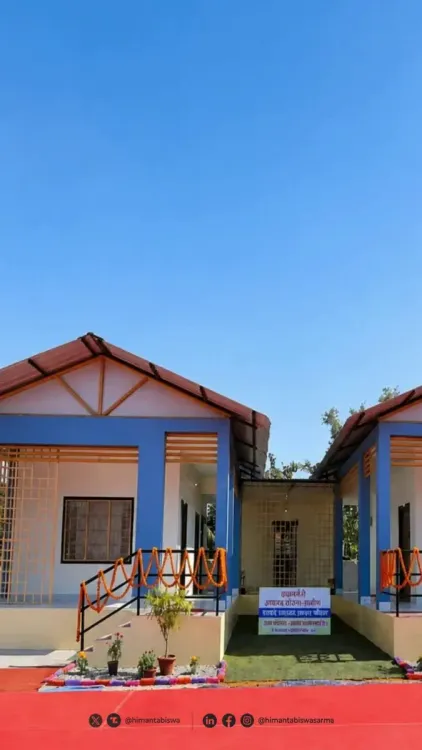
Assam Chief Minister Himanta Biswa Sarma announced on 9 July 2026 that over 3,800 Anganwadi Centres have been upgraded into Model Anganwadi Centres across the state, pledging further expansion to strengthen early childhood care, nutrition, and pre-school education under the ICDS framework.
Key Takeaways
Assam CM Himanta Biswa Sarma announced on 9 July 2026 that over 3,800 Anganwadi Centres have been upgraded to Model Anganwadi Centres.
The initiative aims to create child-friendly spaces for learning, growth, and nutritional support across Assam .
Social Welfare Minister Ajanta Neog has been tagged, indicating active cabinet-level coordination on the programme.
The upgrades build on the Integrated Child Development Services (ICDS) , a Central scheme operational since 1975 .
The Chief Minister indicated further expansion is planned, with the 3,800 figure representing an interim milestone.
Primary beneficiaries are children under six and rural families, with Anganwadi workers also gaining better-equipped workspaces.
Assam Chief Minister Himanta Biswa Sarma on Thursday, 9 July 2026, announced that the state has transformed over 3,800 Anganwadi Centres into Model Anganwadi Centres, describing the initiative as a commitment to the holistic development of young children across Assam. The Chief Minister tagged Social Welfare Minister Ajanta Neog in the post, signalling active coordination at the cabinet level on the rollout.
Context
Sarma's post, addressed affectionately to his 'little bhagins' — a term meaning younger sisters in Assamese, used colloquially to refer to the state's girl children — underlines a gendered welfare emphasis. He stated that the upgraded centres are already 'bringing this vision to life, with many more on the way,' indicating that the programme is in active expansion rather than at a planning stage.
The reference to Minister Ajanta Neog, who holds the Social Welfare portfolio among others, points to institutional ownership of the programme within the Assam cabinet. The upgrade drive is framed as a transformation of existing infrastructure rather than construction of new facilities from scratch.
Policy Backdrop
Anganwadi Centres operate under the Integrated Child Development Services (ICDS), a Central government scheme launched in 1975 that provides supplementary nutrition, health check-ups, immunisation, and non-formal pre-school education to children under six years of age, as well as to pregnant and lactating women. The scheme is one of India's oldest and largest child welfare programmes.
Assam's Model Anganwadi Centre initiative builds on the ICDS foundation by upgrading physical infrastructure, learning materials, and care environments to meet contemporary early childhood development standards. The broader goal aligns with national efforts to improve human development indicators — particularly in the Northeast, where access to quality early-childhood services has historically been uneven across rural and remote geographies.
The Assam Social Welfare Department has been the nodal agency for this transformation, working to convert conventional centres into vibrant, child-friendly spaces equipped for both structured learning and nutritional support.
Stakeholders and Impact
The primary beneficiaries of the Model Anganwadi Centre upgrades are children below six years of age and their families, particularly in rural and semi-urban pockets of Assam. Improved infrastructure directly affects the quality of pre-school education, nutrition delivery, and health monitoring that these children receive in their formative years.
Anganwadi workers and helpers — who are the frontline implementers of the ICDS scheme — also stand to benefit from better-equipped workspaces. For rural families, a modernised Anganwadi Centre can serve as a reliable community anchor for maternal and child health services, reducing dependence on distant urban facilities.
What's Next
Chief Minister Sarma's indication that 'many more' centres are on the way suggests that the 3,800 figure is an interim milestone rather than the programme's ceiling. Observers will watch for state budget provisions in upcoming Assam Legislative Assembly sessions that earmark funds for the continued expansion of Model Anganwadi Centres.
The pace of the rollout and any quality-assessment frameworks adopted by the Social Welfare Department under Minister Neog will be key indicators of whether the initiative translates into measurable improvements in Assam's early childhood development outcomes.
Point of View
The Model Anganwadi push also serves as a tangible metric for NEDA-aligned governance outcomes ahead of future electoral cycles. Whether the expansion sustains momentum will depend on budgetary follow-through and third-party quality assessments of the upgraded centres.
NationPress
7 Oct 2026
Frequently Asked Questions
What are Model Anganwadi Centres in Assam?
Model Anganwadi Centres are upgraded versions of conventional Anganwadi Centres under the ICDS scheme, equipped with improved infrastructure, learning materials, and child-friendly environments to provide better early childhood care, nutrition, and pre-school education.
How many Model Anganwadi Centres has Assam built so far?
According to Chief Minister Himanta Biswa Sarma's announcement on 9 July 2026, over 3,800 Model Anganwadi Centres are already operational in Assam, with further expansion planned.
What is the ICDS scheme and how does it relate to Anganwadis?
The Integrated Child Development Services (ICDS) is a Central government scheme launched in 1975 that delivers supplementary nutrition, health check-ups, immunisation, and non-formal pre-school education through Anganwadi Centres to children under six and to pregnant and lactating women.
Who is Ajanta Neog and what is her role in this initiative?
Ajanta Neog is an Assam cabinet minister holding the Social Welfare portfolio, among others. Chief Minister Sarma tagged her in the announcement, indicating she is the key cabinet-level figure overseeing the Model Anganwadi Centre transformation programme.
Who benefits from the Model Anganwadi Centre upgrade in Assam?
The primary beneficiaries are children below six years of age and their families, especially in rural Assam. Anganwadi workers also benefit from improved facilities, and pregnant and lactating women continue to receive nutrition and health services through these centres.