Assam Cabinet clears key welfare and growth measures

Synopsis
The Assam Cabinet, chaired by Chief Minister Dr. Himanta Biswa Sarma, approved a set of people-centric and growth-driven measures on 8 July 2026, covering welfare, security, and development for the state's 31 million residents. Detailed government orders are expected to follow.
Key Takeaways
The Assam Cabinet cleared multiple measures on 8 July 2026 under the leadership of CM Dr.
Himanta Biswa Sarma .
Approvals span welfare, security, and economic growth — described by the CMO as 'people-centric reforms' and 'growth-driven decisions'.
The BJP -led government has been in power in Assam since 2016 , with regular cabinet sessions forming a core part of its governance approach.
Flagship welfare schemes such as Orunodoi reflect the administration's long-standing focus on direct benefits for economically weaker sections.
Specific details of the approved measures will be released through government orders and official briefings in the coming days.
Assam , home to over 31 million people , faces ongoing challenges around flood management, border security, and social sector development.
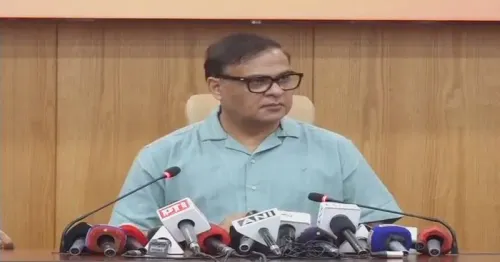
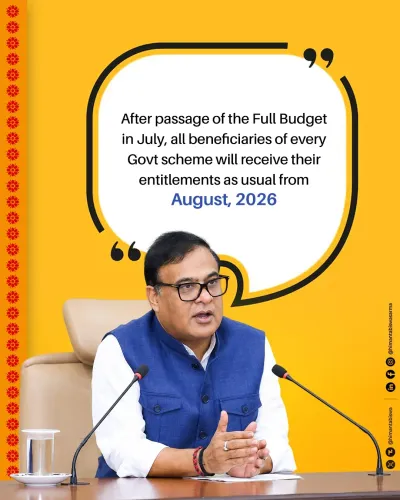
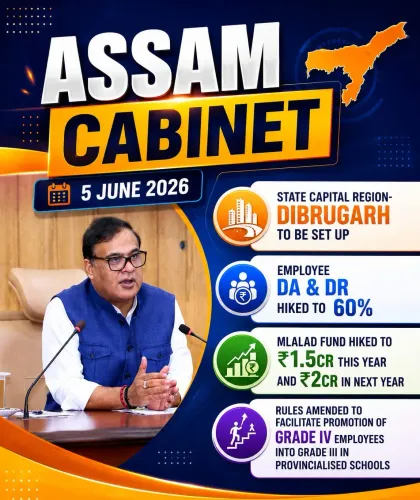
The Chief Minister's Office of Assam announced on Wednesday, 8 July 2026 that the Assam Cabinet, under the leadership of Chief Minister Dr. Himanta Biswa Sarma, cleared a series of significant measures spanning welfare, security, and economic growth for the people of the state.
Context
The official post by the Chief Minister's Office of Assam described the approvals as covering 'people-centric reforms' and 'growth-driven decisions', signalling a bundled set of executive actions aimed at advancing the welfare, security, and progress of Assam's more than 31 million residents. The cabinet meeting is part of a regular cadence of governance under the current administration. No further specifics on individual decisions were contained in the announcement, with detailed government orders expected to follow through official channels.
Policy Backdrop
Dr. Himanta Biswa Sarma assumed office as Chief Minister of Assam in May 2021 and has since convened regular cabinet sessions to push through administrative and policy decisions. The Bharatiya Janata Party-led government, in power in Assam since 2016, has consistently prioritised welfare initiatives, infrastructure development, and internal security as its core governance pillars. Flagship programmes such as the Orunodoi scheme — launched in 2020-21 to provide monthly financial assistance to women from economically weaker sections — reflect the government's sustained focus on direct-benefit transfers and social sector spending.
Cabinet meetings in Assam routinely produce bundled approvals that span multiple departments, consistent with the practice followed by state governments across India. These executive decisions are communicated publicly before being formalised through government orders and departmental circulars, giving citizens early visibility into the administration's priorities.
Stakeholders and Impact
The measures cleared by the cabinet are broadly intended to benefit residents across Assam, a northeastern state with a complex history of ethnic diversity, recurring flood vulnerability, and sensitive border dynamics with Bangladesh and Bhutan. Welfare decisions typically affect beneficiaries enrolled under state schemes, while security-related approvals have implications for law enforcement agencies and border communities. Growth-oriented decisions tend to impact state departments overseeing infrastructure, agriculture, and industry.
State government departments will be the primary implementing bodies for the approved measures. Civil society groups and residents in rural and semi-urban areas, who form the core constituency for welfare programmes, stand to be among the most directly affected stakeholders once detailed orders are issued.
What's Next
Specific details of the individual measures approved in this cabinet session are expected to be released through subsequent government orders and official press briefings. The Assam Legislative Assembly may take up related discussions in its next session, particularly around budgetary allocations tied to any new welfare or infrastructure initiatives. Observers will watch for announcements on scheme expansion, security deployments, or infrastructure contracts that flow from this round of cabinet clearances.
The pace and breadth of cabinet approvals under CM Himanta Biswa Sarma will continue to be a measure of the administration's legislative and executive momentum as Assam approaches the next electoral cycle.
Point of View
However, the announcement functions primarily as a governance optics exercise, with the substantive policy test lying in implementation. As Assam moves closer to the next electoral cycle, the cadence and content of such cabinet clearances will be closely read as indicators of the government's priorities.
NationPress
7 Oct 2026
Frequently Asked Questions
What did the Assam Cabinet decide on 8 July 2026?
The Assam Cabinet, chaired by Chief Minister Dr. Himanta Biswa Sarma, cleared a series of measures covering welfare, security, and economic growth. Specific details of individual decisions are expected to be released through subsequent government orders.
Who is the Chief Minister of Assam?
Dr. Himanta Biswa Sarma is the Chief Minister of Assam. He assumed office in May 2021 and leads the BJP-led state government.
What is the Orunodoi scheme in Assam?
Orunodoi is a flagship welfare scheme launched by the Assam government in 2020-21 that provides monthly financial assistance to women from economically weaker sections of society.
How often does the Assam Cabinet meet?
The Assam Cabinet meets regularly, with sessions convened as needed to approve policy decisions, welfare schemes, and administrative orders. Under CM Himanta Biswa Sarma, cabinet meetings have been held at a consistent pace since 2021.
Which party governs Assam?
The Bharatiya Janata Party (BJP) has been the ruling party in Assam since 2016, currently leading the government under Chief Minister Dr. Himanta Biswa Sarma.