CM Pema Khandu: AP Police gets President's Police Colour
Synopsis
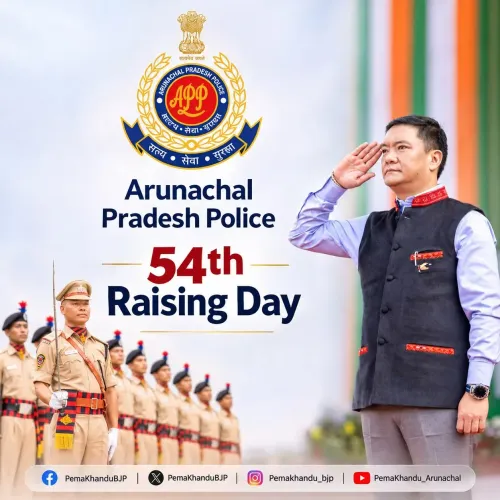
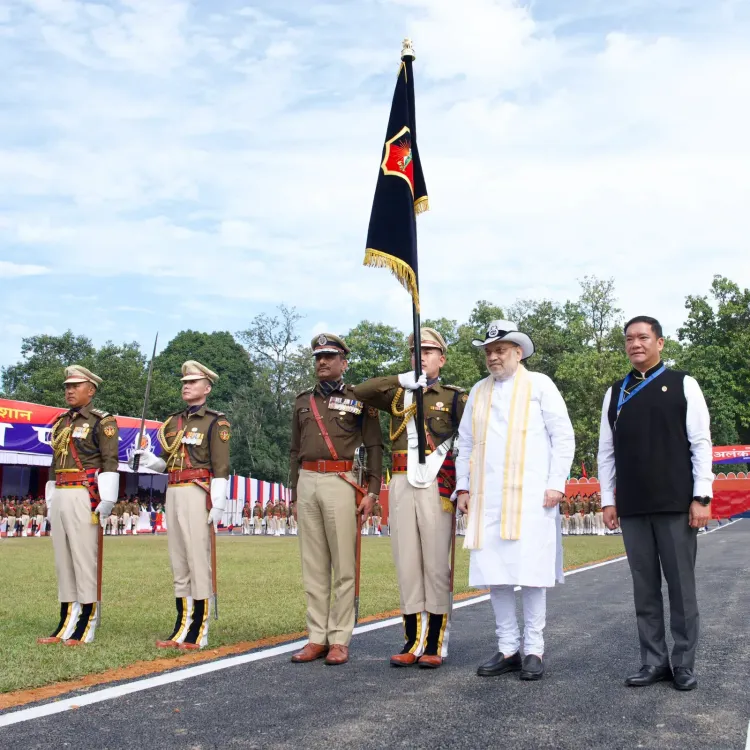
Arunachal Pradesh Police received the President's Police Colour — India's highest institutional honour for a state force — conferred by President Droupadi Murmu. CM Pema Khandu called it a historic milestone for the force, established in 1972, crediting every member who built the institution over 54 years.
Key Takeaways
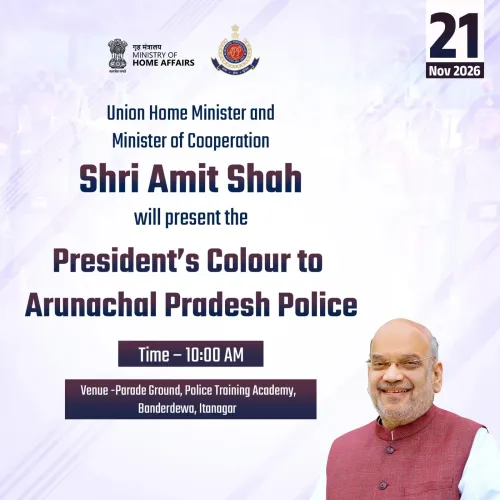
Arunachal Pradesh Police received the President's Police Colour on 21 November 2026 , one of the highest institutional honours for a state police force in India.
The honour was conferred by President of India Droupadi Murmu at a formal ceremony.
CM Pema Khandu thanked President Murmu and Union Home Minister Amit Shah for the recognition.
Arunachal Pradesh Police was established in 1972 when the region was still a union territory, making this a 54-year institutional journey.
Khandu extended congratulations to all police personnel, 'past and present,' emphasising the collective nature of the achievement.
The state borders China and Bhutan , giving the force's national recognition added strategic significance.
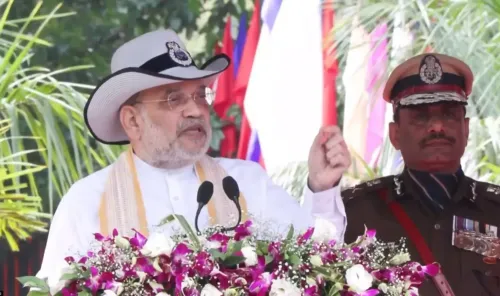
A 54-year journey reached its highest point on Saturday, 21 November 2026, when Arunachal Pradesh Police received the President's Police Colour — one of the most coveted institutional honours a state force can earn in India — with Arunachal Pradesh Chief Minister Pema Khandu calling it 'a red-letter day in the history of Arunachal Pradesh.'
From a union territory in 1972 to a national honour in 2026
Arunachal Pradesh Police was established in 1972, when the region was still a union territory — a frontier administration carved out of the Northeast with limited infrastructure and a vast, difficult terrain to police. That foundational moment, over five decades ago, set the institution on a long road of capacity-building, discipline, and service in one of India's most strategically sensitive border states. The President's Police Colour is the destination that road was always pointed toward.
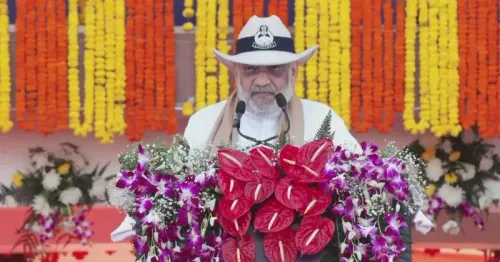
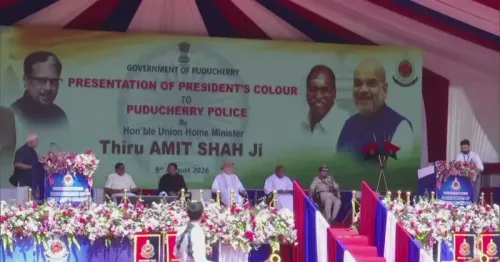
The honour was conferred by President of India Droupadi Murmu. CM Khandu expressed 'heartfelt gratitude' to President Murmu and Union Home Minister Amit Shah for the 'distinguished recognition,' naming both leaders directly in his post on X. The acknowledgement of Shah is significant — the Home Ministry oversees the framework through which such institutional honours are recommended and processed.
What the President's Police Colour actually means
The President's Police Colour is not a routine commendation. It is awarded to state police forces that demonstrate sustained excellence in performance, discipline, and service to the nation — and it is presented personally by the President of India, making it the highest ceremonial recognition an organised police force can receive from the constitutional head of state. State forces across India have periodically received this honour, but for any force, the moment is singular and unrepeatable. It is, as Khandu put it, something that 'comes only once in a lifetime.'
For a northeastern state like Arunachal Pradesh — which shares sensitive international borders with China and Bhutan and has historically operated in challenging terrain — the honour carries added weight. It signals that the force's institutional evolution has been recognised at the highest level of the republic.
Khandu's tribute to every rank, past and present
The Chief Minister was deliberate in widening the circle of credit. 'This achievement belongs to every member who has contributed to building this institution,' he wrote, offering congratulations to 'the entire Arunachal Pradesh Police fraternity, past and present.' The framing was inclusive by design — honouring not just the current force but every officer and constable who served through the institution's formative decades, many of whom did so without the infrastructure or recognition their successors now enjoy.
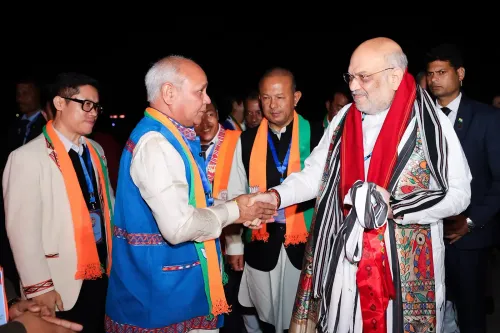
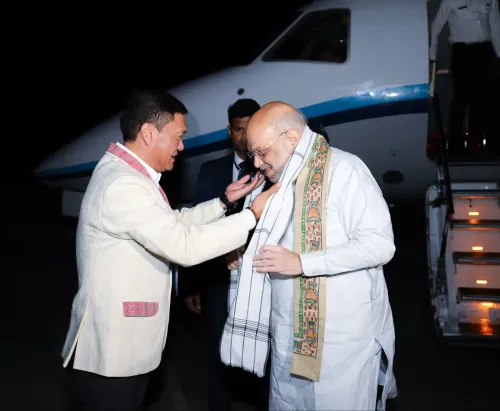
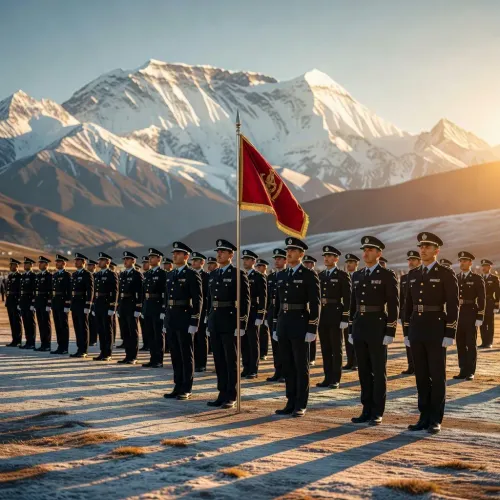
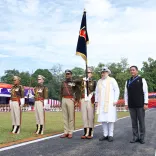
With 20 photographs accompanying the post, the occasion was clearly documented as a formal state ceremony — images that capture a milestone the force and the state government will mark as a defining chapter in Arunachal's administrative history.
A force born on a frontier in 1972 has now been saluted by the President of India. The next chapter will be written by what Arunachal Pradesh Police does with the standard it has just been handed.
Point of View
The honour is also a political signal: that Arunachal's governance institutions have matured under the current dispensation's watch. The explicit acknowledgement of Home Minister Amit Shah alongside President Murmu reflects the political choreography around such honours, where the Centre's facilitation is publicly credited. Going forward, the award raises the bar for the force itself — President's Colour recipients are expected to sustain, and ideally elevate, the standards that earned them the distinction.
NationPress
21 Nov 2026
Frequently Asked Questions
What is the President's Police Colour and why is it significant?
The President's Police Colour is one of the highest institutional honours awarded to a state police force in India, conferred personally by the President of India in recognition of sustained excellence, discipline, and service to the nation.
When did Arunachal Pradesh Police receive the President's Police Colour?
Arunachal Pradesh Police received the President's Police Colour on 21 November 2026 , with the honour conferred by President Droupadi Murmu.
When was Arunachal Pradesh Police established?
Arunachal Pradesh Police was established in 1972 , when the region was a union territory, making the 2026 honour a milestone at the end of a 54-year institutional journey.
What did CM Pema Khandu say about the President's Police Colour?
CM Pema Khandu called it 'a red-letter day in the history of Arunachal Pradesh,' expressed gratitude to President Droupadi Murmu and Home Minister Amit Shah, and dedicated the achievement to every member of the force, past and present.
Which other states have received the President's Police Colour?
State police forces across India have periodically received the President's Police Colour for sustained performance and discipline, though the specific list of all recipients requires official government records for confirmation.