Amit Shah confers President's Police Colour on Arunachal Pradesh Police
Synopsis
For the first time in its 54-year history, the Arunachal Pradesh Police has received India's highest police honour — the President's Police Colour — presented by Home Minister Amit Shah at Banderdewa. The recognition spotlights a force that grew from a skeletal 1967 sanction to over 16,500 personnel guarding one of India's most sensitive frontier states.
Key Takeaways
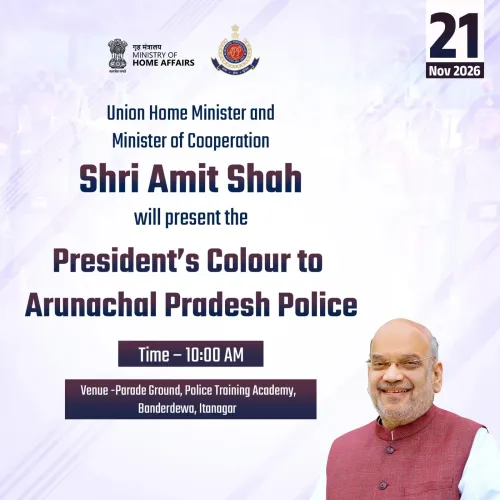
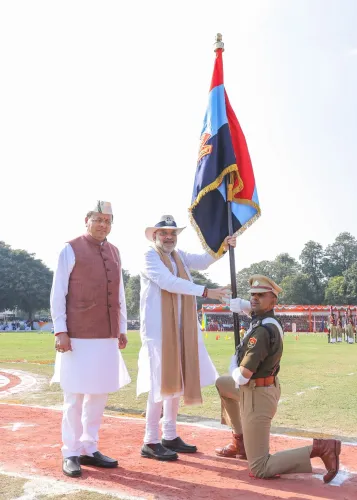
Home Minister Amit Shah presented the President's Police Colour to the Arunachal Pradesh Police on 21 November at Banderdewa , near Itanagar.
The President's Police Colour is the highest honour bestowed upon a police force in India.
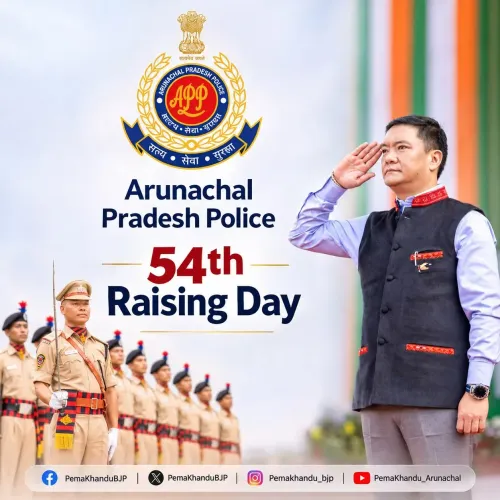
The ceremony followed the force's 54th Raising Day celebrations held the previous week at the same venue.
The Arunachal Pradesh Police has grown from a sanctioned skeletal strength in 1967 to more than 16,500 personnel today.
Senior IPS officer L.B.
Sewa , credited as the 'Architect of Arunachal Police' , established the full-fledged force around 1971–1972 .
Chief Minister Pema Khandu , DGP Rajesh Kumar , Union Minister Kiren Rijiju , and Home Secretary Govind Mohan attended the event.
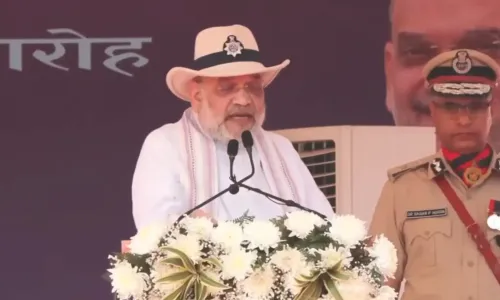
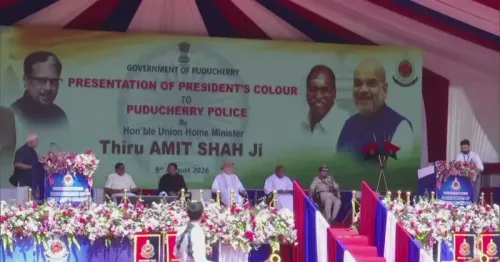
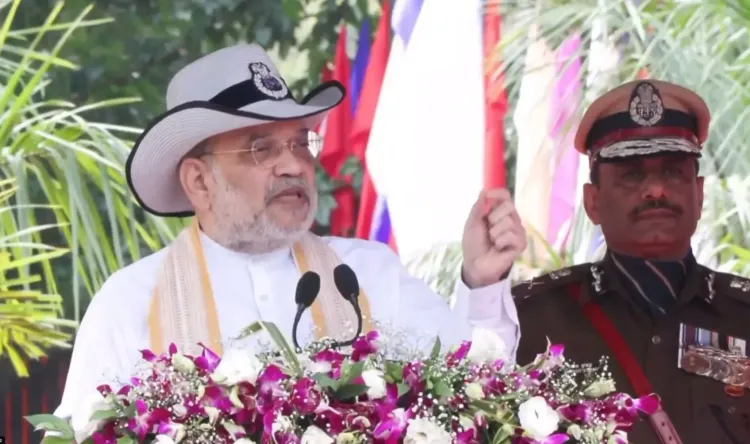
Union Home Minister Amit Shah on Saturday, 21 November presented the President's Police Colour — India's highest honour for a police force — to the Arunachal Pradesh Police at a ceremonial parade in Banderdewa, near Itanagar. The award recognises the force's exceptional service, professional excellence and sustained contributions to law, order and public safety across one of India's most strategically sensitive frontier states.
The Ceremony at Banderdewa
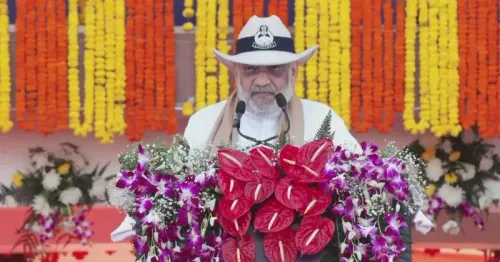
The conferment took place at the Parade Ground of the Police Training Academy in Banderdewa, where units of the Arunachal Pradesh Police performed an impressive march-past that drew appreciation for the force's discipline and operational readiness. Ahead of the formal presentation, Dharma Gurus recited sacred mantras, invoking spiritual blessings and a call for peace and harmony — a gesture that blended tradition with the solemnity of the occasion.
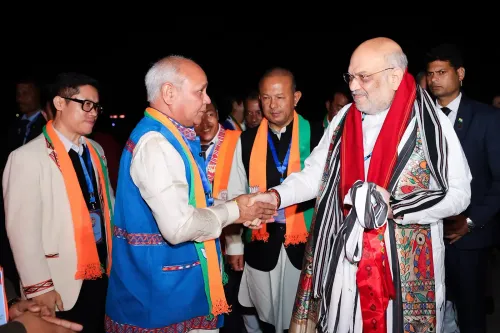
Arunachal Pradesh Chief Minister Pema Khandu, State Home and Inter-State Border Affairs Minister Mama Natung, and Director General of Police Rajesh Kumar accompanied Shah during the ceremony. Union Minister for Parliamentary and Minority Affairs Kiren Rijiju, Deputy Chief Minister Chowna Mein, Union Home Secretary Govind Mohan, and several senior civil and security officials were also present.
Significance of the President's Police Colour
The President's Police Colour is the most prestigious national recognition a police force in India can receive, awarded for exceptional service, dedication and significant contributions to maintaining law and order and ensuring public safety. Its conferment on the Arunachal Pradesh Police comes days after the force celebrated its 54th Raising Day at the Institute of Police Training Centre in Banderdewa — making this a landmark fortnight in the organisation's institutional history.
From Skeletal Beginnings to 16,500 Personnel
The Arunachal Pradesh Police has undergone a remarkable transformation since its earliest days. The initial sanctioned strength of the Civil Police was approved by the Union government in 1967, laying the foundation of organised policing in the state. Senior IPS officer L.B. Sewa — widely regarded as the 'Architect of Arunachal Police' — assumed charge as Assistant Inspector General (AIG), with headquarters in Shillong, in 1971. Under his leadership, sanctioned personnel began taking up positions in 1972, alongside officers brought in on deputation from the Assam Police.
The Police Training Centre at Banderdewa was established in 1973, providing an institutional backbone for training and professional development. Today, the force comprises more than 16,500 personnel — a scale that reflects decades of steady capacity-building in a state that shares sensitive international borders.
What the Honour Signals
During the 54th Raising Day celebrations, leaders highlighted the need to make policing more accessible, transparent, accountable and people-oriented. The President's Police Colour, coming in the same week, reinforces that message at the national level. This comes amid the Centre's continued focus on strengthening border-state security infrastructure, with Arunachal Pradesh occupying a critical position along the Line of Actual Control (LAC) with China. The award is expected to serve as a morale boost for the force's personnel and a recognition of the sacrifices made across generations of service in challenging terrain.
Point of View
500 personnel and a mandate spanning remote frontier districts, questions of infrastructure, personnel welfare and community policing remain underreported. Recognition at the highest level should prompt an equally serious conversation about what resources and reforms the force still needs, not just what it has already achieved.
NationPress
21 Nov 2026
Frequently Asked Questions
What is the President's Police Colour and why is it significant?
The President's Police Colour is the highest national honour awarded to a police force in India, recognising exceptional service, professional excellence and contributions to public safety. It is a rare distinction that carries both symbolic and institutional prestige for the recipient force.
Which police force received the President's Police Colour in November 2024?
The Arunachal Pradesh Police received the President's Police Colour on 21 November 2024, presented by Home Minister Amit Shah at a ceremony in Banderdewa, near Itanagar.
Who attended the President's Police Colour ceremony in Banderdewa?
The ceremony was attended by Chief Minister Pema Khandu, State Home Minister Mama Natung, DGP Rajesh Kumar, Union Minister Kiren Rijiju, Deputy Chief Minister Chowna Mein, and Union Home Secretary Govind Mohan, among other senior officials.
How old is the Arunachal Pradesh Police and how large is it today?
The Arunachal Pradesh Police traces its origins to 1967, when the Union government sanctioned its initial civil police strength. Today, the force comprises more than 16,500 personnel, having grown steadily over more than five decades.
Who is credited with founding the Arunachal Pradesh Police?
Senior IPS officer L.B. Sewa is widely regarded as the 'Architect of Arunachal Police.' He assumed charge as Assistant Inspector General in 1971 and oversaw the deployment of sanctioned personnel from 1972, establishing the organised force alongside officers on deputation from the Assam Police.