Uttarakhand CM Office: Jasoli Homestay Puts Hills on Tourist Map
Synopsis
The Chief Minister's Office of Uttarakhand has spotlighted Dinesh Singh Chaudhary's traditional mountain homestay in Jasoli, Rudraprayag, developed under the state's Homestay Scheme, as a model for spreading tourism revenue into rural Himalayan villages.
Key Takeaways
Dinesh Singh Chaudhary of Jasoli village, Rudraprayag has established a traditional Pahadi homestay under Uttarakhand's Homestay Scheme.
The Chief Minister's Office of Uttarakhand formally highlighted the initiative on 21 November 2026 .
Rudraprayag district is a key gateway to the Kedarnath pilgrimage route, drawing large seasonal tourist footfall.
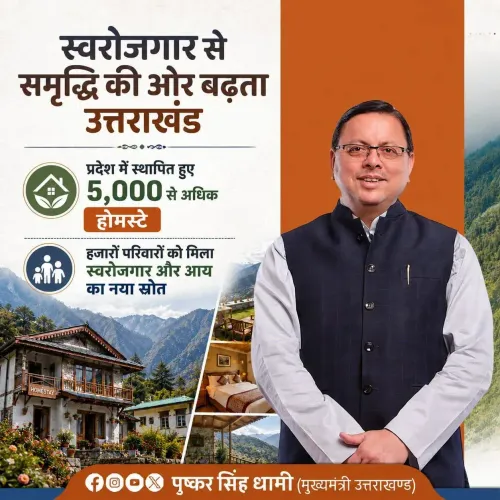
The Homestay Scheme encourages local families to convert traditional homes into registered tourist accommodation, generating supplementary household income.
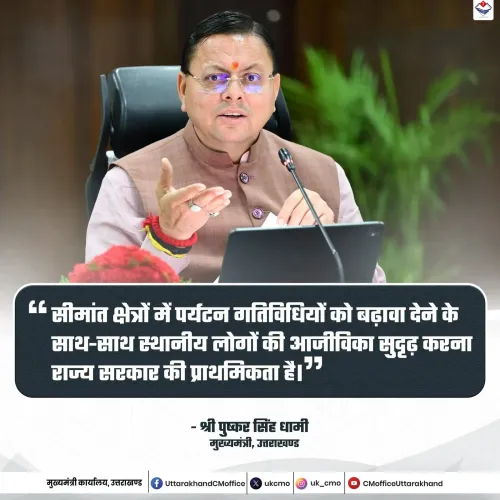
The initiative aims to spread tourism revenue beyond commercial hubs into surrounding villages with traditional Himalayan architecture.
Government promotion of individual success stories like Chaudhary's signals an intent to scale up scheme registrations across neighbouring districts.
In the village of Jasoli, tucked inside Rudraprayag district along one of Uttarakhand's most storied pilgrimage corridors, a local resident has turned a traditional mountain home into a working tourist retreat — and the state government is holding it up as a blueprint for rural economic uplift.
The Chief Minister's Office of Uttarakhand announced on Saturday, 21 November 2026 that Dinesh Singh Chaudhary of Jasoli has developed a traditional Pahadi (mountain-style) homestay under the state's Homestay Scheme, offering visitors a culturally rooted alternative to conventional hotel accommodation.
A Village House Becomes a Destination
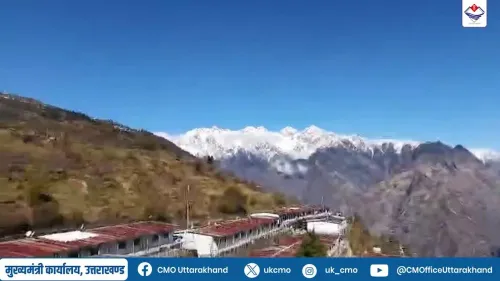
Chaudhary's property is designed around the vernacular architecture of the central Himalayas — stone-and-timber construction, sloping slate roofs, and interiors that reflect the everyday life of a Garhwali household. That authenticity is precisely the point. Uttarakhand's Homestay Scheme encourages local families to register their homes as tourist accommodation, earning supplementary income while keeping the cultural character of hill settlements intact.
Rudraprayag sits at the confluence of the Alaknanda and Mandakini rivers and serves as a gateway district for pilgrims heading to Kedarnath, one of the holiest shrines in the Hindu calendar. The district draws significant seasonal footfall, yet most of that economic activity has historically concentrated around a handful of commercial hubs rather than dispersing into surrounding villages.
Spreading Tourism's Dividend Beyond Pilgrimage Hubs
Uttarakhand's push into rural homestays is a deliberate strategy to widen the geographic spread of tourism revenue. Mountain states across South Asia have increasingly turned to community-based accommodation as a low-capital, low-environmental-footprint way to link visitor spending directly to household incomes. For a family like Chaudhary's, a registered homestay can mean a reliable off-season income stream without abandoning farming or other traditional livelihoods.
The scheme also serves a conservation argument: when residents can earn from preserving traditional architecture rather than replacing it with concrete construction, the incentive structure shifts in favour of heritage. Jasoli's new homestay is, in that sense, both an economic unit and a cultural statement.
What Rudraprayag's Homestay Push Could Signal
The government's decision to spotlight Chaudhary's initiative publicly suggests an intent to use visible success stories as recruitment tools — drawing other village families into the scheme. The districts neighbouring Rudraprayag, including Chamoli and Tehri Garhwal, contain dozens of villages with similar architectural heritage and proximity to pilgrimage or trekking routes that remain largely outside formal tourism circuits.
If registrations accelerate and tourist footfall follows, Jasoli's homestay could become less an isolated case study and more the leading edge of a broader rebalancing of who benefits when Uttarakhand's mountains draw the world in.
Point of View
Relatable beneficiary to humanise a policy and drive organic uptake. It fits neatly into Uttarakhand's broader post-Kedarnath-floods recovery and diversification narrative, where spreading economic risk across more communities is both a political and administrative priority. The real test, however, is whether the scheme's backend — registration support, quality standards, marketing linkages — can scale as fast as the promotional push. Spotlighting success without fixing bottlenecks risks raising expectations that the programme's infrastructure cannot yet meet.
NationPress
21 Nov 2026
Frequently Asked Questions
What is Uttarakhand's Homestay Scheme?
Uttarakhand's Homestay Scheme is a state government programme that encourages local residents, particularly in rural hill areas, to register their traditional homes as tourist accommodation, earning supplementary income while preserving local architecture and culture.
Where is Jasoli village located?
Jasoli is a village in Rudraprayag district , Uttarakhand, situated along the pilgrimage corridor leading to Kedarnath in the central Himalayas.
Who is Dinesh Singh Chaudhary?
Dinesh Singh Chaudhary is a resident of Jasoli, Rudraprayag, who developed a traditional Pahadi-style homestay under Uttarakhand's Homestay Scheme, earning recognition from the state's Chief Minister's Office.
Why is the Rudraprayag district important for Uttarakhand tourism?
Rudraprayag district is a major gateway to the Kedarnath shrine, one of the most visited Hindu pilgrimage sites in India, and sits at the confluence of the Alaknanda and Mandakini rivers, drawing large seasonal tourist and pilgrim footfall.
How does the Homestay Scheme benefit local villagers in Uttarakhand?
The scheme allows village families to earn supplementary income from tourists without leaving their traditional livelihoods, while also creating an incentive to preserve traditional Himalayan architecture rather than replace it with modern construction.