CM Dhami's Home-Stay Scheme Fights Migration in Uttarakhand Hills
Synopsis
The Uttarakhand CMO spotlighted the Pandit Deendayal Upadhyay Home-Stay Yojana on 4 July 2026, calling it a transformative answer to chronic out-migration in hill districts like Chamoli by creating tourism-based livelihoods directly within village households under CM Pushkar Singh Dhami.
Key Takeaways
The Chief Minister's Office of Uttarakhand promoted the Pandit Deendayal Upadhyay Grih Awas (Home-Stay) Yojana on 4 July 2026 .
Chamoli district was specifically cited as a focus area, reflecting its high historical out-migration rates in the Garhwal Himalayas .
The scheme allows rural households to register their homes as tourist accommodation, creating income without requiring large capital investment.
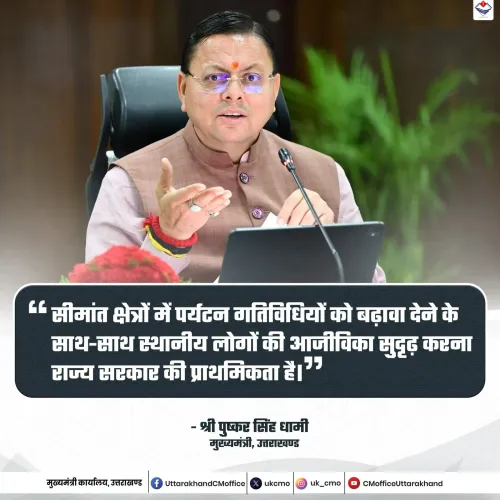
CM Pushkar Singh Dhami , in office since 2021 , has positioned the home-stay model as a flagship tool against palayan (out-migration).
Uttarakhand's tourism policy has included home-stay incentives since the 2010s , but the current administration has elevated the scheme's profile.
Key metrics to watch include new registrations, household earnings data, and state budget allocations for the programme.
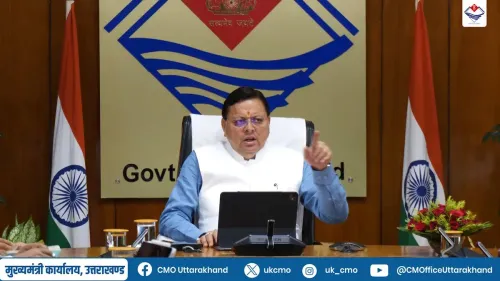
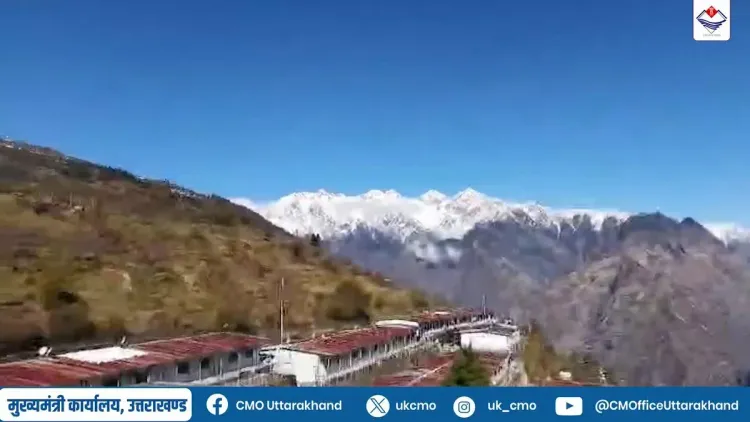
The Chief Minister's Office of Uttarakhand on Saturday, 4 July 2026, highlighted how the Pandit Deendayal Upadhyay Grih Awas (Home-Stay) Yojana, steered by Chief Minister Pushkar Singh Dhami, is working to reverse decades of out-migration from the state's mountain villages by creating tourism-linked livelihoods at the household level.
The post, shared in Hindi, states: 'Uttarakhand ke parvatiya kshetron mein rojgar ke avsar kam hone ke karan palayan lambe samay se ek badi chunauti raha hai' — ('Out-migration has long been a major challenge in Uttarakhand's mountain regions due to scarce employment opportunities') — and positions the home-stay scheme as a direct answer to that challenge, specifically citing Chamoli district.
Context
Uttarakhand, carved out as a separate hill state in 2000, has grappled with chronic depopulation of its higher-altitude villages for generations. Limited agricultural productivity, poor road connectivity in remote pockets, and a narrow formal job market have pushed working-age residents — particularly young men — toward plains cities. Chamoli, situated in the Garhwal Himalayas, is among the districts where village abandonment is visibly acute, making it a recurring focus of state outreach programmes.Policy Backdrop
The Pandit Deendayal Upadhyay Grih Awas Yojana is a state-run scheme that enables rural households to register their homes as tourist accommodation, channelling visitor spending directly to village families. Uttarakhand's tourism policy frameworks dating back to the 2010s have included home-stay incentives, but the current administration under CM Dhami — in office since 2021 — has foregrounded the scheme as a flagship instrument for addressing palayan (out-migration). The model is designed to be decentralised: rather than building large hotel infrastructure, it converts existing dwellings into income-generating assets, lowering the capital barrier for participation. The scheme draws its name from Pandit Deendayal Upadhyay, the ideologue associated with the ruling party's ideological lineage, signalling the political framing of grassroots economic empowerment that accompanies its rollout.Stakeholders and Impact
The primary beneficiaries are hill-district households — particularly in districts such as Chamoli, Rudraprayag, and Pithoragarh — where alternative income streams are scarce. Tourism operators and the broader hospitality ecosystem in Uttarakhand stand to gain from a denser network of registered accommodation nodes, especially as pilgrimage and adventure-tourism traffic to the state has grown. For the state government, a measurable slowdown in out-migration would serve both development and electoral narratives ahead of future assembly cycles. Rural women, who often remain in villages while men migrate, are a key demographic the home-stay model can empower through direct hosting roles.What's Next
Attention will now turn to roll-out metrics: the number of new home-stay registrations in Chamoli and other hill districts, documented changes in household earnings, and any state budget provisions or regulatory updates that expand the scheme's reach. The government's ability to demonstrate concrete income data — rather than anecdotal success — will determine whether the programme shifts from a policy signal to a structural solution for Uttarakhand's long-running migration crisis. Sustained tourism inflows into the Garhwal and Kumaon belts remain the scheme's single largest external dependency.Point of View
The government signals geographic intent in a district where migration is visibly stark, lending the claim a degree of specificity that broader state-level assertions lack. The home-stay model is structurally sound as a low-capital rural income instrument, but its long-term credibility hinges on verifiable earnings data rather than promotional framing. This fits a wider pattern among hill-state governments of leveraging tourism assets to substitute for the industrial investment that terrain makes difficult to attract.
NationPress
3 Oct 2026
Frequently Asked Questions
What is the Pandit Deendayal Upadhyay Grih Awas Yojana in Uttarakhand?
It is a state government home-stay scheme that allows rural households in Uttarakhand's hill districts to register their homes as tourist accommodation, earning income directly from visitors and reducing the need to migrate for work.
Why is out-migration such a big problem in Uttarakhand?
Uttarakhand's mountainous terrain limits agricultural productivity and industrial investment, leaving few formal jobs in higher-altitude villages. This has driven working-age residents to migrate to plains cities for decades, leading to visible village abandonment in districts like Chamoli.
How does the home-stay scheme help reduce migration in Uttarakhand?
By converting existing homes into registered tourist accommodation, the scheme creates a local income stream without requiring households to relocate. It channels visitor spending directly to village families, making staying in the hills economically viable.
Which district did the Uttarakhand CMO highlight in its post about the home-stay scheme?
The CMO's post specifically cited Chamoli, a Garhwal Himalayan district with historically high out-migration rates, as an area where the scheme is changing the situation.
Who is overseeing the home-stay scheme in Uttarakhand?
The scheme is being run under the leadership of Chief Minister Pushkar Singh Dhami, who has been in office since 2021 and has made addressing out-migration a stated priority of his administration.