CM Dhami: Uttarakhand sees 44% rise in reverse migration
Synopsis
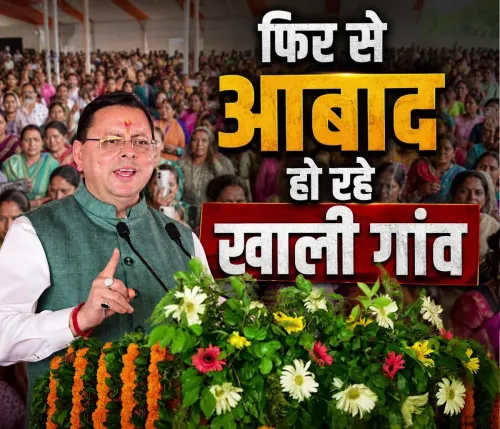
Chief Minister Pushkar Singh Dhami has announced a 44% surge in reverse migration in Uttarakhand, linking the trend to the state's winter and pilgrimage tourism push and government incentive schemes, with Chamoli cited as a key district.
Key Takeaways
The Chief Minister's Office of Uttarakhand announced a 44% rise in reverse migration in the state as of July 2026 .
CM Pushkar Singh Dhami attributed the increase to successful winter and pilgrimage tourism circuits and sustained government incentives.
Chamoli district was specifically highlighted as a focal area for these tourism and employment efforts.
Policy roots include the Mukhyamantri Swarozgar Yojana (launched 2018) and the 2021-22 state tourism policy expanding homestay registrations.
Returning migrants, rural youth, and local tourism operators are the primary beneficiaries of the trend.
The next official migration or tourism department data release will be closely watched to validate the 44% figure.
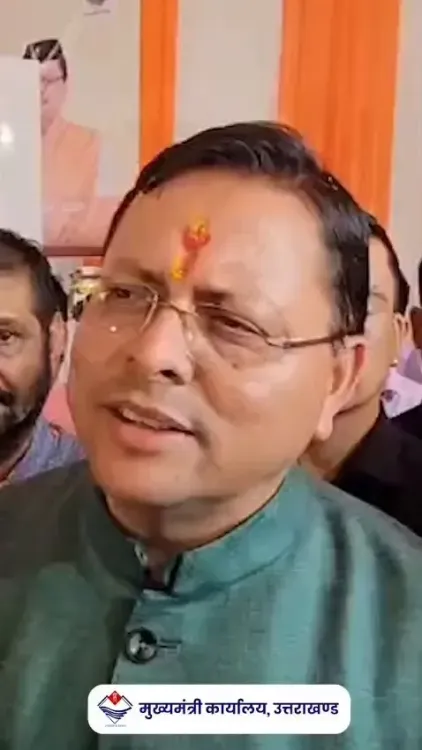
The Chief Minister's Office of Uttarakhand, posting on behalf of Chief Minister Pushkar Singh Dhami, announced on Wednesday, 15 July 2026 that the state has recorded a 44 per cent surge in reverse migration, attributing the trend to the successful conduct of winter and pilgrimage tourism circuits and sustained government incentives.
Context
CM Dhami was quoted in the post as saying: 'Sheetkaleen aur paryatan yatraon ke safal sanchalan va sarkar ke protsahan se Uttarakhand mein reverse palayan mein 44% ki bhari badhotari darj ki gayi hai' — ('Through the successful conduct of winter and tourism journeys and government encouragement, a massive 44% increase in reverse migration has been recorded in Uttarakhand'). The statement specifically referenced Chamoli, a district rich in pilgrimage sites and winter-tourism potential, as a focal point of these efforts.
Reverse migration — the return of working-age residents from plains and cities to their native hill villages — has been a headline policy goal for successive Uttarakhand governments. The state has long grappled with depopulated villages, a phenomenon that accelerated through the 1990s and 2000s as rural youth moved to urban centres in search of employment.
Policy Backdrop
The policy push traces back to at least 2018, when the state began mapping so-called 'ghost villages' and rolled out self-employment incentives under the Mukhyamantri Swarozgar Yojana to create livelihood options in hill districts. The 2021-22 state tourism policy subsequently expanded homestay registrations and winter-season packages across several districts, including Chamoli, with the explicit aim of generating year-round local employment.
Under CM Dhami, who has held office since 2021, tourism development and rural enterprise have been positioned as twin engines to retain and attract back the working-age population. Winter tourism circuits — covering shrines, trekking routes, and homestays — have been actively promoted to extend the tourism season beyond the traditional summer pilgrimage window.
Stakeholders and Impact
The primary beneficiaries of a sustained reverse-migration trend are returning migrants, rural youth, and local tourism operators who gain from increased footfall and a larger resident workforce. For districts like Chamoli, where agricultural land lies fallow due to depopulation, the return of families also carries implications for food security and community infrastructure.
Homestay operators and small hospitality businesses stand to gain from both the returning labour pool and the government's promotional push. State data releases on migration trends have increasingly become a key metric by which the administration measures the effectiveness of its rural enterprise and tourism interventions.
What's Next
Attention will now turn to the next round of official statistics from the state migration or tourism department, which will either corroborate or qualify the 44 per cent figure cited by the Chief Minister. Analysts and opposition parties are likely to seek granular, district-wise data to assess whether the gains are concentrated in a few tourism-heavy areas or spread across Uttarakhand's hill districts more broadly. Any extension of winter-tourism schemes to additional districts beyond Chamoli would signal whether the government intends to scale up this model ahead of the next budget cycle.
Point of View
A district with strong pilgrimage credentials, the administration signals that it views religious and winter tourism as a replicable engine for demographic stabilisation across hill districts. The move fits a broader pattern in which Himalayan state governments increasingly use migration data as a report card on rural development policy, raising the stakes for independent verification. If the figure holds up to scrutiny, it could strengthen the case for scaling homestay and winter-circuit schemes to other under-served districts ahead of the next state budget.
NationPress
14 Oct 2026
Frequently Asked Questions
What is reverse migration in Uttarakhand?
Reverse migration in Uttarakhand refers to the return of people — mostly working-age residents — from plains cities back to their native hill villages, reversing decades of out-migration driven by limited local employment opportunities.
Why has reverse migration increased 44% in Uttarakhand?
CM Pushkar Singh Dhami has attributed the 44% rise to the successful conduct of winter and pilgrimage tourism circuits in districts like Chamoli and to government incentive schemes such as the Mukhyamantri Swarozgar Yojana that create local livelihoods.
What is the Mukhyamantri Swarozgar Yojana in Uttarakhand?
The Mukhyamantri Swarozgar Yojana is a state self-employment scheme launched around 2018 to provide financial incentives and support to residents of hill districts, aimed at reducing the need to migrate to cities for work.
What role does Chamoli play in Uttarakhand's tourism and migration policy?
Chamoli is a Himalayan district rich in pilgrimage sites and winter-tourism potential. The state government has promoted homestay registrations and seasonal tourism packages there to generate year-round local employment and encourage reverse migration.
How does Uttarakhand measure the success of its anti-migration policies?
The Uttarakhand government tracks reverse-migration figures released by state migration and tourism departments as a key metric to assess whether rural enterprise and tourism promotion schemes are effectively retaining or bringing back the working-age population.