Paatil: VDA to build Transport Nagar to end Varanasi gridlock
Synopsis
Union Jal Shakti Minister C. R. Paatil announced on 15 July 2026 that the Varanasi Development Authority is building a high-tech Transport Nagar outside the city to relocate warehouses and heavy trucks from Varanasi's congested inner lanes, alongside a city-wide smart bus shelter rollout.
Key Takeaways
Union Jal Shakti Minister C.
Paatil highlighted the initiative on 15 July 2026 , attributing it to PM Narendra Modi's leadership.
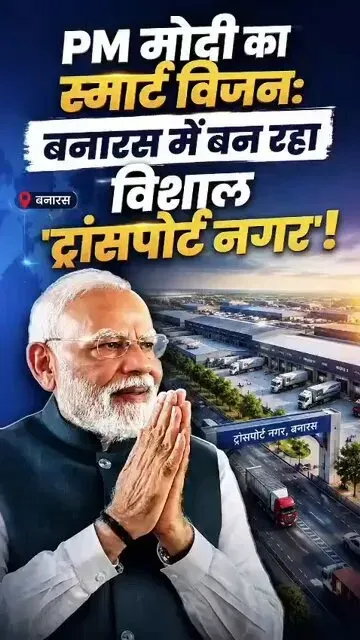
The Varanasi Development Authority (VDA) is developing a high-tech Transport Nagar on the city's outskirts to house all major godowns, transport businesses and heavy vehicles.
The move aims to permanently end severe gridlock in Varanasi's narrow inner-city lanes caused by freight traffic and warehousing.
High-tech smart bus shelters are also being constructed across the city as part of the broader urban-mobility upgrade.
Varanasi has been part of the Smart Cities Mission since 2015 , with urban mobility identified as a core focus area.
Land acquisition, construction milestones and the shifting timeline for the Transport Nagar remain key deliverables to watch.
Union Jal Shakti Minister C. R. Paatil on Wednesday, 15 July 2026 highlighted a major urban-decongestion initiative for Varanasi, announcing that the Varanasi Development Authority (VDA) is developing a large, high-tech 'Transport Nagar' (transport township) on the city's outskirts to permanently end the chronic traffic gridlock caused by warehouses and heavy trucks operating in the heart of the ancient city.
Posting in Hindi, Paatil wrote that the single biggest cause of 'bhayanak jam' (severe gridlock) in Banaras's narrow lanes and roads has been the godowns and heavy trucks located in the city centre. He credited the initiative to the leadership of Prime Minister Narendra Modi, who represents the Varanasi parliamentary constituency. 'All major warehouses, transport businesses and heavy vehicles will now shift to this new hub,' Paatil stated, adding that high-tech 'smart bus shelters' are also being constructed across the city. He concluded that Kashi's roads will become 'not just safe and open, but pollution will be completely eliminated.'
Context
Varanasi, one of India's oldest continuously inhabited cities, has long struggled with a structural urban planning problem: its historic inner core — defined by narrow gallis (lanes) leading to the Ghats — has over decades absorbed wholesale markets, large godowns and heavy freight traffic never designed for such streets. The resulting congestion has affected daily commuters, pilgrims, traders and emergency services alike. Relocating logistics and warehousing activity to a dedicated peripheral hub is a solution urban planners have advocated for years.
The proposed Transport Nagar would consolidate goods-handling, truck parking and transport businesses at a single out-of-city location, mirroring logistics-hub models implemented in other Indian cities to decongest their older cores.
Policy Backdrop
Varanasi was included in the Smart Cities Mission in 2015, with urban mobility and decongestion identified as priority areas. The Atal Mission for Rejuvenation and Urban Transformation (AMRUT), also launched in 2015, provided additional funding streams for city-level transport and drainage infrastructure, including in Varanasi.
The dual thrust of the current announcement — a peripheral freight hub paired with smart public-transport shelters — reflects the integrated urban-mobility approach promoted under these national missions. Relocating wholesale markets and heavy-vehicle zones from heritage city cores has been a recurring feature of Indian urban policy since the early 2000s, with comparable projects executed across several older cities.
Stakeholders and Impact
The primary beneficiaries would be Varanasi's residents and the millions of pilgrims who visit the city annually, who currently navigate roads choked by freight traffic. Inner-city traders who depend on godown proximity may face a transition period as logistics operations shift outward, though a consolidated Transport Nagar typically improves supply-chain efficiency over time.
Truck operators and transport businesses will be the key stakeholders in the relocation process. The addition of high-tech smart bus shelters city-wide signals a parallel push to strengthen public transport infrastructure, which could reduce private vehicle dependency and complement the heavy-vehicle ban from inner roads.
What's Next
The VDA will be the nodal agency for land acquisition, construction and the eventual shifting schedule for the Transport Nagar. Progress on these milestones — including the status of land identification, tendering and a confirmed completion timeline — will determine when residents see tangible relief on city roads.
The smart bus shelter rollout across Banaras is a parallel deliverable to watch. Together, these two interventions represent the most significant urban-mobility push in Varanasi in recent years, and their execution will be closely tracked by both urban planners and the city's voters ahead of future electoral cycles.
Point of View
Reinforcing the BJP's 'Vikas' (development) narrative ahead of any future electoral cycle in Uttar Pradesh. The Transport Nagar concept is not new to Indian urban planning, but its application in Varanasi — a heritage city with acute spatial constraints — carries symbolic weight beyond logistics. Pairing it with smart bus shelters signals an attempt to present a holistic mobility solution rather than a piecemeal fix. Execution fidelity, particularly on land acquisition and the actual relocation of entrenched transport businesses, will be the real test of whether this announcement translates into lasting urban change.
NationPress
15 Jul 2026
Frequently Asked Questions
What is the Varanasi Transport Nagar project?
The Varanasi Transport Nagar is a planned high-tech logistics hub being developed by the Varanasi Development Authority (VDA) on the outskirts of the city. It is designed to relocate all major warehouses, transport businesses and heavy vehicles from Varanasi's congested inner lanes to a single peripheral location, permanently reducing gridlock and pollution in the city centre.
Why is Varanasi facing such severe traffic congestion?
Varanasi's narrow historic lanes were never designed for heavy freight traffic. Over decades, large godowns and truck-based transport businesses set up operations in the city's core, leading to chronic gridlock that affects residents, traders and pilgrims. The absence of a dedicated freight zone outside the city has been identified as the root cause.
What are the smart bus shelters being built in Varanasi?
The VDA is constructing high-tech smart bus shelters across Varanasi as part of the same urban-mobility push. These shelters are intended to improve public transport infrastructure city-wide, complementing the heavy-vehicle relocation by encouraging the use of buses and reducing private vehicle dependency.
Is Varanasi part of the Smart Cities Mission?
Yes. Varanasi was included in India's Smart Cities Mission in 2015, with urban mobility and decongestion listed as priority focus areas. The city has also received funding under the Atal Mission for Rejuvenation and Urban Transformation (AMRUT) for transport and drainage infrastructure.
When will the Varanasi Transport Nagar be completed?
A confirmed completion timeline has not been publicly announced. Progress will depend on land acquisition, tendering and construction milestones managed by the Varanasi Development Authority (VDA). Updates from the VDA or the Uttar Pradesh state government are expected to provide clarity on the schedule.