Jal Shakti Minister Paatil Highlights Varanasi's Industrial Rise
Synopsis
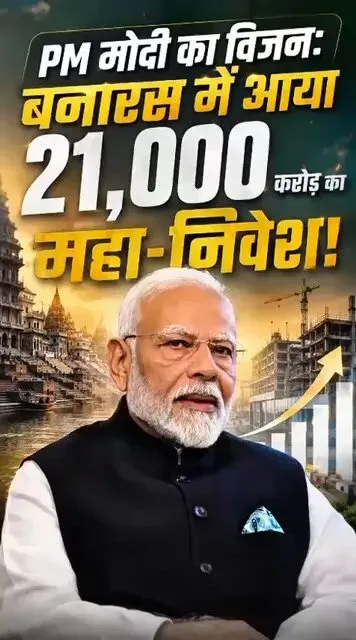
Union Jal Shakti Minister C. R. Paatil declared on 10 July 2026 that Varanasi has become a major industrial hub under PM Modi's leadership, citing over ₹21,000 crore in investment and 96 projects operational since June 2026, promising local jobs for Purvanchal's youth.
Key Takeaways
Union Jal Shakti Minister C.
Paatil posted on 10 July 2026 highlighting Varanasi 's industrial growth.
The post claims over ₹21,000 crore in industrial investment has come to Varanasi under PM Modi 's leadership.
96 large industrial projects in Varanasi district were stated to have become fully operational in June 2026 .
Minister Paatil said youth from Purvanchal can now find quality employment locally, reducing the need to migrate to Delhi or Mumbai .
The post invoked the government slogan 'Virasat bhi aur Vikas bhi' (Heritage as well as Development) to frame Varanasi's dual identity.
Official employment and investment-realisation data from the district administration will be key to verifying the claims.
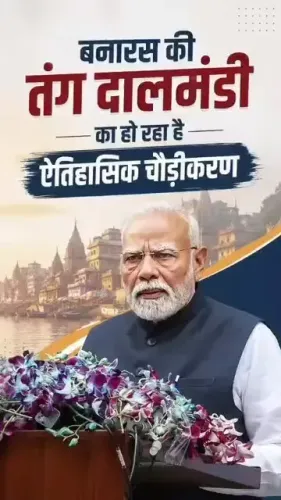
Union Jal Shakti Minister C. R. Paatil on Friday, 10 July 2026 highlighted Varanasi's transformation into a major industrial hub, crediting Prime Minister Narendra Modi's leadership for attracting over ₹21,000 crore in industrial investment to the ancient city.
Context
Posting in Hindi on X, Minister Paatil asked rhetorically, 'क्या आप जानते हैं कि हमारी काशी अब सिर्फ धर्म और पर्यटन का ही नहीं, बल्कि बड़े-बड़े उद्योगों का भी सबसे बड़ा हब बन चुकी है?' ('Do you know that our Kashi has now become the biggest hub not just of religion and tourism, but also of major industries?'). He stated that 96 large industrial projects in the district became fully operational in June 2026, and that youth from the Purvanchal region no longer need to migrate to Delhi or Mumbai for employment. The post closed with the invocation 'Har Har Mahadev', a phrase associated with Varanasi's Shiva devotion.
Policy Backdrop
Varanasi is Prime Minister Modi's parliamentary constituency, a status that has channelled sustained central attention toward the city since 2014. The city was included in the Smart Cities Mission and received dedicated infrastructure and heritage-restoration packages in the years following his first election from the seat. National initiatives such as Make in India, combined with Uttar Pradesh's own industrial policies, have encouraged manufacturing clusters to develop outside traditional hubs, with Varanasi positioned as an anchor for eastern UP's economic corridor. Minister Paatil invoked the government's recurring slogan 'Virasat bhi aur Vikas bhi' ('Heritage as well as Development'), which frames simultaneous heritage conservation and economic modernisation as a unified policy goal.
Stakeholders and Impact
The primary beneficiaries cited are the youth of Purvanchal, the eastern Uttar Pradesh region long associated with high rates of out-migration to metropolitan cities in search of work. If the investment and project-completion figures are borne out by official data, local MSMEs and ancillary service providers stand to gain from the industrial activity. Reduced migration pressure could also ease demand on urban infrastructure in cities like Delhi and Mumbai that have historically absorbed Purvanchal's labour surplus.
What's Next
Attention will now turn to official employment and investment-realisation data from the Varanasi district administration and the Uttar Pradesh government to substantiate the figures cited. Any supplementary industrial allocations in the next state or Union budget will be watched as a signal of whether the momentum described by Minister Paatil translates into sustained policy commitment. The framing of Varanasi as an economic powerhouse alongside its spiritual identity is likely to feature prominently in the ruling party's political communication ahead of future electoral cycles in Uttar Pradesh.
Point of View
000 crore, 96 projects) and a relatable migration story, the communication targets the aspirational voter in eastern Uttar Pradesh directly. The 'Virasat bhi aur Vikas bhi' framing has been applied consistently across pilgrim cities since 2014, suggesting a deliberate template rather than an isolated claim. Whether the figures hold up to scrutiny will determine how durable this narrative proves in the lead-up to the next state election cycle.
NationPress
8 Oct 2026
Frequently Asked Questions
How much industrial investment has come to Varanasi according to CR Paatil?
Minister C. R. Paatil stated that over ₹21,000 crore in industrial investment has come to Varanasi under PM Modi's leadership, though official verification of this figure is pending.
How many industrial projects became operational in Varanasi in June 2026?
According to Minister Paatil's post, 96 large industrial projects in Varanasi district became fully operational in June 2026.
What is the 'Virasat bhi aur Vikas bhi' slogan about?
'Virasat bhi aur Vikas bhi' translates to 'Heritage as well as Development' and is a government slogan framing simultaneous heritage conservation and economic modernisation as a unified policy goal, particularly applied to cities like Varanasi.
Why is Varanasi getting so much industrial attention from the central government?
Varanasi is Prime Minister Narendra Modi's parliamentary constituency. Since 2014 it has received dedicated central packages through initiatives like the Smart Cities Mission and Make in India, making it a flagship site for the government's development agenda.
What does Varanasi's industrial growth mean for Purvanchal youth?
Minister Paatil claims that local industrial expansion is creating quality employment in Varanasi itself, reducing the need for youth from the Purvanchal region of eastern Uttar Pradesh to migrate to Delhi or Mumbai for work.