Shekhawat hails India-Australia Sport Roadmap launch
Synopsis
Prime Minister Narendra Modi and Australian PM Anthony Albanese launched the India-Australia Sport Collaboration Roadmap on 10 July 2026, expanding bilateral cooperation from cricket into sports science, technology, and training. Union Minister Gajendra Singh Shekhawat shared the announcement, highlighting sport as a key link in the two nations' Comprehensive Strategic Partnership.
Key Takeaways
The India-Australia Sport Collaboration Roadmap was jointly launched by PM Narendra Modi and Australian PM Anthony Albanese on 10 July 2026 .
The roadmap expands cooperation beyond cricket to cover sports science, technology, and athlete training .
Both on-field competition and off-field partnership — including governance and grassroots development — are part of the framework.
The initiative builds on the India-Australia Comprehensive Strategic Partnership established in 2020 .
Key beneficiaries include national sports federations, coaches, and athletes in both countries.
Operational details, funding mechanisms, and pilot programmes are yet to be announced.
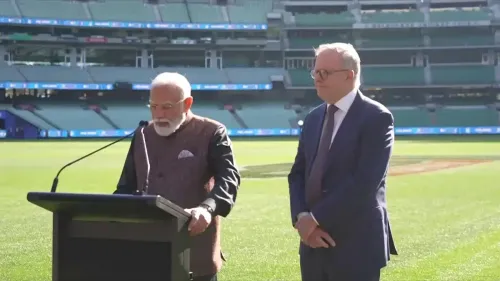
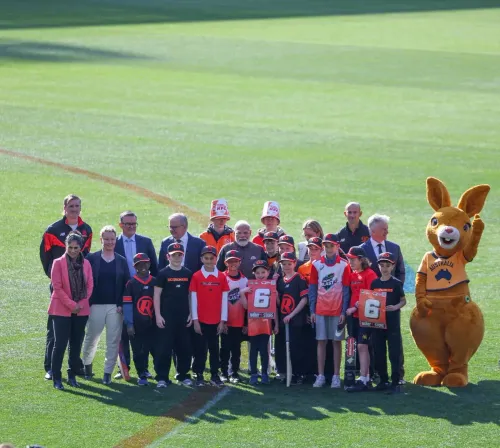
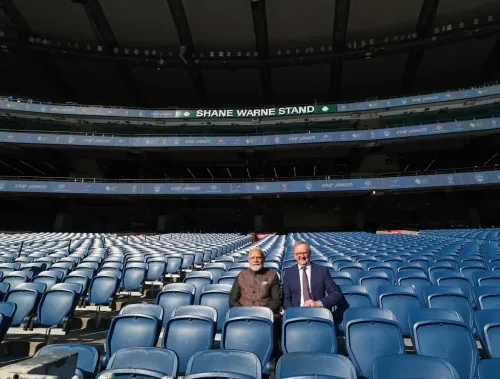
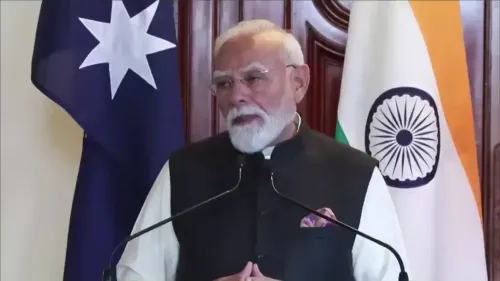
Union Culture and Tourism Minister Gajendra Singh Shekhawat on Friday, 10 July 2026 shared Prime Minister Narendra Modi's statement marking the launch of the India-Australia Sport Collaboration Roadmap alongside Australian Prime Minister Anthony Albanese, calling it a milestone in bilateral people-to-people ties.
Context
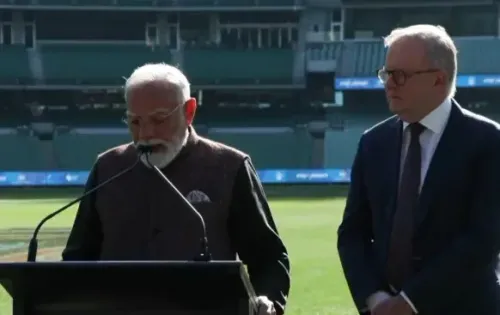
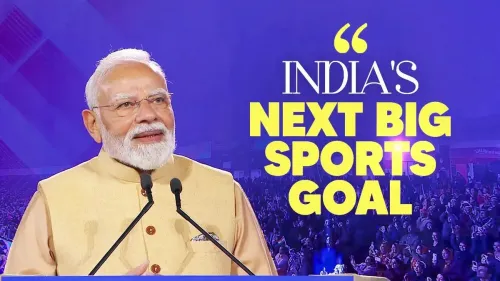
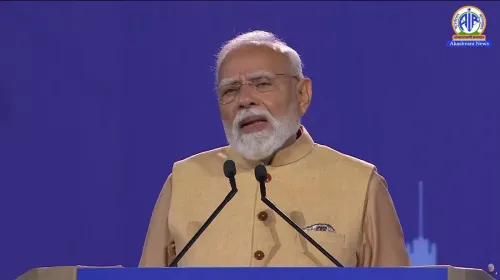
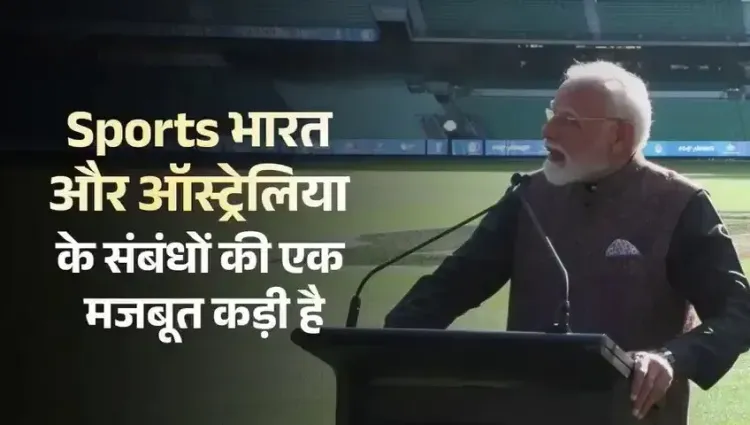
Speaking through the post shared by Minister Shekhawat, PM Modi said: 'Sports bharat aur Australia ke sambandhon ki ek mazboot kadi hai' ('Sports is a strong link in the relationship between India and Australia'). He described the roadmap launch as a moment of great joy, signalling that cooperation would extend well beyond cricket into training, sports science, and technology.
The statement underlines how the two governments are using sport as a visible soft-power instrument alongside defence, trade, and strategic alignment in the Indo-Pacific region.
Policy Backdrop
India and Australia elevated their bilateral relationship to a Comprehensive Strategic Partnership during a virtual summit in 2020, with people-to-people and cultural linkages explicitly included as a pillar. Cricket-based exchanges and periodic memoranda of understanding on sports cooperation have featured in annual India-Australia summit outcomes for over a decade.
The new roadmap broadens that foundation by committing both nations to structured collaboration on sports science and technology, athlete training pathways, and off-field governance — moving beyond the sport-by-sport, event-by-event approach of earlier agreements.
Stakeholders and Impact
National sports federations, coaches, and athletes on both sides stand to benefit from formalised training exchanges and access to sports-science infrastructure. For India, the partnership aligns with its broader ambition to build world-class sports infrastructure and develop competitive capacity across disciplines beyond cricket.
Australia, a recognised leader in high-performance sports systems, gains a structured platform for capacity-building engagement in Asia's largest democracy. Off-field collaboration — covering sports governance, anti-doping frameworks, and grassroots development — is positioned as complementary to on-field competition and spectator-driven people-to-people contact.
What's Next
Attention will now turn to the operational guidelines, funding mechanisms, and pilot programmes that will give the roadmap concrete form. Joint announcements at the next India-Australia leaders' summit are expected to provide further detail on institutional structures and timelines.
If implemented effectively, the roadmap could set a template for India's sports diplomacy with other Indo-Pacific partners, reinforcing New Delhi's push to position sport as a strategic instrument of foreign engagement.
Point of View
Multi-sport framework — a sign that both governments view sport as a serious instrument of strategic engagement, not merely ceremonial goodwill. For New Delhi, formalising access to Australia's high-performance sports science ecosystem fits squarely within India's long-term ambition to compete at the top of the Olympic medal table and host major global sporting events. The timing, coinciding with an in-person leaders' meeting, also reinforces the Quad's soft-power dimension, complementing harder security and trade conversations. Minister Shekhawat's amplification of the announcement signals the Culture and Tourism Ministry's stake in positioning India as a global sports destination alongside its established cultural brand.
NationPress
8 Oct 2026
Frequently Asked Questions
What is the India-Australia Sport Collaboration Roadmap?
The India-Australia Sport Collaboration Roadmap is a bilateral framework launched jointly by PM Narendra Modi and Australian PM Anthony Albanese on 10 July 2026 to expand sports cooperation beyond cricket into training, sports science, and technology.
Which sports will be covered under the India-Australia sports roadmap?
While cricket remains a cornerstone, the roadmap explicitly extends to other sports, with a focus on sports science, technology, and athlete training programmes across disciplines.
What is India and Australia's Comprehensive Strategic Partnership?
India and Australia elevated their bilateral relationship to a Comprehensive Strategic Partnership in 2020, covering defence, trade, people-to-people ties, and cultural linkages, of which sports cooperation is now a formal component.
What role does Gajendra Singh Shekhawat play in this sports announcement?
As Union Minister of Culture and Tourism, Gajendra Singh Shekhawat shared PM Modi's statement on the roadmap launch, reflecting his ministry's interest in sport as part of India's broader cultural and soft-power diplomacy.
What happens next after the India-Australia Sport Collaboration Roadmap launch?
Governments and sports federations on both sides are expected to announce operational guidelines, funding mechanisms, and pilot programmes, with further details likely at the next India-Australia leaders' summit.