Shekhawat shares Modi's call on India-Australia terror fight
Synopsis
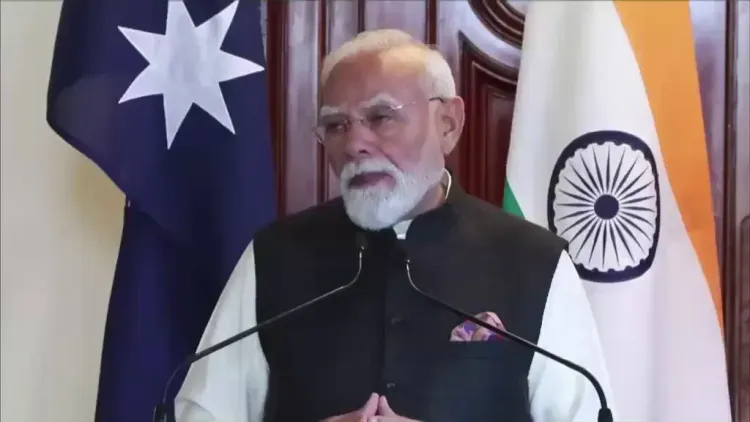
Union Minister Gajendra Singh Shekhawat amplified PM Modi's statement on 9 July 2026 declaring that India and Australia view terrorism as a shared threat to all humanity, not just individual nations, and reaffirming their unbreakable joint resolve to fight it.
Key Takeaways
Minister Gajendra Singh Shekhawat shared a statement by PM Narendra Modi on 9 July 2026 via X, highlighting the India-Australia counter-terrorism partnership.
PM Modi stated that both nations view terrorism as 'a grave challenge for all of humanity', not a problem for any single country.
India and Australia upgraded ties to a Comprehensive Strategic Partnership in 2020 , with counter-terrorism as an explicit pillar.
Both countries participate in the Quad alongside the US and Japan, addressing transnational security threats across the Indo-Pacific.
India has long advocated for a Comprehensive Convention on International Terrorism at the United Nations , a position Australia broadly supports.
The next India-Australia 2+2 Ministerial Dialogue and Quad Foreign Ministers meeting are expected to produce joint counter-terrorism commitments.
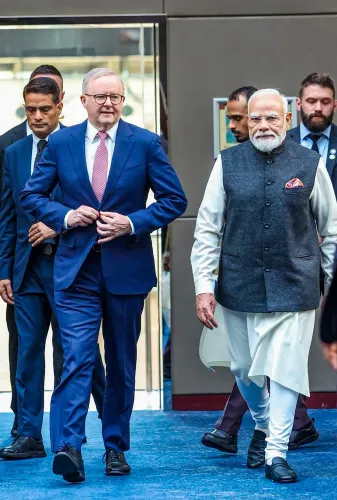
Union Culture and Tourism Minister Gajendra Singh Shekhawat on Thursday, 9 July 2026 shared a statement by Prime Minister Narendra Modi on X, underscoring the shared resolve of India and Australia to combat terrorism as a threat to all of humanity.
Context
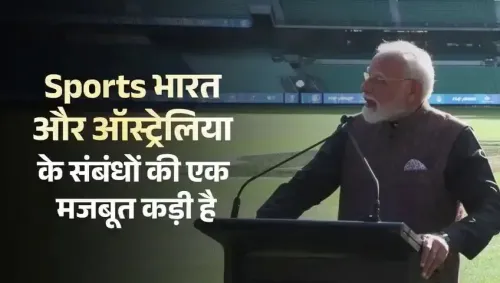
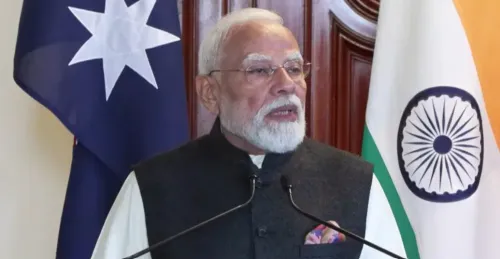
The post quotes PM Modi in Hindi: 'भारत और ऑस्ट्रेलिया मानते हैं कि आतंकवाद केवल किसी एक देश के लिए नहीं, बल्कि पूरी मानवता के लिए गंभीर चुनौती है' — 'India and Australia believe that terrorism is not a challenge for any one country alone, but a grave challenge for all of humanity. Our fight against terrorism is shared, and our resolve is unbreakable.' The statement frames counter-terrorism not as a bilateral convenience but as a civilisational obligation, a framing India has consistently advanced in multilateral forums.
Minister Shekhawat, a senior BJP leader and Lok Sabha MP from Jodhpur, Rajasthan, amplified the message on his personal X handle, signalling broad party alignment with the government's foreign-policy posture on terrorism.
Policy Backdrop
The India-Australia relationship was elevated to a Comprehensive Strategic Partnership in 2020, with counter-terrorism cooperation listed as an explicit pillar. This built on the 2009 Joint Declaration on Security Cooperation, which established frameworks for intelligence sharing and joint action against terrorist networks.
Since 2017, the two countries have held 2+2 Ministerial Dialogues — bringing together foreign and defence ministers — where terrorism financing and radicalisation have featured as standing agenda items. Both nations are also members of the Quad (Quadrilateral Security Dialogue alongside the United States and Japan), a grouping that addresses transnational security threats across the Indo-Pacific.
India has long championed a Comprehensive Convention on International Terrorism (CCIT) at the United Nations, a proposal that calls for a universal legal framework to prosecute and extradite terrorists without political exceptions — a position Australia has broadly supported.
Stakeholders and Impact
The statement carries significance for security agencies in both countries that coordinate on counter-terrorism intelligence, as well as for Indo-Pacific partners watching the depth of the India-Australia strategic alignment. For India, projecting a united front with a major democratic partner reinforces its argument that terrorism must be treated as a global rather than a regional problem.
The messaging also resonates domestically, where cross-party consensus on zero tolerance for terrorism is a political given, and where amplification by senior ministers from different portfolios signals whole-of-government solidarity behind the foreign-policy line.
What's Next
Attention will now turn to the next India-Australia 2+2 Ministerial Dialogue and any upcoming Quad Foreign Ministers meeting, where joint statements on counter-terrorism mechanisms — including information sharing, terror financing, and radicalisation — are expected to be issued. India's continued push for the CCIT at the UN may also gain fresh momentum if this bilateral resolve is translated into coordinated multilateral advocacy.
Point of View
Minister Shekhawat reinforces a pattern in which the ruling party projects whole-of-government unity on foreign-policy priorities, particularly those touching national security. The framing of terrorism as a 'challenge for all of humanity' is a deliberate echo of India's long-running multilateral campaign for a Comprehensive Convention on International Terrorism at the UN, lending the bilateral statement a broader normative weight. Against the backdrop of the India-Australia Comprehensive Strategic Partnership and the Quad architecture, the message signals that New Delhi is weaving counter-terrorism into every strand of its Indo-Pacific diplomacy. The timing and tone suggest this is less a spontaneous post and more a coordinated amplification of a significant diplomatic moment between the two democracies.
NationPress
8 Oct 2026
Frequently Asked Questions
What did PM Modi say about India and Australia on terrorism?
PM Modi stated that India and Australia believe terrorism is not a challenge for any single country but a grave challenge for all of humanity, and that their fight against terrorism is shared and their resolve unbreakable.
What is the India-Australia Comprehensive Strategic Partnership?
The Comprehensive Strategic Partnership was established in 2020 and elevated the India-Australia relationship to include enhanced counter-terrorism cooperation, defence ties, trade, and people-to-people links.
Is Australia part of the Quad with India?
Yes. Australia is a member of the Quad (Quadrilateral Security Dialogue) alongside India, the United States, and Japan, a grouping that addresses transnational security threats including terrorism across the Indo-Pacific.
What is India's CCIT proposal at the United Nations?
India has long championed a Comprehensive Convention on International Terrorism (CCIT) at the UN, which would create a universal legal framework to prosecute and extradite terrorists without political exceptions.
Why did Minister Shekhawat share this statement about terrorism?
Minister Gajendra Singh Shekhawat shared PM Modi's statement on 9 July 2026 to amplify India's joint counter-terrorism resolve with Australia, reflecting broad ruling-party alignment with the government's foreign-policy posture on terrorism.