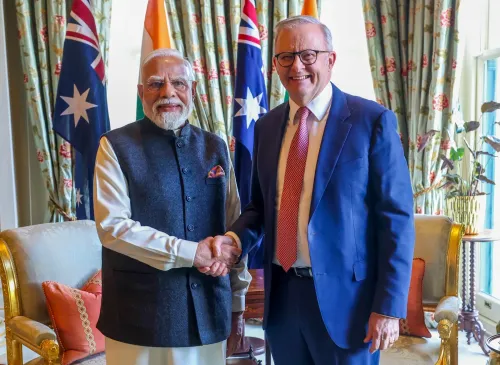
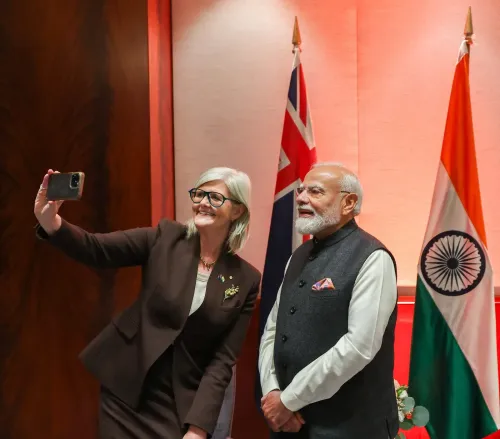
PM Modi meets ex-Australian PM Morrison, discusses India-Australia ties
Synopsis
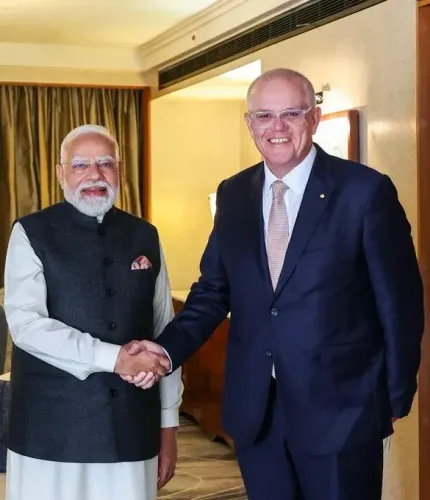
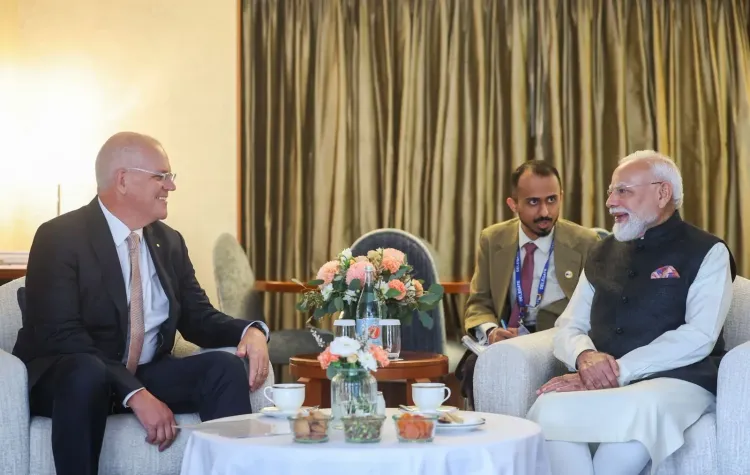
Prime Minister Narendra Modi met former Australian Prime Minister Scott Morrison on 9 July 2026, discussing India-Australia friendship. The two leaders had worked closely to build the Comprehensive Strategic Partnership, the ECTA trade deal, and Quad cooperation between 2020 and 2022.
Key Takeaways
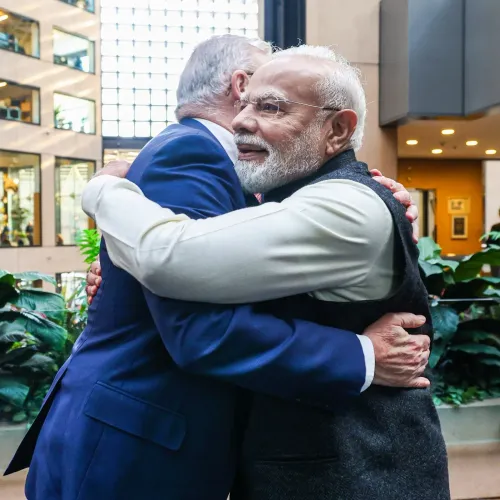
PM Narendra Modi met former Australian PM Scott Morrison on 9 July 2026 and described it as a 'great conversation' on India-Australia friendship.
Morrison served as Australian PM from 2018 to 2022 and was central to elevating ties to a Comprehensive Strategic Partnership in June 2020 .
The India-Australia ECTA , signed in April 2022 , remains a landmark trade milestone from the Modi-Morrison period.
Both leaders participated in multiple Quad Leaders' Summits between 2021 and 2022 , reinforcing Indo-Pacific security cooperation.
The meeting reflects the institutionalised depth of India-Australia ties, which persist beyond individual tenures in office.
Prime Minister Narendra Modi on Thursday, 9 July 2026 shared that he met Scott Morrison, former Prime Minister of Australia, for a conversation centred on the India-Australia friendship. Modi posted on X that it was 'always good to catch up' with Morrison, signalling the warmth of personal ties that have outlasted Morrison's time in office.
Context
The meeting between Modi and Morrison underscores that the India-Australia relationship has matured well beyond transactional diplomacy. Morrison, who served as Australian Prime Minister from 2018 to 2022, was a key architect of the current bilateral architecture during his tenure, engaging closely with India on trade, defence, and Indo-Pacific security.
The two leaders worked together through multiple high-level formats, including the Quadrilateral Security Dialogue (Quad) — the strategic grouping of India, Australia, the United States, and Japan — and a landmark bilateral virtual summit in June 2020 that elevated ties to a Comprehensive Strategic Partnership.
Policy Backdrop
The institutional scaffolding of the India-Australia relationship was substantially built during the Modi-Morrison era. In April 2022, the two countries signed the India-Australia Economic Cooperation and Trade Agreement (ECTA), designed to reduce tariffs and expand bilateral merchandise trade — a milestone that had eluded the two nations for over a decade of negotiations.
Defence cooperation also deepened through joint exercises and logistics-access arrangements, while the Indian diaspora in Australia — one of the fastest-growing migrant communities — became an increasingly prominent people-to-people bridge. These foundations have continued to hold under Morrison's successors in Canberra.
Stakeholders and Impact
The continued engagement between Modi and Morrison sends a signal to bilateral traders, defence establishments, and the Indian community in Australia that the personal relationships underpinning the partnership remain active. Institutionalised ties of this depth typically survive changes of government on either side, and informal leader-to-leader contact reinforces that continuity.
For the Quad framework, such interactions also carry symbolic weight: they demonstrate that the Indo-Pacific security architecture is not solely a function of who holds office, but reflects a durable strategic convergence between New Delhi and Canberra.
What's Next
Attention will now turn to the next Quad Leaders' Summit and any scheduled review of ECTA tariff concessions, both of which will test the durability of the frameworks that Modi and Morrison helped build. Bilateral ministerial meetings and defence white-paper updates from Australia are also expected to shape the near-term trajectory of the partnership. The informal nature of this meeting suggests the two leaders continue to consult on the strategic direction of the relationship even outside official channels.
Point of View
Not merely protocol-driven. The post arrives at a moment when the Quad's next summit cycle is being watched closely, and informal leader contacts of this kind help sustain momentum between formal gatherings. It also reflects a broader Modi foreign-policy pattern of cultivating individual relationships as instruments of strategic continuity. The reference to 'India-Australia friendship' — rather than specific deliverables — keeps the message warm and non-committal, suited to a meeting with someone no longer in office.
NationPress
7 Oct 2026
Frequently Asked Questions
Why did PM Modi meet Scott Morrison in July 2026?
PM Modi met former Australian PM Scott Morrison for an informal conversation on India-Australia friendship, as shared by Modi on X on 9 July 2026. The specific occasion or venue was not detailed in the post.
What is the India-Australia Comprehensive Strategic Partnership?
The Comprehensive Strategic Partnership was announced by India and Australia in June 2020 during a virtual summit between PM Modi and then-PM Morrison, elevating the bilateral relationship to its highest formal tier.
What is the India-Australia ECTA?
The India-Australia Economic Cooperation and Trade Agreement (ECTA) was signed in April 2022 to reduce tariffs and expand bilateral merchandise trade, marking the first trade deal between the two countries in over a decade of negotiations.
What is the Quad and how are India and Australia involved?
The Quad, or Quadrilateral Security Dialogue, is a strategic grouping of India, Australia, the United States, and Japan focused on Indo-Pacific security. Both Modi and Morrison participated in multiple Quad Leaders' Summits between 2021 and 2022.
Is Scott Morrison still involved in Australian politics?
Scott Morrison left office as Australian Prime Minister in 2022. He is no longer in government, but continues to engage informally with world leaders, as reflected in his meeting with PM Modi in July 2026.