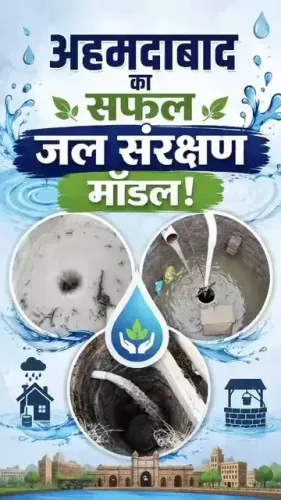
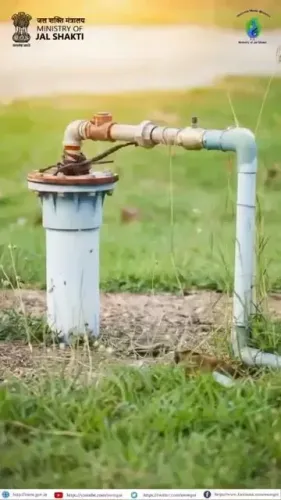
Jal Shakti Minister Paatil highlights recharge well drive in Navsari
Synopsis
Union Jal Shakti Minister C. R. Paatil on 9 July 2026 spotlighted recharge-well-based rainwater harvesting in Navsari, Gujarat, under the Jal Sanchay Jan Bhagidari Abhiyan, underlining community-driven groundwater replenishment during the monsoon season.
Key Takeaways
Union Jal Shakti Minister C.
Paatil posted about active groundwater recharge work in Navsari, Gujarat on 9 July 2026 .
The initiative operates under the Jal Sanchay Jan Bhagidari Abhiyan , a Central Government campaign for community-based water conservation.
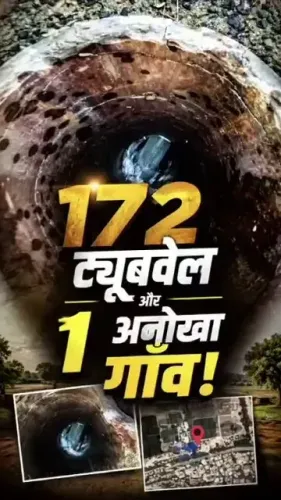
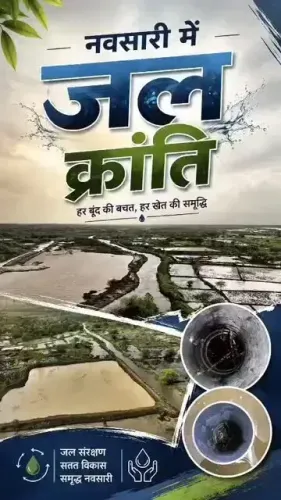
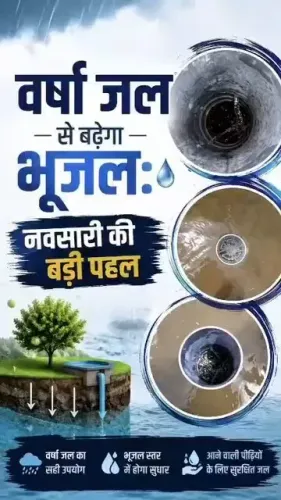
Recharge wells are being used to channel harvested rainwater directly into aquifers in Navsari district.
The abhiyan builds on the Jal Shakti Abhiyan launched in 2019 , which targeted water-stressed districts nationwide.
Gujarat farmers and rural communities are the primary stakeholders, given their heavy dependence on groundwater for irrigation and domestic use.
District-level groundwater data and possible expansion to more blocks in Gujarat are the key developments to watch.
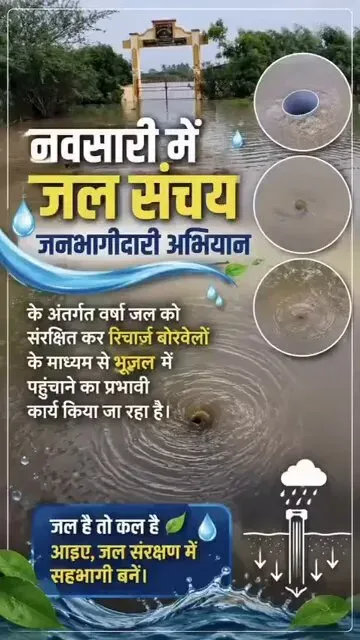
Union Jal Shakti Minister C. R. Paatil on Thursday, 9 July 2026 highlighted groundwater recharge work underway in Navsari, Gujarat, under the Jal Sanchay Jan Bhagidari Abhiyan, noting that rainwater is being conserved and channelled into aquifers through recharge wells.
Posting on X, the minister stated: 'Navsari mein Jal Sanchay Jan Bhagidari Abhiyan ke antargat varsha jal ko sanrakshit kar recharge kuon ke madhyam se bhoojal mein pahunchaane ka prabhavi karya kiya ja raha hai' — ('Effective work is being carried out in Navsari under the Jal Sanchay Jan Bhagidari Abhiyan to conserve rainwater and direct it into groundwater through recharge wells.')
Context
Navsari is a district in south Gujarat with a significant agricultural base and a long-standing focus on groundwater management. The post draws attention to active field-level implementation of a centrally backed campaign during the monsoon season, when rainwater harvesting interventions are most effective.
The Jal Sanchay Jan Bhagidari Abhiyan is a Central Government campaign that emphasises public participation in rainwater harvesting and groundwater recharge — a model that seeks to move water conservation from a purely administrative exercise to a community-owned effort.
Policy Backdrop
The abhiyan draws from the lineage of the Jal Shakti Abhiyan, launched in 2019, which targeted water-stressed districts across India with a focus on rainwater harvesting, watershed development, and source sustainability. Gujarat has historically been an early adopter of such frameworks, combining state-level check-dam programmes with Central schemes to address aquifer depletion.
Recharge wells — also called injection wells or percolation wells — work by funnelling surface runoff or harvested rainwater directly into shallow aquifers, bypassing slower natural percolation. This approach has gained traction in western and peninsular India, where decades of agricultural over-extraction have depleted groundwater tables at an accelerating pace.
Stakeholders and Impact
Gujarat's farming communities are the primary beneficiaries of sustained groundwater recharge, as irrigation in the state is heavily dependent on borewells and open wells. Rural households in Navsari district, many of which rely on groundwater for drinking and domestic use, also stand to gain from improved aquifer levels.
The 'Jan Bhagidari' — or people's participation — component of the abhiyan is designed to ensure local ownership: gram panchayats, self-help groups, and individual farmers are encouraged to contribute labour or resources, making the recharge infrastructure more likely to be maintained over time.
What's Next
District-level groundwater monitoring data from Navsari will be a key indicator of whether recharge well interventions are translating into measurable aquifer recovery. Officials and water-sector observers will watch for any extension of the abhiyan to additional blocks within Gujarat as the monsoon season progresses.
With the Jal Shakti Ministry placing visible emphasis on community-driven water conservation, the Navsari model could be cited as a replicable template for other districts in water-stressed states if field outcomes are documented and shared at the national level.
Point of View
When water conservation messaging carries the most public resonance. The Jal Sanchay Jan Bhagidari Abhiyan represents the BJP government's broader strategy of framing infrastructure delivery as a participatory movement rather than a top-down programme, lending it electoral and ideological texture. Gujarat, as the party's home state and a laboratory for welfare-scheme rollout, frequently surfaces in ministerial communications as a proof-of-concept. Sustained attention to Navsari's groundwater outcomes will determine whether this visibility translates into a replicable policy model or remains a monsoon-season communication exercise.
NationPress
8 Oct 2026
Frequently Asked Questions
What is the Jal Sanchay Jan Bhagidari Abhiyan?
The Jal Sanchay Jan Bhagidari Abhiyan is a Central Government campaign that promotes public participation in rainwater harvesting and groundwater recharge, encouraging communities, panchayats, and farmers to actively contribute to water conservation infrastructure.
What are recharge wells and how do they work?
Recharge wells, also called injection or percolation wells, channel harvested rainwater or surface runoff directly into shallow aquifers, bypassing the slower natural percolation process and helping replenish groundwater levels more quickly.
Why is Navsari significant for groundwater conservation?
Navsari is a south Gujarat district with substantial agricultural activity where groundwater is a critical resource for irrigation and domestic use. Its inclusion in the abhiyan reflects the broader focus on addressing aquifer depletion in western India.
What is the Jal Shakti Abhiyan launched in 2019?
The Jal Shakti Abhiyan, launched in 2019, was a Central Government initiative targeting water-stressed districts across India with measures including rainwater harvesting, watershed development, and source sustainability — forming the policy foundation for subsequent campaigns like the Jal Sanchay Jan Bhagidari Abhiyan.
Who is C. R. Paatil and what ministry does he head?
C. R. Paatil is a senior BJP leader, former Gujarat BJP state president, and currently serves as Union Minister of Jal Shakti, the ministry responsible for water resources, river development, and Ganga rejuvenation.