Jal Shakti Minister Paatil: 1.5 Cr Water Structures Built
Synopsis
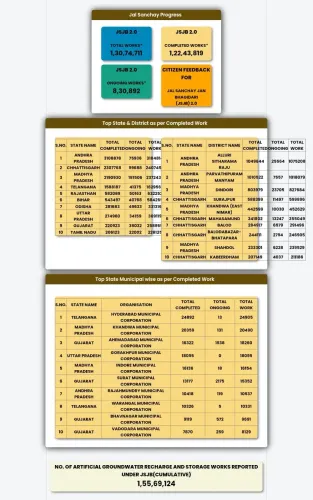
Union Jal Shakti Minister C. R. Paatil announced on 31 May 2026 that the Jalsanchay Abhiyan, launched in September 2024, has completed nearly 1.5 crore water conservation structures through mass public participation — marking a major milestone in India's community-driven water security push.
Key Takeaways
The Jalsanchay Abhiyan was launched on 6 September 2024 by the Ministry of Jal Shakti.
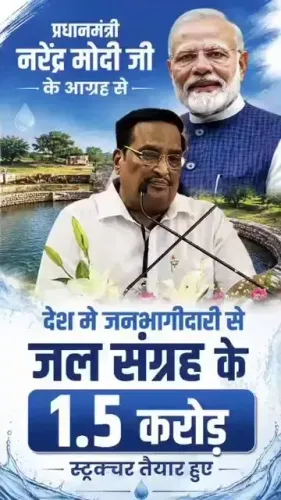
As of 31 May 2026 , approximately 1 crore 50 lakh (1.5 crore) structures have been completed under the campaign.
Paatil credited the achievement to 'immense cooperation of the people,' framing it as a community-driven effort.
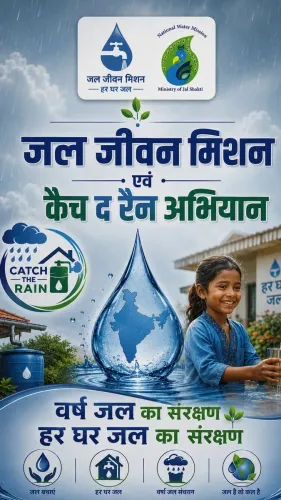
The campaign builds on earlier water-security initiatives including the Jal Jeevan Mission (2019) and the Catch the Rain campaign (2021) .
Primary beneficiaries are farmers and rural communities facing groundwater depletion and seasonal water scarcity.
Independent audits of structural quality and state-wise breakdowns of completed works are awaited to assess on-ground impact.
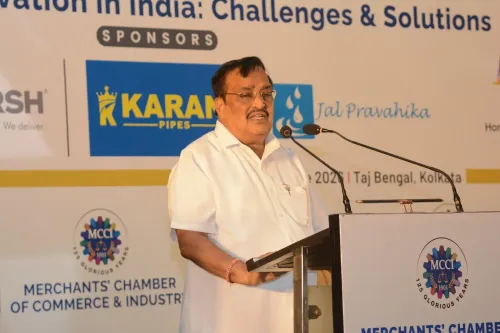
Union Jal Shakti Minister C. R. Paatil on Sunday, 31 May 2026 announced that a water conservation drive launched on 6 September 2024 has successfully completed approximately 1 crore 50 lakh structures with widespread public participation. The milestone marks a significant scale of community-led water harvesting and recharge work carried out over roughly twenty months.
Context
In his post on X, Minister Paatil wrote: '6 September 2024 ko shuru hua Jalsanchay Abhiyan aaj 31 May 2026 tak logon ke apar sahyog se lagbhag 1 crore 50 lakh structure poore karne mein safal raha hai.' Translated, this reads: 'The Jalsanchay Abhiyan, which began on 6 September 2024, has today — by 31 May 2026 — succeeded in completing approximately 1 crore 50 lakh structures with the immense cooperation of the people.' The minister credited the achievement entirely to public participation, framing it as a mass movement rather than a government-led infrastructure exercise.
Policy Backdrop
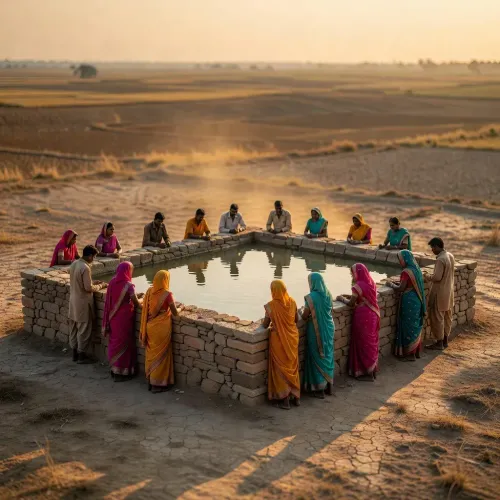
The Ministry of Jal Shakti has overseen a succession of water-security programmes over recent years. The Jal Jeevan Mission, launched in 2019, focused on providing functional household tap connections in rural India, while the Catch the Rain campaign, initiated in 2021, encouraged rainwater harvesting and the creation of artificial groundwater recharge structures. The Jalsanchay Abhiyan appears to continue this policy lineage, emphasising decentralised, community-built water storage infrastructure at scale. Successive central governments have prioritised small-scale water storage and recharge structures as a response to groundwater depletion and seasonal water scarcity, particularly in agriculture-dependent districts.
The construction of 1.5 crore structures over a span of under two years — if sustained and functional — would represent one of the largest community water-conservation mobilisations undertaken under any single campaign in India's recent policy history. The Ministry of Jal Shakti has consistently pursued an integrated approach combining central scheme funding with state government implementation and local community involvement.
Stakeholders and Impact
Farmers and rural communities stand as the primary beneficiaries of water harvesting and recharge structures of this kind. Improved groundwater availability directly affects irrigation access for smallholder farmers, particularly in rain-fed agricultural zones that experience prolonged dry spells between monsoon seasons. Community participation in building these structures also generates local employment and embeds a sense of ownership that can improve long-term maintenance outcomes.
State governments, gram panchayats, and local self-help groups are typically the implementing partners in such campaigns, meaning the scale of achievement cited by Minister Paatil reflects coordination across multiple layers of governance. The emphasis on 'immense cooperation of the people' in his post signals an intent to position this as a Jan Andolan — a people's movement — aligned with the broader political communication strategy around citizen-centric governance.
What's Next
Periodic progress reports, third-party audits of completed structures, and any supplementary budget provisions for the campaign's continuation are expected to be points of scrutiny in forthcoming parliamentary sessions. The government is also likely to release detailed state-wise breakdowns of the 1.5 crore structures to demonstrate geographic spread and equity of impact. Independent assessments of structural quality and actual water-retention outcomes will determine whether this milestone translates into measurable improvements in groundwater levels and agricultural water security on the ground.
Point of View
Which has made water security a centrepiece of its rural governance narrative since 2019. By attributing the milestone to public participation rather than bureaucratic delivery, Minister Paatil is reinforcing the Jan Andolan framing that has been a consistent communication device across flagship schemes. The scale of the claim will invite scrutiny — independent verification of structural functionality and groundwater impact will be essential to distinguish construction targets from actual water-security outcomes. This announcement also sets the stage for the campaign's progress to feature prominently in pre-budget and parliamentary discourse on rural infrastructure spending.
NationPress
14 Oct 2026
Frequently Asked Questions
What is the Jalsanchay Abhiyan?
The Jalsanchay Abhiyan is a water conservation campaign launched by the Ministry of Jal Shakti on 6 September 2024, aimed at building water harvesting and groundwater recharge structures across India with community participation.
How many structures have been built under the Jalsanchay Abhiyan?
According to Union Jal Shakti Minister C. R. Paatil, approximately 1 crore 50 lakh (1.5 crore) structures have been completed under the campaign as of 31 May 2026.
Who is C. R. Paatil?
C. R. Paatil is the Union Minister of Jal Shakti and a senior BJP leader. He previously served as the BJP's Gujarat state president and is known for his organisational role within the party.
How does the Jalsanchay Abhiyan relate to earlier water schemes?
The Jalsanchay Abhiyan continues a policy lineage that includes the Jal Jeevan Mission launched in 2019 for rural tap connections and the Catch the Rain campaign of 2021 for rainwater harvesting, all under the Ministry of Jal Shakti.
Who benefits from water conservation structures built under this campaign?
Farmers and rural communities are the primary beneficiaries, as improved groundwater availability supports irrigation in rain-fed agricultural areas and helps address seasonal water scarcity.