Jal Shakti Minister Paatil: 1.5 Cr Water Structures Built via Jan Bhagidari
Synopsis
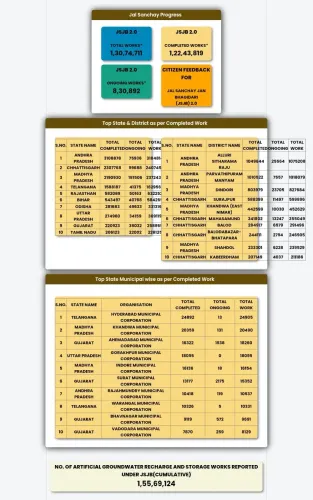
Union Jal Shakti Minister C. R. Paatil announced on June 6, 2026 that 1.5 crore water storage structures have been built across India through public participation at PM Narendra Modi's urging, marking a major milestone under the Jal Shakti Abhiyan and allied water conservation campaigns.
Key Takeaways
Union Jal Shakti Minister C.
Paatil announced that 1.5 crore water conservation structures have been built nationwide through jan bhagidari (public participation).
The minister attributed the milestone directly to Prime Minister Narendra Modi's personal appeal to citizens.
The claim builds on three overlapping programmes: Jal Shakti Abhiyan (2019), Catch the Rain (2020), and Amrit Sarovar (2022).
Primary beneficiaries are rural communities and farmers who depend on decentralised water storage to manage monsoon variability and groundwater depletion.
The 2026 monsoon season will be the immediate test of whether the structures deliver measurable water-security gains.
Groundwater data and state-level maintenance reports are expected to provide independent verification of the programme's impact.
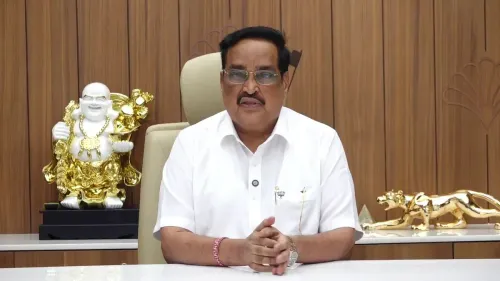
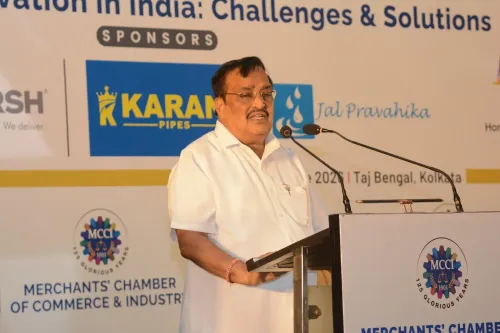
Union Jal Shakti Minister C. R. Paatil on Saturday, June 6, 2026, credited Prime Minister Narendra Modi's personal appeal for catalysing the construction of 1.5 crore water conservation structures across India through public participation, or jan bhagidari.
Context
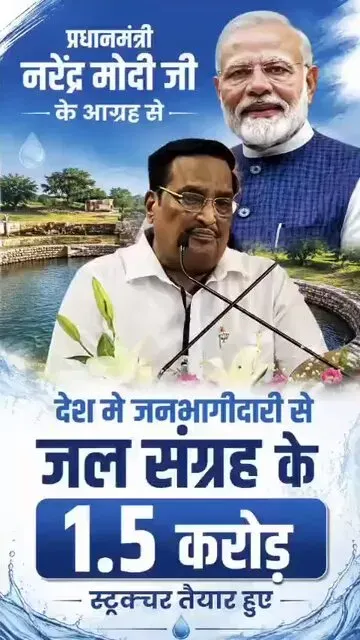
In his post, Minister Paatil wrote: 'Pradhan Mantri @narendramodi sir ke aagrah se desh mein jan bhagidari se jal sangrah ke 1.5 crore structure taiyaar hue' — meaning, 'At the urging of Prime Minister Narendra Modi, 1.5 crore water storage structures have been built across the country through public participation.' The statement frames the milestone explicitly as an outcome of citizen-driven action inspired by the Prime Minister's direct appeal, rather than purely top-down government construction.
The post was accompanied by a video, suggesting the ministry released supporting visual documentation of the achievement alongside the announcement.
Policy Backdrop
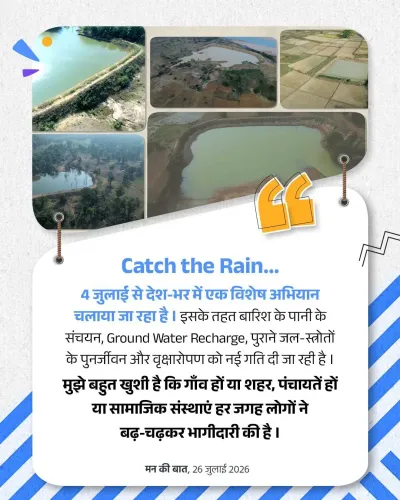
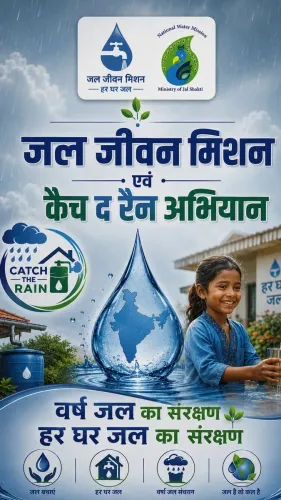
The claim sits within a layered policy architecture that the central government has built since 2019. The Jal Shakti Abhiyan, launched that year, mobilised states and communities for rainwater harvesting and water-body rejuvenation. The Catch the Rain campaign, scaled up from 2020, pushed states and citizens to create decentralised conservation infrastructure before the monsoon season each year.
The Amrit Sarovar initiative, announced in 2022, added a further dimension by targeting the construction or rejuvenation of ponds at the village level nationwide. Together, these successive programmes have operationalised the government's stated goal of combining central guidance with grassroots action to address groundwater depletion and the variability of monsoon rainfall.
Minister Paatil, a senior BJP leader and former Gujarat BJP state president, has been the political face of these water-mission programmes since taking charge of the Jal Shakti Ministry. His post continues a pattern of attributing field outcomes directly to the Prime Minister's personal initiative — a communication style consistent with the ministry's broader outreach on water conservation milestones.
Stakeholders and Impact
Rural communities and farmers are the primary beneficiaries of decentralised water storage infrastructure. Small-scale structures — check dams, farm ponds, recharge wells, and rejuvenated village tanks — reduce dependence on erratic groundwater and improve resilience during dry spells between monsoon spells.
At 1.5 crore structures, the scale claimed would represent one of the largest community-built water infrastructure programmes in the world. If distributed across India's roughly 6.5 lakh villages, it would average more than 23 structures per village, a density that, if maintained, could materially alter local hydrology over time.
What's Next
The 2026 monsoon season will serve as the immediate stress test for these structures — whether they capture and retain rainwater at the scale intended. The Jal Shakti Ministry is expected to release progress reports on structure maintenance and groundwater-level data in the months ahead, which will provide independent verification of the programme's on-ground impact.
Analysts watching India's water security will look to district-level groundwater surveys and state government data to assess whether the construction milestone translates into measurable improvements in water availability for farming households ahead of the kharif sowing season.
Point of View
Positioning the 1.5 crore structures figure as the cumulative payoff of seven years of community water campaigns — and anchoring credit firmly with PM Modi's personal advocacy. The framing of jan bhagidari is politically significant: it allows the government to claim a mass-participation mandate for infrastructure that blends central scheme funding with state and citizen labour. The milestone, if verified, would represent the most ambitious decentralised water infrastructure push in post-independence India, reinforcing the BJP's rural-development narrative ahead of state election cycles. The real test, however, will come when independent groundwater and hydrological data either corroborate or complicate the headline number.
NationPress
21 Oct 2026
Frequently Asked Questions
What are the 1.5 crore water structures announced by Jal Shakti Minister Paatil?
These are decentralised water conservation structures — including check dams, farm ponds, recharge wells, and rejuvenated village tanks — built across India through public participation under campaigns such as Jal Shakti Abhiyan, Catch the Rain, and Amrit Sarovar.
What is jan bhagidari in the context of water conservation?
Jan bhagidari means 'public participation' — the policy approach of mobilising citizens, village communities, and local governments to build and maintain water storage infrastructure alongside central and state government funding.
What is the Jal Shakti Abhiyan?
Jal Shakti Abhiyan is a central government campaign launched in 2019 to promote rainwater harvesting, water-body rejuvenation, and groundwater recharge through community action across India's water-stressed districts.
Who is C. R. Paatil and what ministry does he head?
C. R. Paatil is a senior BJP leader and former Gujarat BJP state president who currently serves as Union Minister of Jal Shakti, the ministry responsible for drinking water, sanitation, and water resources policy in India.
How does the Amrit Sarovar scheme relate to these water structures?
Amrit Sarovar, announced in 2022 , targets the construction or rejuvenation of ponds at the village level across India and forms one layer of the broader network of community water storage structures cited in Minister Paatil's announcement.