Jal Shakti Minister Paatil Backs PM Modi's Catch the Rain Push
Synopsis
Union Jal Shakti Minister C. R. Paatil on 26 July 2026 praised PM Narendra Modi's Mann Ki Baat address on the Catch the Rain campaign, calling water conservation a shared societal resolve and highlighting the role of villages, panchayats, and civil society in reviving traditional water bodies.
Key Takeaways
Union Jal Shakti Minister C.
Paatil publicly endorsed PM Narendra Modi 's water conservation message from Mann Ki Baat on 26 July 2026 .
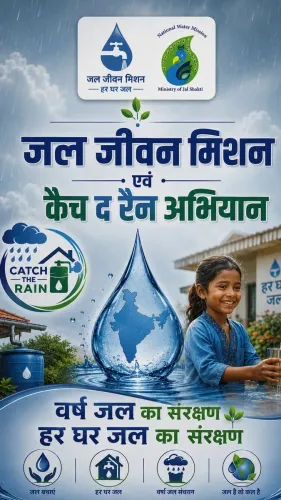
The Catch the Rain campaign, active since 2020 , focuses on rainwater harvesting, revival of ponds, wells, and baolis , and groundwater recharge.
The Ministry of Jal Shakti , formed in May 2019 , oversees India's consolidated water management and conservation programmes.
The Jal Shakti Abhiyan was launched in 2019 across 256 water-stressed districts to drive community-level conservation.
The government's Jan Bhagidari model positions panchayats, villages, and social organisations as primary actors in water security — not just central agencies.
The approach mirrors community mobilisation strategies used in Swachh Bharat and Namami Gange , responding to documented groundwater depletion across India.
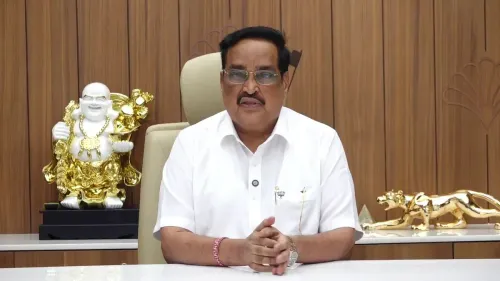
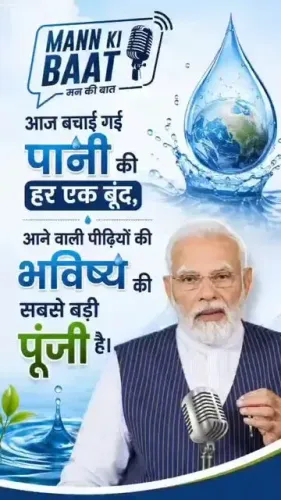
Union Jal Shakti Minister C. R. Paatil on Sunday, 26 July 2026 lauded Prime Minister Narendra Modi's call for community-driven water conservation, responding to the PM's mention of the 'Catch the Rain' campaign during his monthly Mann Ki Baat radio address. Paatil described the Prime Minister's message as a reminder that water conservation is not merely a government programme but a shared societal resolve.
Context
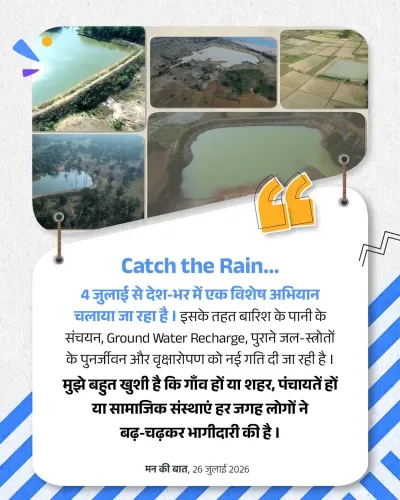
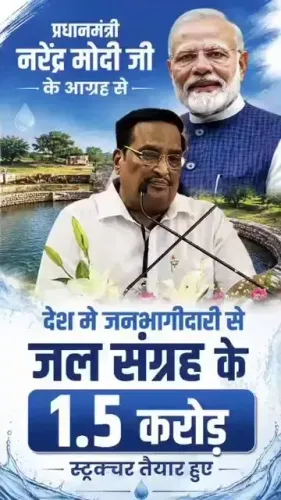
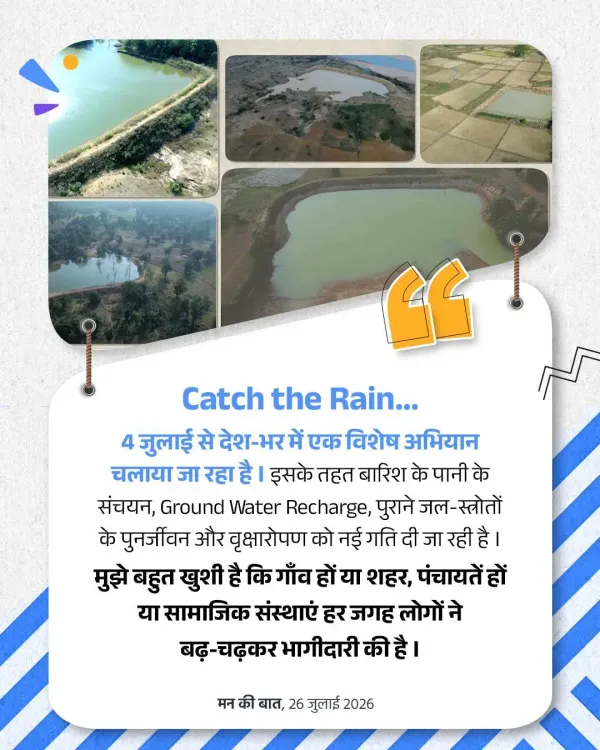
In his post, Minister Paatil quoted the spirit of the Prime Minister's address: 'Jal sanrakshan keval sarkar ka abhiyan nahin, balki samaj ka sajha sankalp hai' ('Water conservation is not just the government's campaign, but society's shared commitment'). He highlighted the inspiring role played by villages, panchayats, and social organisations across the country in conserving ponds, wells, and baolis (stepwells), harvesting rainwater, recharging groundwater, and reviving old water sources.
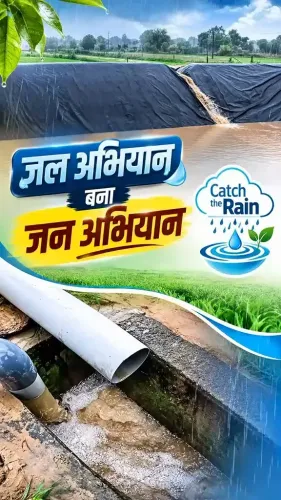
The post was accompanied by two images and carried hashtags #MannKiBaat, #CatchTheRain, #JalShakti, #JalSanrakshan, and #JanBhagidari, underscoring the government's framing of water security as a people's movement.
Policy Backdrop
The Ministry of Jal Shakti was created in May 2019 by merging the erstwhile Ministries of Water Resources, River Development and Ganga Rejuvenation with Drinking Water and Sanitation — consolidating India's water management functions under a single umbrella. That same year, the Jal Shakti Abhiyan was launched across 256 water-stressed districts to promote conservation, rainwater harvesting, and the rejuvenation of traditional water bodies.
The Catch the Rain campaign, promoted from 2020 onward, institutionalised pre-monsoon water conservation activities with an explicit focus on panchayat and community involvement. Its core activities — revival of taalaabs (ponds), kuen (wells), and baolis — align directly with the themes Paatil highlighted in his post.
Stakeholders and Impact
Panchayats, rural communities, and civil society organisations are the primary actors in the Catch the Rain model. The Jan Bhagidari (people's participation) approach mirrors the community mobilisation strategy deployed in earlier flagship programmes such as Swachh Bharat and Namami Gange, where local ownership was positioned as central to on-ground outcomes.
The emphasis on decentralised action comes against the backdrop of documented groundwater depletion and increasing monsoon variability across multiple Indian states. By situating conservation at the village and panchayat level, the government aims to reduce dependence on centralised infrastructure and embed water stewardship into local governance cycles.
What's Next
Attention will now turn to state-level progress reports on Catch the Rain activities and any fresh operational guidelines that the Jal Shakti Ministry may issue ahead of the next monsoon cycle. Minister Paatil's public endorsement of the PM's message signals that the ministry intends to keep community participation at the centre of its water conservation agenda, potentially reinforcing Jan Bhagidari as the organising principle for upcoming policy communications.
Point of View
The minister reinforces a pattern where flagship water schemes are framed as people's movements rather than bureaucratic mandates, deflecting accountability downward to local bodies while keeping credit at the top. The Catch the Rain campaign's community-first architecture also serves to pre-empt criticism of slow infrastructure delivery by showcasing village-level action as proof of momentum. Analysts will watch whether this messaging is followed by measurable targets or fresh funding for panchayat-level water infrastructure.
NationPress
24 Oct 2026
Frequently Asked Questions
What is the Catch the Rain campaign in India?
The Catch the Rain campaign is a nationwide water conservation initiative promoted from 2020 onward under the Ministry of Jal Shakti. It focuses on pre-monsoon rainwater harvesting, revival of traditional water bodies such as ponds, wells, and baolis, and groundwater recharge, with active involvement from panchayats, villages, and community organisations.
What did PM Modi say about water conservation in Mann Ki Baat?
According to Union Jal Shakti Minister C. R. Paatil's post on 26 July 2026, PM Modi mentioned the Catch the Rain campaign in his Mann Ki Baat address and conveyed that water conservation is not merely a government programme but a shared societal commitment, emphasising the role of Jan Bhagidari — people's participation.
What is the Ministry of Jal Shakti and when was it formed?
The Ministry of Jal Shakti was formed in May 2019 by merging the Ministries of Water Resources, River Development and Ganga Rejuvenation with Drinking Water and Sanitation. It is the central ministry responsible for water management, conservation, and related schemes across India.
What is Jan Bhagidari in the context of water conservation?
Jan Bhagidari means 'people's participation' and refers to the government's model of involving local communities, panchayats, and civil society organisations directly in conservation activities. In water conservation, it means villages and social groups take responsibility for reviving water bodies and harvesting rainwater rather than relying solely on central government infrastructure.
What is the Jal Shakti Abhiyan?
The Jal Shakti Abhiyan is a water conservation campaign launched in 2019 across 256 water-stressed districts in India. It promotes rainwater harvesting, traditional water body rejuvenation, and groundwater recharge, and is a precursor to the broader Catch the Rain campaign.