France protests: 135 arrested, 70,000 police deployed by Saturday afternoon
Synopsis
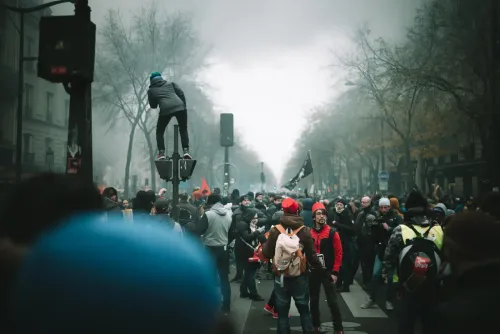
France's rolling anti-government protest wave entered a tense new weekend, with 135 arrests by early Saturday afternoon, 70,000 security forces on the streets, and a politically explosive backdrop: Marine Le Pen launching her presidential campaign in Orléans while tens of thousands of opponents converged on the same city.
Key Takeaways
135 arrests were made across France by 1 pm local time on Saturday, 24 October 2026 .
136 public order incidents recorded nationwide; 35,000 people counted in public spaces by early afternoon.
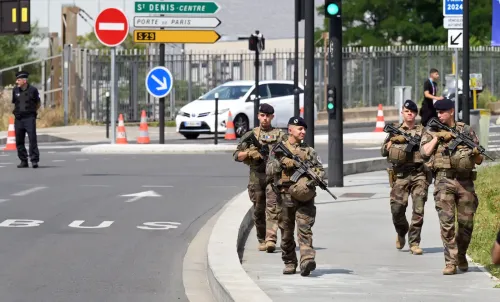
70,000 police officers and gendarmes , plus Operation Sentinelle soldiers, deployed for the protests.
In Lyon , banned gatherings were dispersed with tear gas ; 24 Paris metro stations closed for security.
Nearly 15,000 National Rally supporters and 20,000–30,000 counter-protesters converged on Orléans for the RN congress and Marine Le Pen's presidential campaign launch.
Protests began in late September over school conditions and teacher shortages before expanding into broader anti-government unrest driven by living costs and budget cuts.
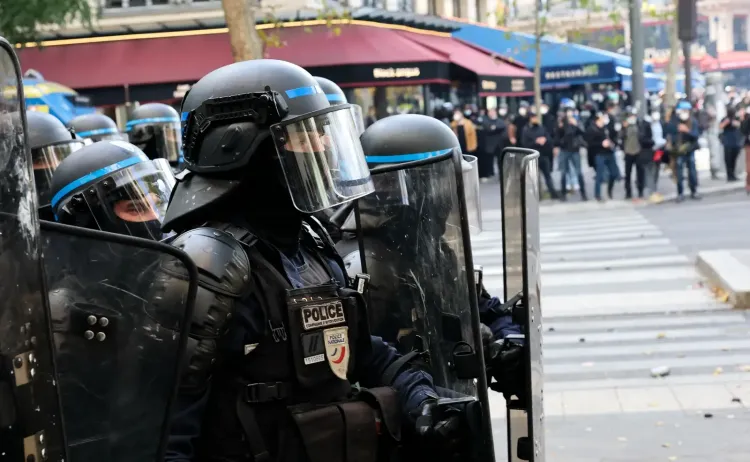
French police had made 135 arrests during nationwide demonstrations by 1 pm local time on Saturday, 24 October 2026, French Interior Minister Laurent Nunez confirmed at a press briefing. A total of 136 public order incidents were recorded across the country, with 35,000 people counted in public spaces by early afternoon.
Scale of Deployment
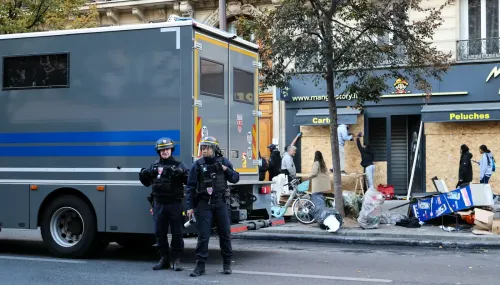
Interior Minister Nunez said 70,000 police officers and gendarmes had been deployed nationwide ahead of the day's protests. Soldiers from the French army's Operation Sentinelle were also mobilised to help prevent violence, underscoring the government's concern about a repeat of the disorder seen in recent weeks. The scale of the security operation is among the largest seen in France for domestic demonstrations in recent years.
Cities Authorising Protests and Key Incidents
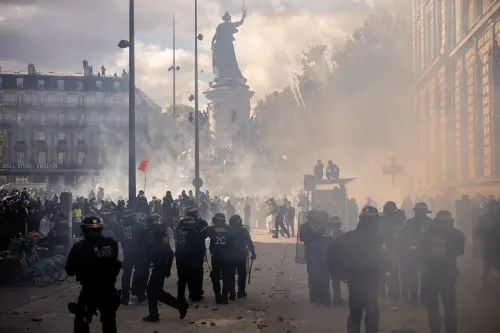
Several major French cities authorised demonstrations on Saturday, including Lille, Strasbourg, Mulhouse, Grenoble, Marseille, Toulouse, Amiens, and Paris. In Lyon, where demonstrations were banned across a large part of the city centre, small gatherings were dispersed by law enforcement officers using tear gas grenades, according to French television channel BFM TV. In Paris, the public transport operator RATP closed 24 metro stations from 9 am local time for security reasons.
Far-Right Congress Adds Political Tension
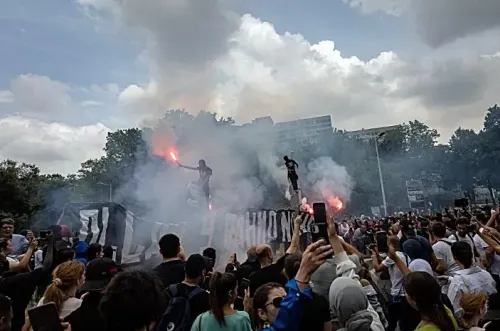
The protest weekend coincided with a politically charged event in Orléans, where nearly 15,000 supporters of the far-right National Rally (RN) were expected to gather over Saturday and Sunday for the party's congress and the formal launch of RN leader Marine Le Pen's presidential campaign, according to French daily Le Monde. Meanwhile, between 20,000 and 30,000 opponents of the far-right party were separately expected to demonstrate in the city on Saturday, raising the potential for confrontation.
Background: What Sparked the Unrest
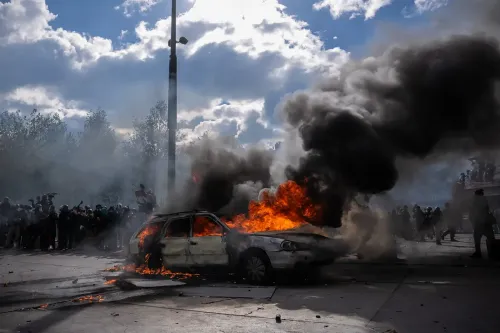
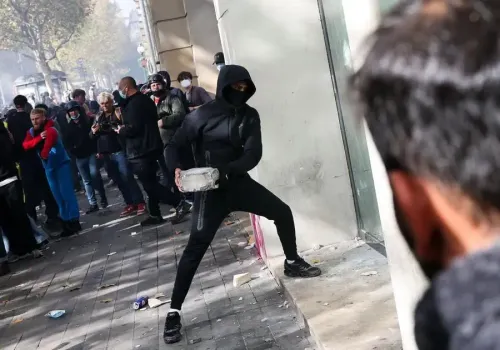
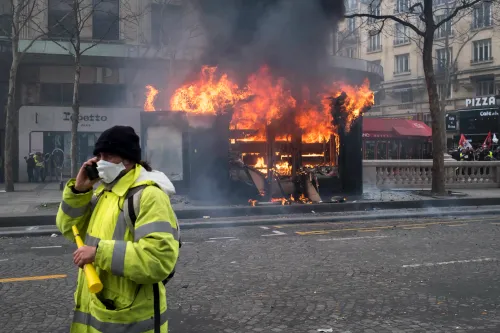
The clashes originally erupted in late September over poor conditions in schools and teacher shortages. The movement quickly expanded into broader anti-government demonstrations fuelled by soaring living costs, high fuel prices, and public sector budget cuts — all directed at President Emmanuel Macron's administration. Nunez had previously noted that more than 2,000 people were arrested during violent protests across France in prior weeks, with material damage affecting several hundred businesses.
Government's Stance
'Demonstrating is a fundamental right. Causing disorder through coordinated violence is not,' Nunez said, striking a line between protecting civil liberties and maintaining order. The government's dual message — deploying massive security while defending the right to protest — reflects the delicate balance Paris is trying to maintain as unrest enters its second month.
With the National Rally congress in Orléans running through Sunday and protest momentum showing little sign of ebbing, the coming days will be closely watched for any escalation.
Point of View
Deploying 70,000 security personnel and army soldiers, suggests Paris is treating this less as a democratic expression and more as a public order emergency. The collision in Orléans — Le Pen's presidential launch flanked by tens of thousands of counter-demonstrators — risks transforming a socioeconomic protest into a culture-war flashpoint, which historically emboldens the far right more than it weakens it. Macron's administration faces a familiar bind: a security crackdown feeds the narrative of authoritarian overreach, while appearing soft invites more disorder.
NationPress
24 Oct 2026
Frequently Asked Questions
How many people were arrested during France's protests on Saturday?
French police made 135 arrests by 1 pm local time on Saturday, 24 October 2026, according to Interior Minister Laurent Nunez. A total of 136 public order incidents were recorded nationwide by that point.
Why are people protesting across France?
The protests began in late September over poor conditions in schools and teacher shortages, but quickly expanded into nationwide anti-government demonstrations. Key grievances include soaring living costs, high fuel prices, and public sector budget cuts targeting President Emmanuel Macron's administration.
What security measures did France deploy for Saturday's demonstrations?
Interior Minister Laurent Nunez said 70,000 police officers and gendarmes were deployed nationwide. Soldiers from the French army's Operation Sentinelle were also mobilised, and Paris's RATP closed 24 metro stations from 9 am for security reasons.
What is happening in Orléans during the protests?
Orléans is hosting the National Rally (RN) party congress over Saturday and Sunday, including the launch of RN leader Marine Le Pen's presidential campaign. Nearly 15,000 RN supporters are expected at the congress, while between 20,000 and 30,000 opponents of the far-right party are expected to demonstrate separately in the city.
How serious has the unrest been in France over recent weeks?
Interior Minister Nunez previously stated that more than 2,000 people were arrested during violent protests across France in earlier weeks. Material damage was described as considerable, affecting several hundred businesses nationwide.