500 schools shut in France as student protests over staffing crisis intensify
Synopsis
France's student protest movement — rooted in staff shortages and crumbling classrooms — has shut or disrupted up to 500 secondary schools, left 24 ransacked, and injured 78 education staff. With talks producing no concrete measures and a fresh mobilisation planned for Tuesday, the government is facing a genuine institutional crisis, not just a street disorder problem.
Key Takeaways
Around 500 secondary schools in France remained shut or partially closed on Monday, 6 October 2026 .
24 of 735 schools impacted by protests have been 'set on fire or ransacked,' according to Education Minister Edouard Geffray .
78 Ministry of Education staff members have been injured since the protests began.
Demonstrations originated at Saint-Exupery secondary school in Créteil over teacher strikes against staff shortages, then spread nationwide.
Talks between the Education Minister and student representatives on Friday ended without 'concrete measures,' with students calling for protests to continue.
A fresh day of mobilisation is planned for Tuesday , with police deploying tear gas, rubber bullets, and LBDs to manage unrest.
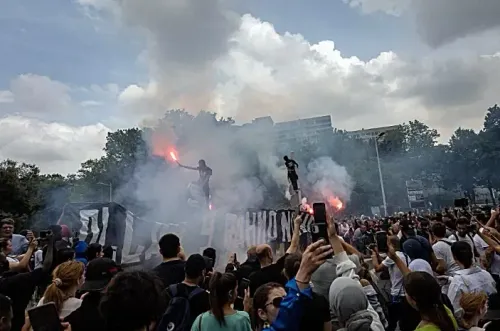
Around 500 secondary schools across France remained shut or partially closed on Monday, 6 October 2026, as a nationwide student protest movement — triggered by staff shortages and crumbling school infrastructure — entered its second week, with another day of mobilisation planned for Tuesday. The demonstrations have been marked by clashes with police, arson, and widespread damage to school buildings and street furniture.
Scale of Disruption
France's Ministry of Education confirmed on Sunday that classes would be 'totally or partially' suspended in 400–500 secondary schools where security conditions 'are not met.' Education Minister Edouard Geffray, speaking to TV channel France 2 and radio station France Inter, said there were 'between 400 and 500 suspended classes' on Friday, and that Monday would likely see a 'gradual, partial resumption.' He added that 24 of the 735 schools impacted by the protests had been 'set on fire or ransacked,' and that 78 staff members from the Ministry of Education had been injured since the unrest began.
What Sparked the Movement
The protests originated at the Saint-Exupery secondary school in Créteil, where students began demonstrating roughly two weeks ago in solidarity with teachers who had struck over staffing shortfalls and inadequate resources. Demonstrations then spread across France over the following week. Students have cited unsafe and insanitary buildings, overcrowded classrooms, and timetables unable to accommodate the absence of teachers. A vocal contingent has also voiced opposition to the ban on mobile phones in schools.
Police Response and Government's Defence
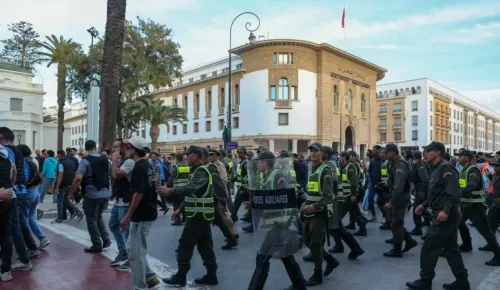
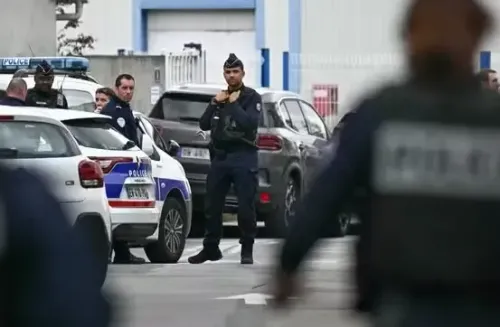
Law enforcement deployed tear gas, rubber bullets, defensive ball launchers (LBDs), and batons to disperse some protesters. During the demonstrations, rubbish bins and objects were set alight, projectiles were thrown at officers, and school buildings and street furniture were damaged.
Interior Minister Laurent Nunez defended the conduct of security forces, posting on X that they 'do not repress young people but protect and supervise students and pupils who wish to peacefully carry out their demands.' He added that forces intervene 'with firmness and without delay to put an end to the degradations, violence, and abuses committed by troublemakers.' Nunez also rejected 'serious and unfounded accusations of so-called brutal and disproportionate interventions,' dismissing claims that crackdowns were directed specifically at 'racialised youth from working-class neighbourhoods' as 'totally disconnected accusatory rhetoric from the real world.'
Talks Fail to Produce Concrete Measures
On Friday, Education Minister Geffray met student representatives in an attempt to defuse tensions. The talks failed to yield any agreement, with representatives stating they had not obtained 'concrete measures' and calling for the movement to continue into the following week. The impasse suggests the protests are unlikely to subside quickly, particularly as the underlying grievances — staff shortages, infrastructure neglect, and timetable disruptions — remain unaddressed.
What Comes Next
With a fresh mobilisation planned for Tuesday and student representatives maintaining their call for continued action, French authorities face the challenge of balancing security with a legitimate institutional crisis in the country's secondary school system. The government's next move on staffing and resource commitments will be closely watched.
Point of View
But the underlying cause — chronic understaffing, deteriorating infrastructure, and timetable chaos — is an institutional failure that predates these protests by years. Interior Minister Nunez's pointed rebuttal of accusations of racialised policing signals a deeper political subtext that could inflame rather than contain the movement. The failure of Friday's talks to produce even a symbolic concession suggests the government is either unwilling or unable to move quickly on structural reforms. The longer schools stay closed, the harder it becomes to separate legitimate student grievances from the violence that has overshadowed them.
NationPress
5 Oct 2026
Frequently Asked Questions
Why are schools closed in France right now?
Around 500 secondary schools in France are shut or partially closed due to ongoing student protests over staff shortages, unsafe buildings, overcrowded classes, and disrupted timetables. The unrest began at Saint-Exupery secondary school in Créteil about two weeks ago and has since spread nationwide.
How many schools have been damaged in the France protests?
According to Education Minister Edouard Geffray, 24 of the 735 schools affected by the protests have been 'set on fire or ransacked.' A total of 78 Ministry of Education staff members have been injured since the demonstrations began.
What are the student protesters demanding?
Students are calling for better staffing levels, safer and more sanitary school buildings, and less overcrowded classrooms. Some students have also expressed opposition to the ban on mobile phones in schools. Representatives say talks with the Education Minister on Friday yielded no 'concrete measures.'
How has the French government responded to the protests?
Interior Minister Laurent Nunez has defended police conduct, saying forces 'protect and supervise' peaceful students while acting firmly against those causing damage. Education Minister Edouard Geffray met student representatives on Friday but no agreement was reached, and protests are set to continue.
When will French schools reopen fully?
A gradual, partial resumption of classes was expected from Monday, according to Education Minister Geffray, but another mobilisation day is planned for Tuesday. Full reopening depends on whether security conditions are met and whether the government addresses the core grievances driving the protests.