CM Bhajan Lal Sharma Pushes Solar Energy to Empower Rajasthan Farmers
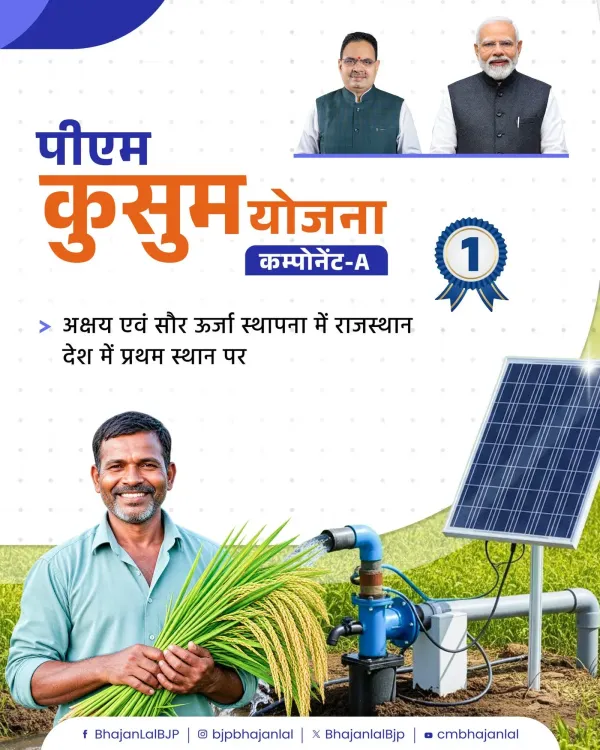
Synopsis
Rajasthan Chief Minister Bhajan Lal Sharma has pledged his double engine government's resolve to empower farmers through solar energy promotion, building on the central PM-KUSUM scheme to cut irrigation costs and boost agricultural incomes across India's sunniest state.
Key Takeaways
Rajasthan CM Bhajan Lal Sharma reaffirmed on 19 November 2026 that his government is promoting solar energy in agriculture to raise farmer incomes.
The push builds on the PM-KUSUM scheme (launched 2019) , which solarises pump sets and allows farmers to sell surplus power to the grid.
Sharma invoked the 'double engine government' framing to highlight BJP centre-state alignment on the policy.
Rajasthan is one of India's highest solar-potential states, making solar-powered irrigation a logical priority.
The initiative contributes to India's national target of 500 GW non-fossil fuel capacity by 2030 .
Key metrics to watch: solar pump installation numbers and subsidy disbursal speed under Rajasthan's PM-KUSUM rollout.
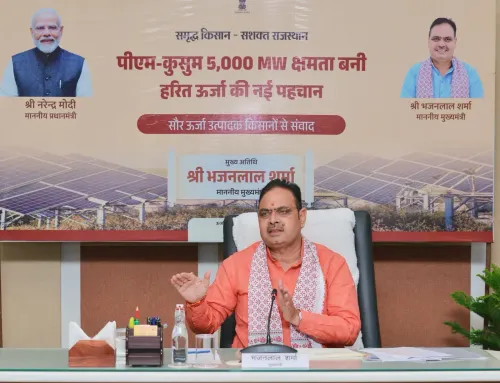
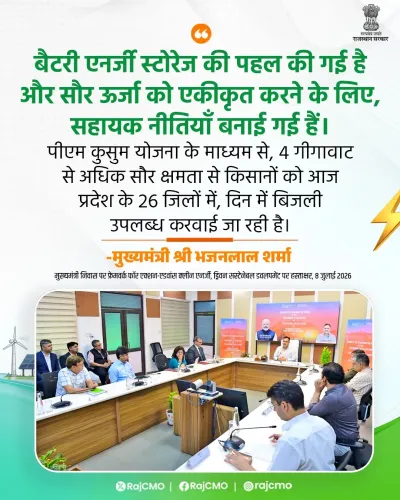
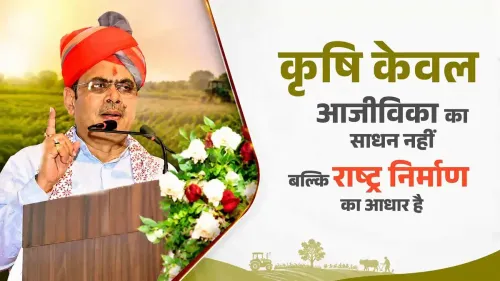
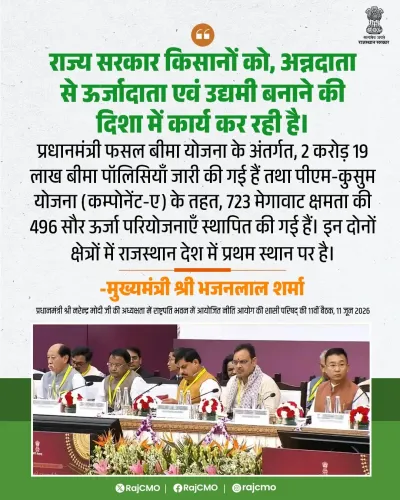
When a sun-drenched state decides to put its greatest natural asset to work for its farmers, the equation is hard to argue with. Rajasthan Chief Minister Bhajan Lal Sharma reaffirmed on Thursday, 19 November 2026, that his government is working with firm resolve to strengthen the agriculture sector by promoting solar energy — with the twin goals of making farmers self-reliant and raising their incomes.
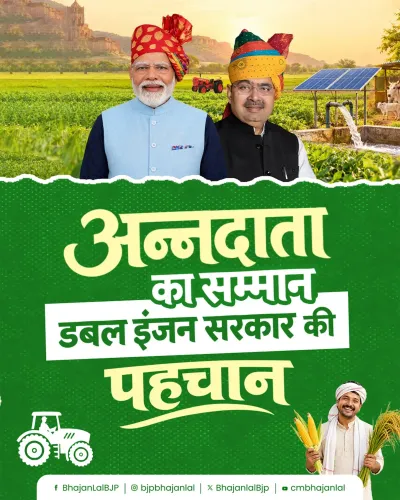
Posting in Hindi, CM Sharma wrote that the 'double engine government' — a phrase BJP uses to signal alignment between its state and central administrations — is 'working with firm resolve to empower the agricultural sector by promoting solar energy' so as to 'make farmers self-reliant and increase their income.' The message is a public articulation of a policy direction that has been building since the BJP returned to power in Rajasthan in December 2023.
Solar Agriculture and the PM-KUSUM Foundation
The policy backbone here is the central government's PM-KUSUM scheme, launched in 2019, which set out to solarise agricultural pump sets across India, enable grid-connected solar plants on farmland, and — critically — allow farmers to sell surplus electricity back to the grid. For Rajasthan, with its exceptional solar irradiance, the scheme was always a natural fit: the state ranks among India's highest in both installed solar capacity and agricultural electricity demand.
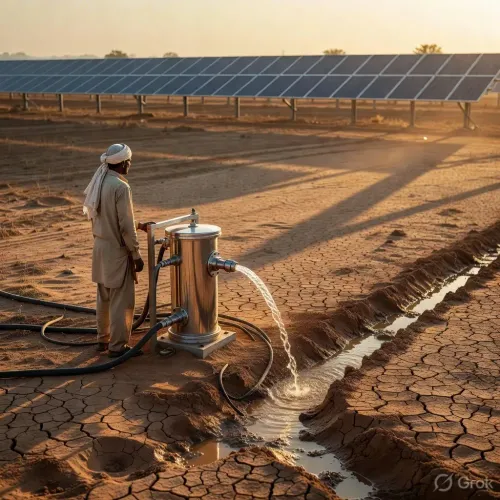
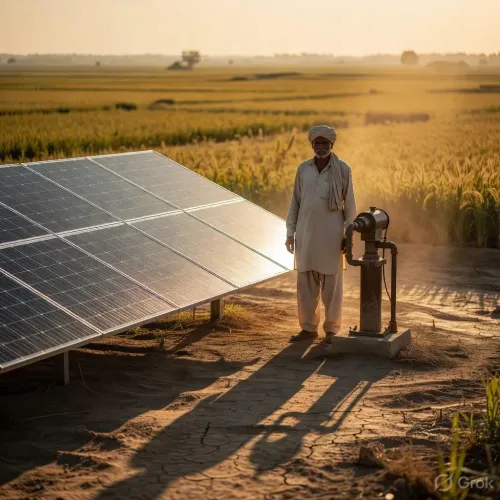
The logic is straightforward. A farmer running a diesel pump pays for every litre burned. A farmer running a solar pump eliminates that recurring cost — and if connected to the grid, earns revenue on the side. That double benefit is exactly the 'income increase' CM Sharma's post is pointing toward.
The Bigger Push: India's 500 GW Non-Fossil Target
Rajasthan's solar-agriculture push does not exist in isolation. Both BJP-governed states and the central government have been pursuing parallel programmes to cut irrigation costs, reduce diesel dependence in rural areas, and contribute to India's national target of 500 GW of non-fossil fuel capacity by 2030. Each solar pump installed in a Rajasthan village is a small but additive step toward that national number.
The 'double engine' framing CM Sharma deploys is as much political signalling as policy description — it reminds farmers that the state and central governments are rowing in the same direction, which in practical terms means faster scheme approvals, smoother subsidy disbursal, and coordinated targets. Whether those installation numbers on the ground match the ambition of the messaging is the question worth watching.
Rajasthan's farmers are waiting not just for the rhetoric to shine — but for the panels to go up.
Point of View
But Rajasthan's credibility on this agenda will ultimately be measured by installation numbers and subsidy disbursal speed, not messaging. The solar-agriculture convergence also quietly advances India's 500 GW renewable target, giving the Centre and state a shared political win that transcends any single election cycle. Sharma's framing of energy policy as farmer welfare is a deliberate bridge between two voter priorities — rural income and clean energy — that BJP has consistently tried to fuse.
NationPress
19 Nov 2026
Frequently Asked Questions
What is Rajasthan CM Bhajan Lal Sharma saying about solar energy for farmers?
CM Sharma has stated that his double engine government is working with firm resolve to promote solar energy in agriculture to make farmers self-reliant and increase their incomes, in line with the central PM-KUSUM scheme.
What is PM-KUSUM scheme and how does it help farmers?
PM-KUSUM, launched in 2019, is a central government scheme that solarises agricultural pump sets, enables grid-connected solar plants on farmland, and allows farmers to earn income by selling surplus power back to the grid.
Why is Rajasthan focused on solar energy for agriculture?
Rajasthan has among the highest solar irradiance in India, making it ideal for solar-powered irrigation. Solar pumps cut diesel costs for farmers and can generate additional income, while also contributing to India's 500 GW renewable energy target by 2030.
What does 'double engine government' mean in the context of Rajasthan?
BJP uses the term 'double engine government' to describe a situation where both the state government and the central government are BJP-led, implying coordinated policy implementation, faster approvals, and smoother subsidy disbursal for schemes like PM-KUSUM.
How does solar energy help increase farmer income in Rajasthan?
Solar pumps eliminate recurring diesel fuel costs for irrigation. Under schemes like PM-KUSUM, farmers with grid-connected solar systems can also sell surplus electricity, creating an additional income stream on top of their agricultural earnings.