CM Bhajanlal Sharma: PM-KUSUM turns farmers into energy providers
Synopsis
Chief Minister Bhajanlal Sharma interacted with PM-KUSUM beneficiaries in Rajasthan, highlighting over 2,300 solar plants with 5,000 MW capacity and daytime power for 3.34 lakh farmers across 26 districts, with a state pledge to extend coverage to all farmers by 2027.
Key Takeaways
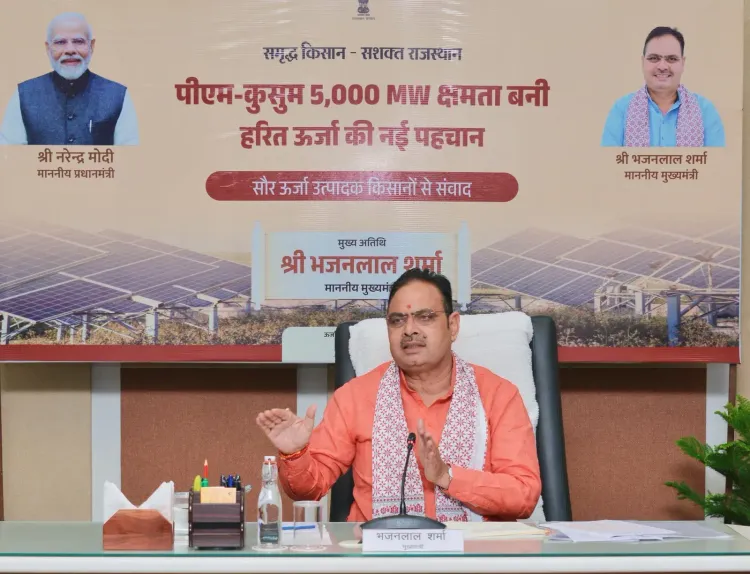
CM Bhajanlal Sharma held a direct interaction with PM-KUSUM scheme beneficiary farmers on 19 August 2026 .
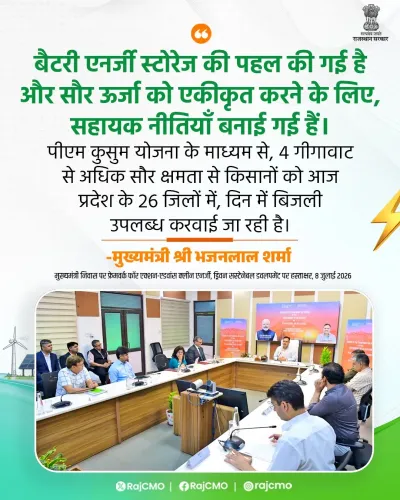
More than 2,300 solar energy plants with over 5,000 MW combined capacity have been installed in Rajasthan under the scheme.
3.34 lakh farmers across 26 districts are now receiving daytime electricity for agricultural use.
The PM-KUSUM scheme was launched nationally in 2019 by the Ministry of New and Renewable Energy to promote solar adoption among farmers.
The Rajasthan government has set a deadline of 2027 to provide daytime electricity to all farmers in the state.
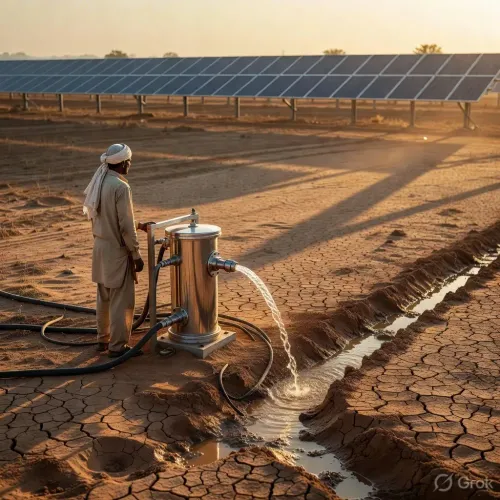
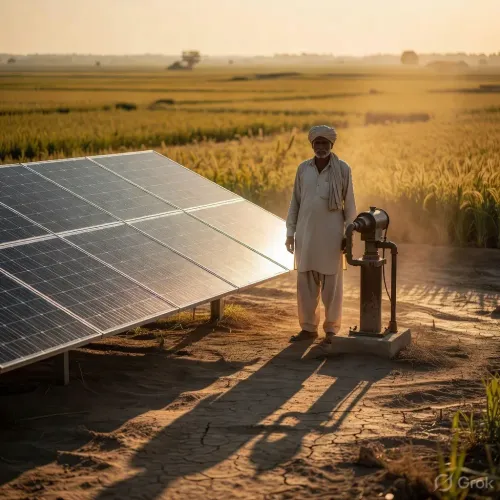
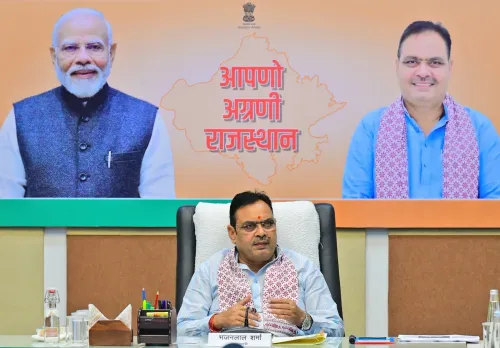
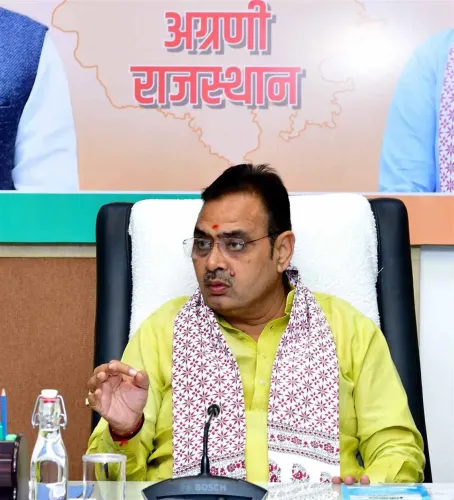
Rajasthan's farmers are no longer just growing food — they are generating power. Chief Minister Bhajanlal Sharma held a direct interaction with beneficiary farmers of the PM-KUSUM scheme on Wednesday, 19 August 2026, declaring that the programme is transforming cultivators from annadaata (food providers) into urjadaata (energy providers) as well.
2,300-plus solar plants and 3.34 lakh farmers already powered up
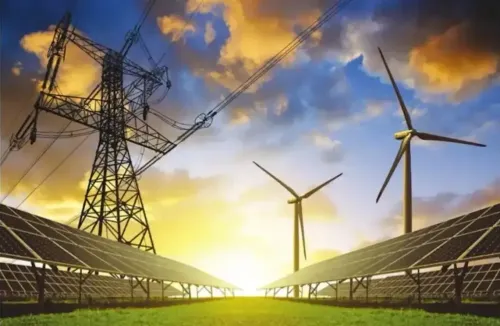
The numbers behind Sharma's claim are substantial. Across Rajasthan, more than 2,300 solar energy plants with a combined capacity exceeding 5,000 megawatts have already been installed under the scheme. More concretely, 3.34 lakh farmers spread across 26 districts are now receiving daytime electricity for agricultural work — a shift that directly addresses one of rural India's oldest complaints: power cuts during peak farming hours.
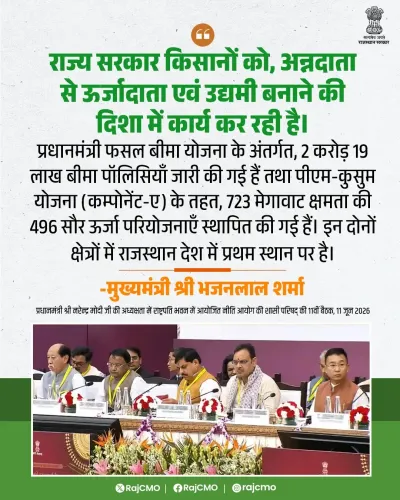
Sharma quoted the scheme's impact in his own words: the PM-KUSUM programme is empowering farmers 'not only as food providers but also as energy providers.' That dual identity — cultivator and clean-energy contributor — is the political and policy centrepiece of the state government's pitch.
PM-KUSUM: the central scheme Rajasthan is betting on
The Pradhan Mantri Kisan Urja Suraksha evam Utthaan Mahabhiyan (PM-KUSUM) was launched by the Ministry of New and Renewable Energy in 2019 to decentralise solar adoption among farmers through solar pumps and grid-connected plants. Rajasthan, with some of the highest solar irradiance in the country, was always a natural fit for the scheme's ambitions.
The state has leaned into that advantage — using decentralised solar installations not just to hit renewable targets but to solve a structural agricultural problem: the absence of reliable daytime power for irrigation and farm operations.
The 2027 deadline the state has set for itself
Sharma's government is not stopping at current coverage. The Rajasthan state government has committed to ensuring daytime electricity for all farmers in the state by 2027 — a deadline that now anchors the scheme's next phase. With 26 districts already covered, the administration faces the harder task of extending the grid to remaining districts within the window.
Whether the infrastructure rollout keeps pace with the political promise will be the defining test of this initiative over the next twelve months.
Point of View
Voter-visible deliverable ahead of the 2027 target year. Rajasthan's geographic advantage in solar irradiance gives the state a credible platform to lead this story nationally. The 2027 deadline, however, converts a policy achievement into a political accountability marker: if daytime power does not reach all remaining districts, the promise becomes a liability. The broader pattern — states using central renewable schemes to solve legacy agricultural power deficits — signals a structural shift in how farm welfare is being redefined in India's energy transition era.
NationPress
3 Oct 2026
Frequently Asked Questions
What is the PM-KUSUM scheme?
PM-KUSUM (Pradhan Mantri Kisan Urja Suraksha evam Utthaan Mahabhiyan) is a central government scheme launched in 2019 by the Ministry of New and Renewable Energy to promote solar energy adoption among farmers through solar pumps and decentralised solar power plants.
How many farmers in Rajasthan benefit from PM-KUSUM?
As of August 2026, more than 3.34 lakh farmers across 26 districts of Rajasthan are receiving daytime electricity for agricultural work under the PM-KUSUM scheme.
How much solar capacity has been installed under PM-KUSUM in Rajasthan?
More than 2,300 solar energy plants with a combined installed capacity exceeding 5,000 megawatts have been set up in Rajasthan under the PM-KUSUM scheme.
What is Rajasthan's 2027 target for farmers under PM-KUSUM?
The Rajasthan state government has committed to providing daytime electricity to all farmers across the state by 2027 , extending coverage beyond the current 26 districts.
What did CM Bhajanlal Sharma say about farmers and solar energy?
CM Bhajanlal Sharma said that the PM-KUSUM scheme is empowering farmers not only as 'annadaata' (food providers) but also as 'urjadaata' (energy providers), enabling them to generate solar power alongside farming.