Rajasthan CM Bhajan Lal backs PM-KUSUM as farmer energy shift
Synopsis
The Chief Minister's Office of Rajasthan invoked the PM-KUSUM scheme on 19 August 2026, positioning farmers as energy providers — urjadata — alongside their traditional role as food providers, aligning with India's 500 GW renewable energy target by 2030.
Key Takeaways
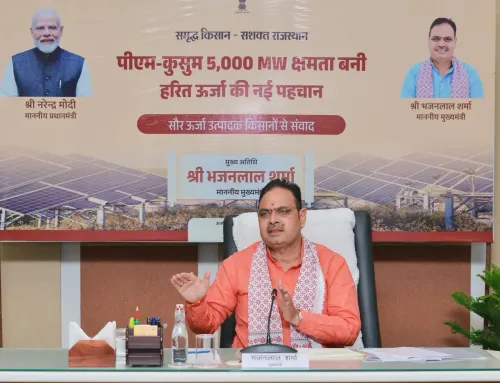
The Rajasthan CMO posted on 19 August 2026 tagging CM Bhajan Lal Sharma , highlighting PM-KUSUM as a farmer empowerment tool.
PM-KUSUM (Pradhan Mantri Kisan Urja Suraksha evam Utthaan Mahabhiyan) was launched by the Ministry of New and Renewable Energy in 2019 .
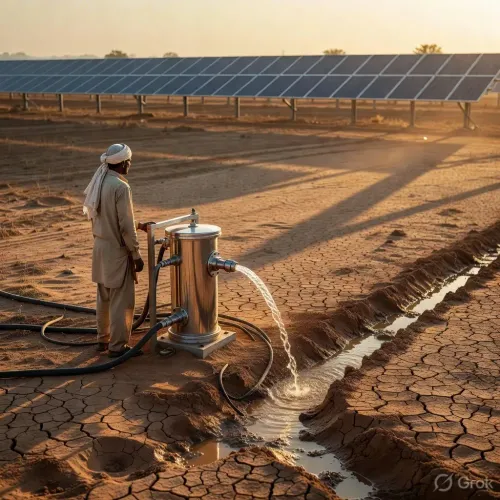
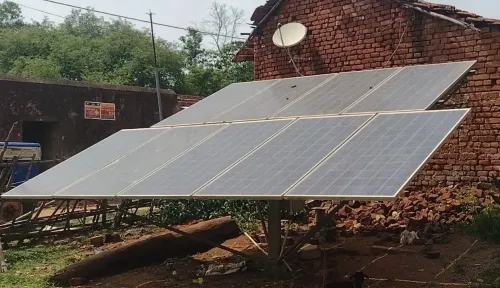
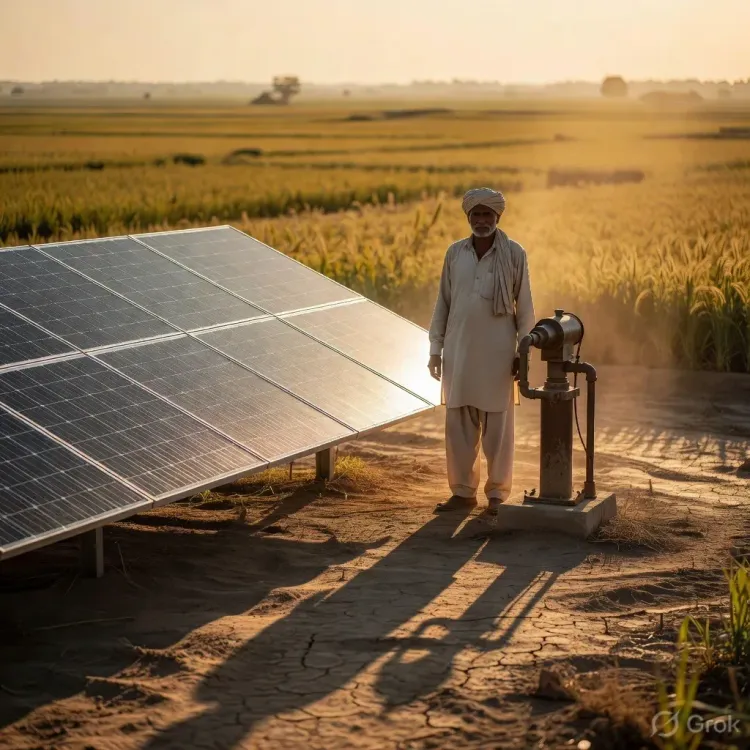
The scheme solarises agricultural pumps and allows farmers to sell surplus power back to the grid, creating an additional income stream.
Rajasthan has integrated PM-KUSUM into its state renewable energy targets aligned with India's 500 GW non-fossil fuel goal by 2030 .
The post reframes farmers from subsidy recipients to active participants in India's energy economy — annadata and urjadata both.
Farmers across India are no longer just feeding the nation — they are powering it. The Chief Minister's Office of Rajasthan, tagging Chief Minister Bhajan Lal Sharma, underscored this transformation on Wednesday, 19 August 2026, invoking the PM-KUSUM scheme as the vehicle driving farmers from being annadata (providers of food) to urjadata (providers of energy).
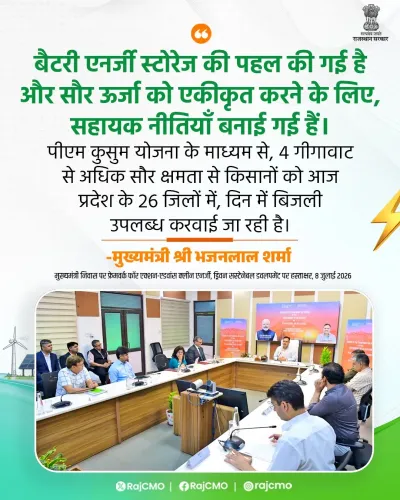
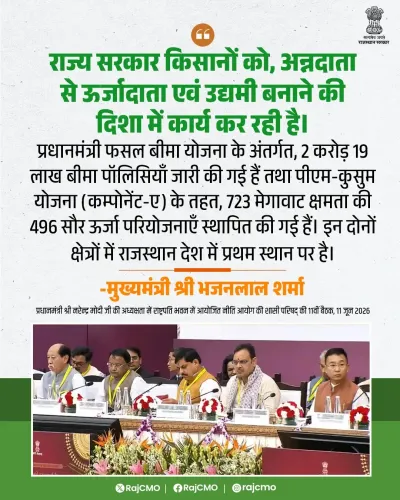
The post stated: 'Through the PM-KUSUM scheme, the country's farmer is strengthening his identity not just as a provider of food, but also as a provider of energy.'
What PM-KUSUM actually does for a Rajasthan farmer
Launched by the Ministry of New and Renewable Energy in 2019, the Pradhan Mantri Kisan Urja Suraksha evam Utthaan Mahabhiyan (PM-KUSUM) was designed with a dual purpose: replace diesel-guzzling irrigation pumps with solar-powered ones, and allow farmers to sell surplus electricity back to the grid. For a state like Rajasthan — vast, sun-drenched, and heavily agricultural — the scheme fits like a key into a lock. High solar irradiance means pumps run longer and surplus generation is real, not theoretical. The scheme operates across three components: standalone off-grid solar pumps, grid-connected individual farm pumps, and solarisation of existing grid-connected pumps. Each component chips away at two chronic problems in Indian agriculture — the high cost of diesel and the unreliability of grid power for irrigation.Rajasthan's role in India's 500 GW solar ambition
India has set a target of 500 GW of non-fossil fuel capacity by 2030, and decentralised agricultural solar is a critical, often underreported, pillar of that goal. Rajasthan — already home to some of the country's largest utility-scale solar parks — has integrated PM-KUSUM into its state-level renewable energy targets. The logic is straightforward: every solarised pump is a node of distributed generation that strengthens the grid while cutting a farmer's input costs. By framing the farmer as urjadata, CM Bhajan Lal Sharma's office is doing something politically deliberate and economically grounded — repositioning the agricultural community not as a beneficiary of subsidies alone, but as an active participant in India's energy economy. That is a meaningful shift in narrative, and in policy design, narrative shapes uptake. The real measure of this push will come in state-level data on pump solarisation targets met, grid connections completed, and income generated from power sales — numbers that will determine whether the urjadata identity is earned or aspirational.Point of View
Who took office in December 2023, amplifying a central scheme with visible state-level enthusiasm reinforces alignment with the Modi government's energy agenda. The 'urjadata' framing also serves a policy function: schemes with strong narrative identity tend to see higher farmer enrollment. Whether Rajasthan's on-ground solarisation numbers justify the pride will be the real test of this communication.
NationPress
5 Oct 2026
Frequently Asked Questions
What is the PM-KUSUM scheme for farmers?
PM-KUSUM (Pradhan Mantri Kisan Urja Suraksha evam Utthaan Mahabhiyan) is a central government scheme launched in 2019 that helps farmers replace diesel irrigation pumps with solar-powered ones and sell surplus electricity to the grid, creating an additional income source.
What does 'urjadata' mean in the context of PM-KUSUM?
'Urjadata' means 'energy provider' in Hindi. The Rajasthan CMO used the term to describe how PM-KUSUM enables farmers to generate and supply solar power, adding an energy-provider role to their traditional identity as 'annadata' or food providers.
How does PM-KUSUM benefit Rajasthan farmers specifically?
Rajasthan's high solar irradiance makes it ideal for the scheme — solar pumps run efficiently, reducing diesel costs, and surplus generation potential is high. The state has incorporated PM-KUSUM into its renewable energy targets aligned with India's 500 GW goal by 2030.
Who is Bhajan Lal Sharma and what is his role in PM-KUSUM?
Bhajan Lal Sharma is the BJP Chief Minister of Rajasthan who assumed office in December 2023. The Rajasthan CMO tagged him in the post, signalling state government support for the central scheme's implementation in Rajasthan.
What is India's renewable energy target and how does PM-KUSUM fit in?
India aims to achieve 500 GW of non-fossil fuel energy capacity by 2030. PM-KUSUM contributes through decentralised solar deployment in agriculture, turning millions of farm pumps into distributed generation nodes across states like Rajasthan.