White House Touts Thailand Trade Deal as 'America First' Win for US Farmers
Synopsis
The White House is citing a trade agreement with Thailand as evidence that President Trump's 'America First' bilateral trade strategy is producing concrete gains for American agriculture, framing the deal as a vindication of tariff-forward diplomacy over multilateral frameworks.
Key Takeaways
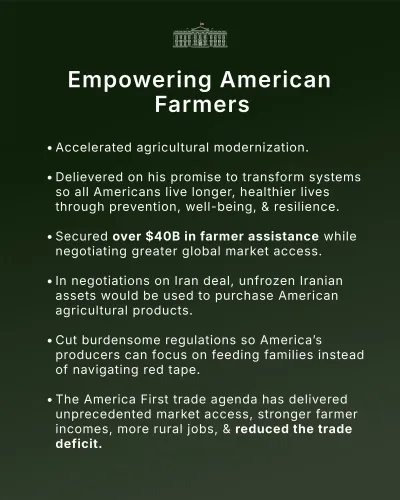
The White House publicly promoted a trade deal with Thailand as proof that Trump's 'America First' strategy is working for American farmers.
The post frames the agreement as part of a broader pattern of bilateral dealmaking delivering faster results than multilateral trade frameworks.
American agriculture — including soybean, dairy, and grain producers — stands to gain if the deal reduces Thai import barriers on US farm goods.
The administration's public messaging is a direct rebuttal to critics who argued tariff-first diplomacy would harm rural American constituencies.
Indian trade negotiators face renewed pressure, as Washington signals it expects agricultural-market concessions from bilateral partners.
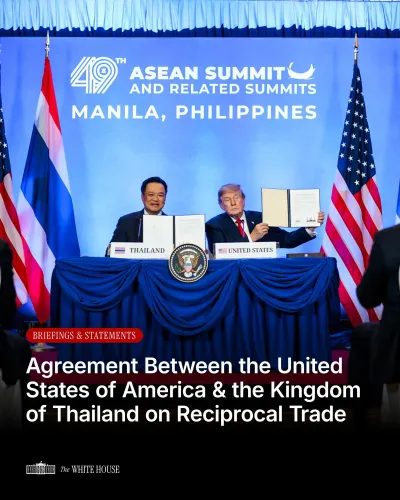
A trade agreement with Thailand is now the centrepiece of the White House's argument that President Donald Trump's 'America First' tariff strategy is delivering real gains for American agriculture — and the administration is making sure the world knows it.
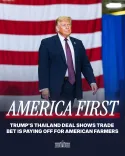
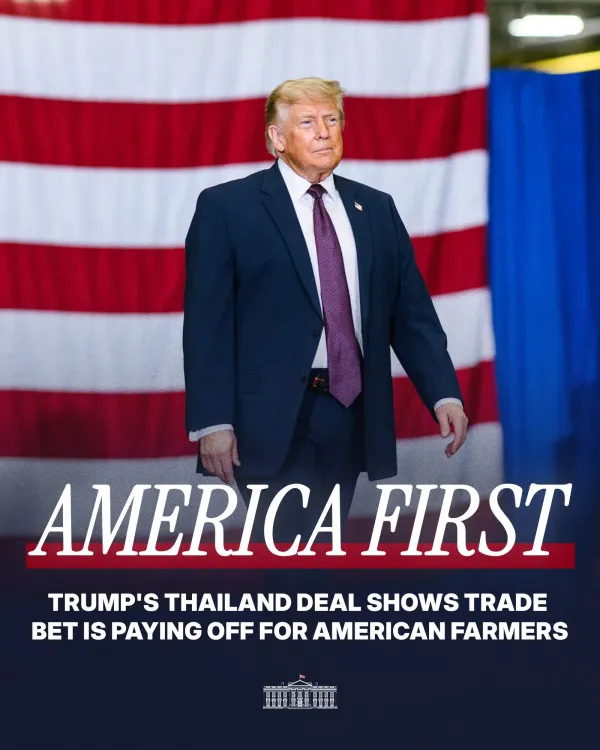
The White House shared what it described as a headline-worthy signal: 'Trump's Thailand deal shows America First trade bet is paying off for farm country.' The post, amplified with a fire emoji for emphasis, frames the Thailand agreement not as a one-off diplomatic win but as proof of a broader thesis — that aggressive bilateral dealmaking produces tangible results for American farmers faster than multilateral frameworks ever could.
What the Thailand Deal Means for American Agriculture
Agriculture has always been the most politically charged front in any American trade war. Farm-state senators and rural constituencies formed the backbone of Trump's electoral coalition, and they also absorbed the heaviest early losses when retaliatory tariffs from trading partners hit American soybean, pork, and wheat exports during his first term. A deal that opens Thai markets to American farm goods — or removes barriers that previously choked exports — directly addresses that vulnerability. Thailand is a significant agricultural economy in its own right, and its market matters: the country is a major importer of soybeans, dairy, and certain grains. Any agreement that lowers Thai tariffs on American farm products would flow directly into the ledgers of Midwestern grain farmers and Southern poultry producers.'America First' Trade Doctrine: The Bilateral Bet
Trump's trade philosophy has always rested on a single wager — that the United States, as the world's largest consumer market, holds more leverage in one-on-one negotiations than it ever exercises inside sprawling multilateral bodies. The White House's framing of the Thailand deal as a 'bet paying off' is a deliberate callback to critics who argued that tariff-first diplomacy would isolate Washington and hurt the very constituencies it claimed to protect. By positioning Thailand as a data point in a larger pattern, the administration signals that more deals — framed as victories for specific domestic sectors — are likely to follow, each one presented as vindication of the same doctrine.India's Interest in the US-Thailand Trade Trajectory
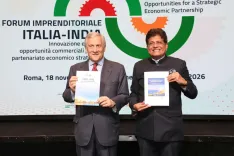
For Indian policymakers and trade negotiators watching from New Delhi, the US-Thailand framework carries a pointed message. India and the United States have been in extended discussions over their own bilateral trade agreement, with American negotiators consistently pushing for greater market access for US agricultural products — a demand that cuts directly against India's food-security sensitivities and farmer-protection instincts. The White House's public celebration of the Thailand deal is, in part, a demonstration of what Washington expects from partners: measurable, agricultural-market concessions. How New Delhi calibrates its response to that pressure will shape the trajectory of one of the most consequential bilateral trade relationships of the decade. The scoreboard is being updated in Washington. Farm country is watching — and so is the rest of the world.Point of View
The administration builds a cumulative narrative of 'America First' effectiveness that is designed to be campaign-ready. For India, the subtext is unmistakable: Washington has demonstrated it can close deals with Asian partners who agree to agricultural concessions, raising the implicit cost of New Delhi's continued resistance on farm-market access in US-India trade talks.
NationPress
19 Nov 2026
Frequently Asked Questions
What is the Trump Thailand trade deal about?
The Trump administration struck a bilateral trade agreement with Thailand that the White House says benefits American agricultural exporters by improving market access for US farm products in the Thai market.
How does the Thailand deal help American farmers?
Thailand is a significant importer of agricultural goods including soybeans and dairy. A deal that reduces Thai tariffs or barriers on US farm exports would directly increase revenue for American grain, soybean, and dairy producers.
What is the 'America First' trade strategy?
'America First' trade policy, championed by President Trump, prioritises aggressive one-on-one bilateral negotiations over multilateral trade bodies, using US market access as leverage to extract concessions from trading partners.
Does the US-Thailand deal affect India?
While the deal is bilateral between the US and Thailand, it signals to other partners — including India — that Washington expects agricultural-market concessions in any trade framework, increasing pressure on ongoing US-India trade negotiations.
Why is the White House publicising this trade deal now?
The administration is building a public record of 'America First' trade wins to demonstrate to domestic constituencies, particularly in farm states, that the tariff-forward approach is producing tangible economic results.