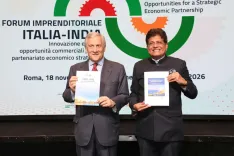
Goyal at India-Italy Forum: Co-create, Co-invest, Co-manufacture
Synopsis
Commerce Minister Piyush Goyal addressed the Fourth India-Italy Business and Innovation Forum in Rome alongside Deputy PM Antonio Tajani, urging businesses in both nations to co-create, co-invest and co-manufacture across seven high-value sectors including semiconductors, EVs, pharma and quantum computing.
Key Takeaways
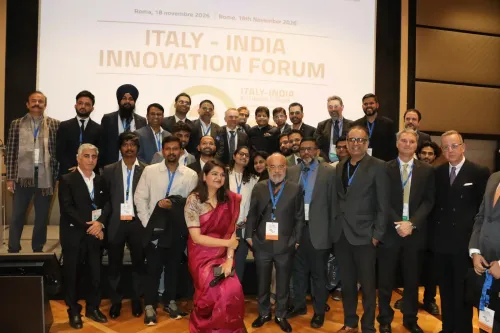
Piyush Goyal addressed the Fourth India-Italy Business and Innovation Forum plenary in Rome on 19 November 2026 .
Italian Deputy Prime Minister and Foreign Affairs Minister Antonio Tajani co-presided, lending the forum significant diplomatic weight.
Goyal called for collaboration across seven sectors : semiconductors and nuclear tech, automotive and electric mobility, chemicals, pharma and med-tech, industrial and agri-food machinery, and textiles, AI and quantum computing.
The minister urged businesses to move 'beyond traditional trade' toward co-creation, co-investment and co-manufacturing models.
Italy is a G7 member and EU economy; the forum reflects India's strategy of deepening European manufacturing and technology partnerships.
Progress on follow-up MoUs and joint projects — particularly in semiconductors and electric mobility — will be the key metric of outcomes.
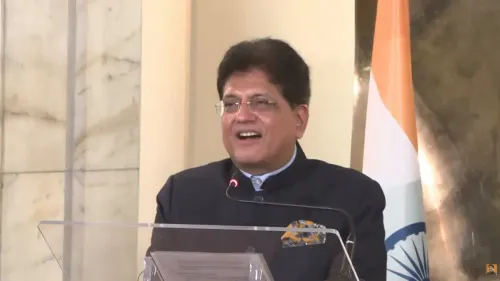
From semiconductors to quantum computing, Union Commerce and Industry Minister Piyush Goyal stood before Italian industry leaders in Rome on Thursday, 19 November 2026 and laid out a sweeping vision: that India and Italy must stop thinking of each other merely as trading partners and start building things together for the world.
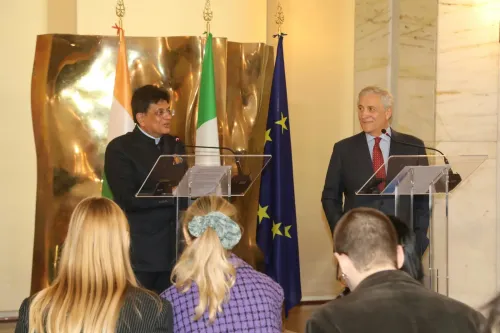
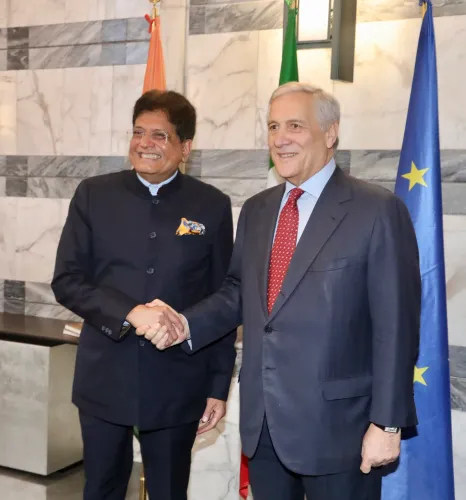
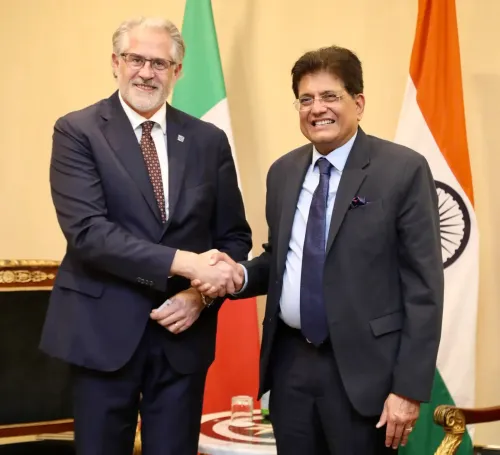
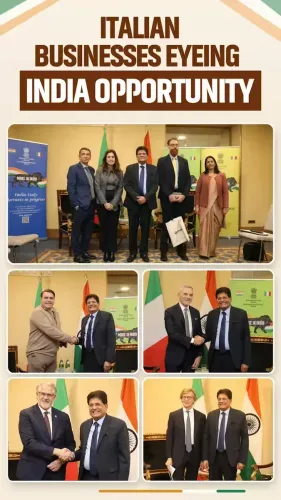
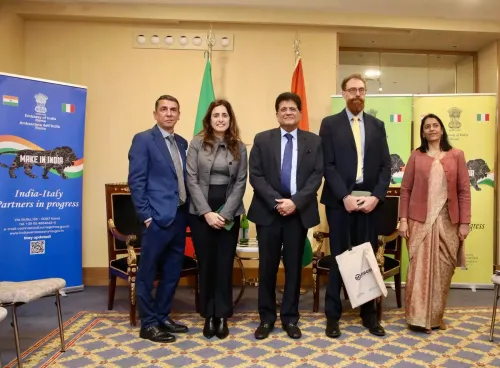
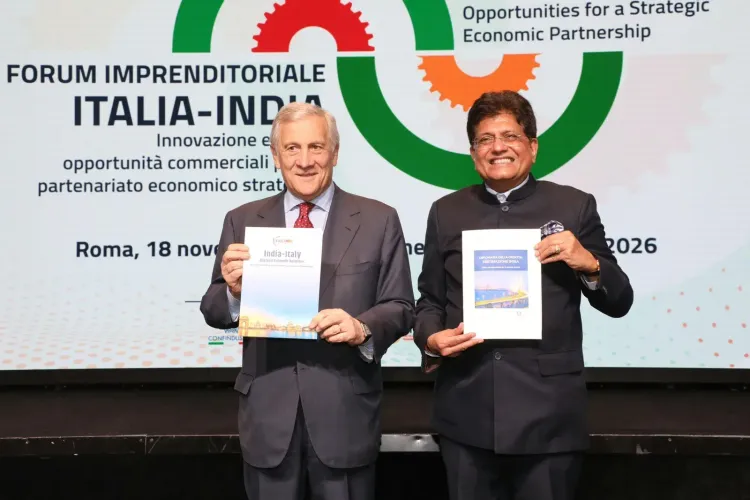
Goyal addressed the Plenary Session of the Fourth India-Italy Business and Innovation Forum alongside Antonio Tajani, Italy's Deputy Prime Minister and Minister of Foreign Affairs and International Cooperation. The minister described the two nations as natural complements — Indian innovation pairing with Italian enterprise — and called on businesses from both sides to explore what he framed as 'new frontiers of economic and technological engagement.'
Seven sectors, one strategic argument
The minister's pitch was deliberately wide-ranging, spanning semiconductors and nuclear technologies, automotive and electric mobility, chemicals, pharmaceuticals and med-tech, industrial and agri-food machinery, and textiles, artificial intelligence and quantum computing. The breadth is the point. This wasn't a narrow trade pitch — it was an argument that the India-Italy relationship is under-leveraged and that the ceiling is far higher than current bilateral volumes suggest.
Italy brings world-class strengths in precision machinery, design-led manufacturing and the automotive supply chain. India brings scale, a deep IT ecosystem, a rapidly growing pharmaceuticals sector, and an increasingly competitive semiconductor ambition. The forum's fourth edition signals that both governments are serious about moving from dialogue to deal-making.
Tajani at the table — the diplomatic weight
That Tajani — a serving Deputy Prime Minister and foreign minister — was present alongside Goyal lends this engagement unusual diplomatic heft for a business forum. Italy is a G7 member and an influential voice inside the European Union, making its partnership particularly valuable as India deepens its European economic footprint. Goyal referred to Tajani as a 'good friend,' a signal of an established personal rapport that can accelerate institutional momentum.
The forum sits within a bilateral strategic partnership framework that India and Italy have maintained for roughly two decades. What has changed is the ambition: Goyal's call to 'co-create, co-invest and co-manufacture' reflects India's broader pivot from being a destination for foreign goods to positioning itself as a co-producer inside global value chains — the core logic behind Production-Linked Incentive schemes and the Make in India programme.
Beyond trade — the co-production logic
The specific pairing of sectors is telling. Semiconductors and quantum computing are strategic technologies where supply-chain sovereignty has become a geopolitical priority for every major economy. Electric mobility sits at the intersection of climate commitments and industrial competitiveness. Agri-food machinery is an area where Italian engineering excellence meets India's massive agricultural modernisation need. Each vertical Goyal named carries both commercial and strategic rationale — this is not random optimism, it is a calculated diversification play.
Watchers will now look for follow-up MoUs, joint venture announcements, or working-group formations in the months ahead, particularly in semiconductors and electric mobility, where the gap between aspiration and signed agreements is currently widest.
India and Italy have set the table in Rome. Whether businesses on both sides pull up their chairs and order will be the real story of the months ahead.
Point of View
Quantum computing, EVs — reflects India's awareness that the next wave of industrial competition will be decided in deep-tech, not just in labour-cost arbitrage. Tajani's presence as a sitting Deputy PM signals that Italy views this relationship as a strategic rather than merely commercial priority, which could accelerate movement on pending trade and technology agreements. The 'co-create, co-invest, co-manufacture' formulation is also a deliberate reframing for Indian industry: the minister is pushing domestic businesses to think of Europe as a platform for joint global supply, not just a market to sell into.
NationPress
19 Nov 2026
Frequently Asked Questions
What is the India-Italy Business and Innovation Forum?
The India-Italy Business and Innovation Forum is a bilateral platform that brings together industry leaders and government officials from both countries to advance economic and technological collaboration. The fourth edition of its plenary session was held in Rome in November 2026.
What sectors did Piyush Goyal highlight at the Rome forum?
Goyal highlighted seven areas for India-Italy collaboration: semiconductors and nuclear technologies, automotive and electric mobility, chemicals, pharmaceuticals and med-tech, industrial and agri-food machinery, and textiles, AI and quantum computing.
Who is Antonio Tajani and why was he at the forum?
Antonio Tajani is Italy's Deputy Prime Minister and Minister of Foreign Affairs and International Cooperation. He co-presided at the forum alongside Goyal, reflecting the high diplomatic priority both governments place on the bilateral relationship.
What does 'co-manufacture for the world' mean in India's trade strategy?
It refers to India's shift from being a destination for imported goods or a low-cost export base to becoming a joint production partner with countries like Italy — building products together inside global value chains, often backed by frameworks like Production-Linked Incentives.
What outcomes should we watch for after the India-Italy forum?
Key indicators will be follow-up memoranda of understanding, joint venture announcements, or working-group formations — particularly in semiconductors, electric mobility and quantum computing, where both countries have expressed strong interest in moving from dialogue to concrete projects.